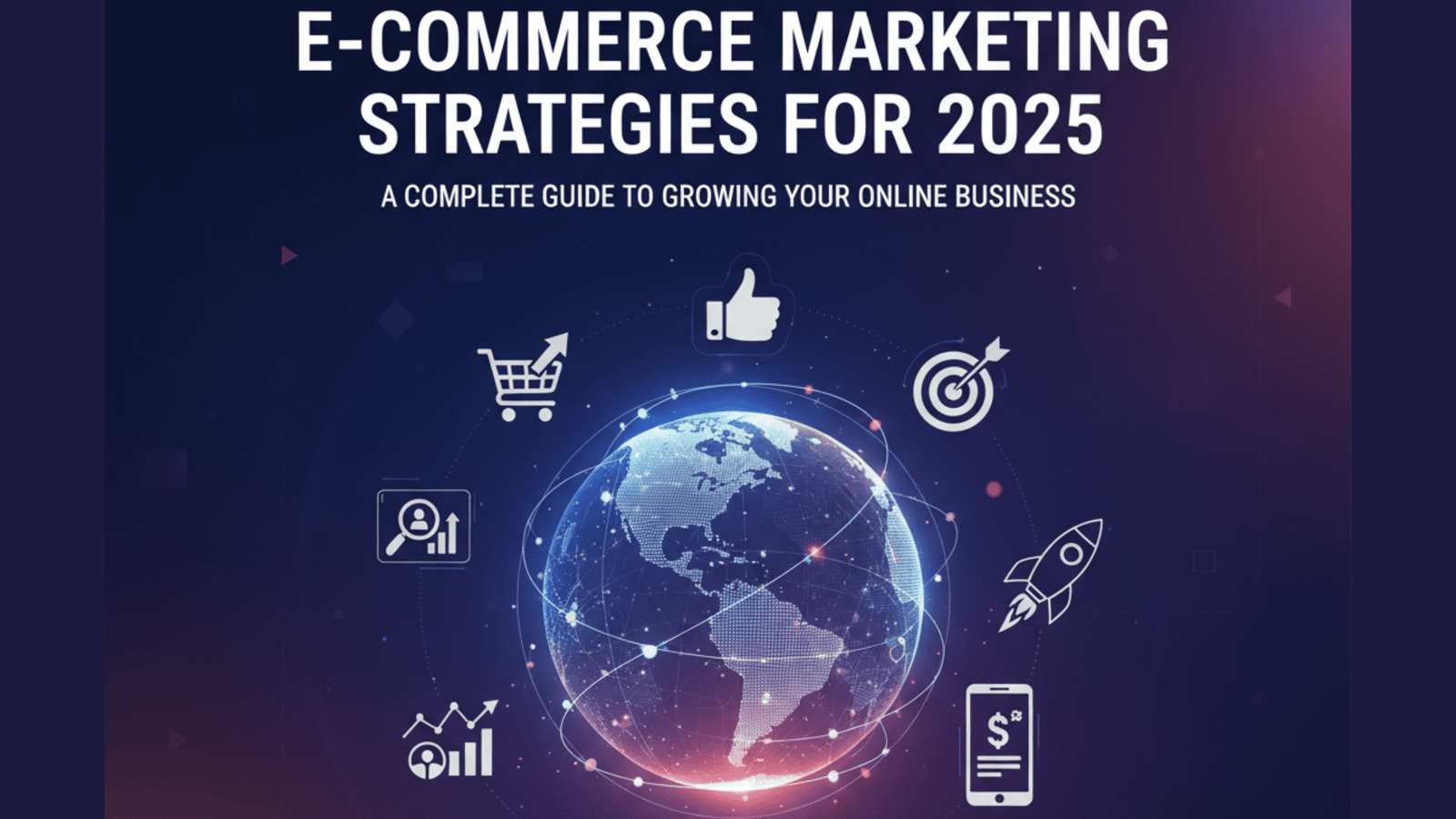
E-commerce Marketing Strategies for 2025: A Complete Guide to Growing Your Online Business
- 1 SEO (Search Engine Optimization)
- 1.1 Content Marketing
- 1.2 Social Media Marketing
- 1.3 Email Marketing
- 1.4 Customer Loyalty Programs
- 1.5 PPC Marketing (Pay Per Click)
- 1.6 Retargeting
- 1.7 Influencer Marketing
- 1.8 How to make the most of influencer marketing:
- 1.9 SMS Marketing
- 2 Conclusion
- 2.1 FAQs
- 2.1.1 Which is the best e-commerce marketing technique for start-ups?
- 2.1.2 How can I determine which social media platform is best for my brand?
- 2.1.3 What is the return on investment (the “ROI”) of influencer marketing?
- 2.1.4 How often should I send marketing emails?
- 2.1.5 SMS Marketing: Is It Suitable for All Types of Industries?
In today’s rapidly changing digital commerce marketplace, a solid e-commerce marketing strategy is no longer simply an option – it’s a must-have. Consumer habits are changing at a breakneck pace, while competition for online dollars has become increasingly fierce. “To succeed in this marketing world, businesses need to do more than simply set up a website – they need to create a marketing ecosystem which generates traffic, converts visitors to customers, and converts one-time buyers to long-term clients.”
The tactics mentioned here are designed to help e-commerce brands drive more customers, conversions, and customer income. You have the rest of the calendar year to execute these lessons. Whether you are a small startup or an established company, these tried-and-tested maneuvers will ensure your brand shines while driving significant growth.
SEO (Search Engine Optimization)
SEO is one of the cornerstones of an e-commerce website. It ensures your products and content are visible on search engine results pages (SERPs) when people are actively searching for them.
To strengthen SEO:
- Use Keyword Research to Find What Your Audience Searches For.
- Improve titles, meta descriptions, URLs, and product descriptions.
- Design your site structure to ensure that search engines can easily crawl it.
- Infuse your content with blogs, FAQs, and how-to articles.
- Reasonable and appropriate SEO enhances organic visibility, and accessible site traffic is directed towards your site.
Content Marketing
Content marketing enhances SEO while also building authority, engaging readers, and driving leads and conversions. A content-rich website goes well beyond product listings — it’s the place to tell your brand’s story and educate your customers.
Good content strategies are:
- Answer blogs are response blogs.
- Buying guides and tutorials
- Success stories and reviews from our customers
- Videos that demonstrate how to use the product, Message comparison videos
- Better trust can be established through content marketing, which will help keep Buyers engaged for a more extended period and lead to higher conversions.
Social Media Marketing
E-commerce continues to thrive in social media marketing. With billions of users on platforms such as Instagram, TikTok, Facebook, and Twitter, brands have been able to engage directly with consumers.
To optimize your strategy:
- Concentrate on the community where your audience is most engaged.
- Be sure to post frequently with engaging imagery and clear calls to action.
- Use stories, reels, and live sessions to build it.
- Promote UGC with contests or hashtags.
- Brands can humanize themselves and create loyalty by reaching out to customers where they congregate.
Email Marketing
Emails remain the most effective way to develop potential leads and stay in touch with existing ones.
Email marketing benefits:
- Promote new products, sales, and content updates.
- Segment with ‘and’ based on customer behavior for tailor-made messages.
- Leverage automation to retarget cart abandoners and send post-purchase follow-ups.
- Email marketing is inexpensive, easy to scale, and completely measurable. If used effectively for segmentation and personalization, repeat business can receive a significant boost.
Customer Loyalty Programs
Reward programs motivate returning customers and one-time buyers into brand advocates.
Loyalty program types include:
- Point-based rewards systems
- Tiered membership levels
- Access to sales or new products.
- Birthday and anniversary bonuses
- In addition to boosting retention, loyalty programs are used to gather information on purchasing patterns to allow for more tailored offers and stronger relationships with customers.
PPC Marketing (Pay Per Click)
Although organic is king, PPC campaigns may help boost visibility, especially for new products or during your busy seasons.
Some of the components of a solid PPC strategy are:
- Google Shopping + search ads
- Paid social campaigns, including on Instagram, Facebook, and TikTok
- Retargeted ads to bring back old site visitors
- PPC helps you be in front of the right audience at the right time, sending high-quality traffic and raising your return on ad spend(ROAS).
Retargeting
Retargeting is a great way to retarget users who came to your website but didn’t convert. Since these users already know about your brand, they have lower resistance to purchasing from you.
Strategies include:
- Show dynamic ads for people who viewed your product
- Providing time-sensitive discounts to encourage repeat visits
- Employing abandoned cart email reminders
- Retarget the drop-offs and increase your overall conversion rates.
Influencer Marketing
These influencers provide a strong tie to niche communities and offer an element of trust and credibility that advertising can’t.
How to make the most of influencer marketing:
- Find an Influencer that matches your values.
- Micro influencers (a lot higher engagement) or macro influencers (more reach)
- Utilize sponsored posts, unboxings, reviews, or giveaways
- Influencers serve as reputable middlemen and can elevate visibility to a whole new level, especially when it comes to new product releases.
SMS Marketing
In a world where the mobile rules, SMS is back to be a killer in marketing. It sends messages straight to a user’s device and has far superior open rates than email.
SMS marketing can be applied to:
- Flash sales or time-limited offers
- Cart abandonment recovery
- Order confirmations and dispatch communications
- Rewards Club loyalty bonuses, promos, and promo deals only for the app.
- Through well-timed frequency and value-based messages, SMS can engage immediacy and engender customer lifetime value.
Conclusion
Gone are the days when e-commerce marketing simply means picking a couple of things and hoping for the best: Marketers today need to think about and manage multiple touch points and sections. Whether it’s SEO and content, email and SMS, the playbook above touches on organic and paid options to work on when it comes to getting visitors to your site, converting them into sales, and making sure they stick around for the long haul.
To succeed online in 2025, companies must remain adaptive, data-driven, and customer-centric. Not only will investing in these e-commerce marketing strategies leave your competitors in the dust, but they help you forge long-lasting relationships with your customers.
FAQs
Which is the best e-commerce marketing technique for start-ups?
Search engine optimization and content marketing are good places to start. They are also really cheap and give you sustained visibility.
How can I determine which social media platform is best for my brand?
Discover where your ideal audience is congregating. TikTok and Instagram could be beneficial for younger fans, while Facebook might be more suitable for an older fan base.
What is the return on investment (the “ROI”) of influencer marketing?
What is the return on investment (ROI ) of an influencer? Often, micro-influencers provide better engagement rates and more targeted conversions.
How often should I send marketing emails?
And again, frequency varies by audience, but you should aim for 1–2 of these emails per week. Experiment and track your engagement so u don’t abuse your subscribers.
SMS Marketing: Is It Suitable for All Types of Industries?
For retail, fashion, food delivery, and other consumer-oriented businesses, SMS marketing is the most effective approach. It should be used judiciously to prevent customer burnout.