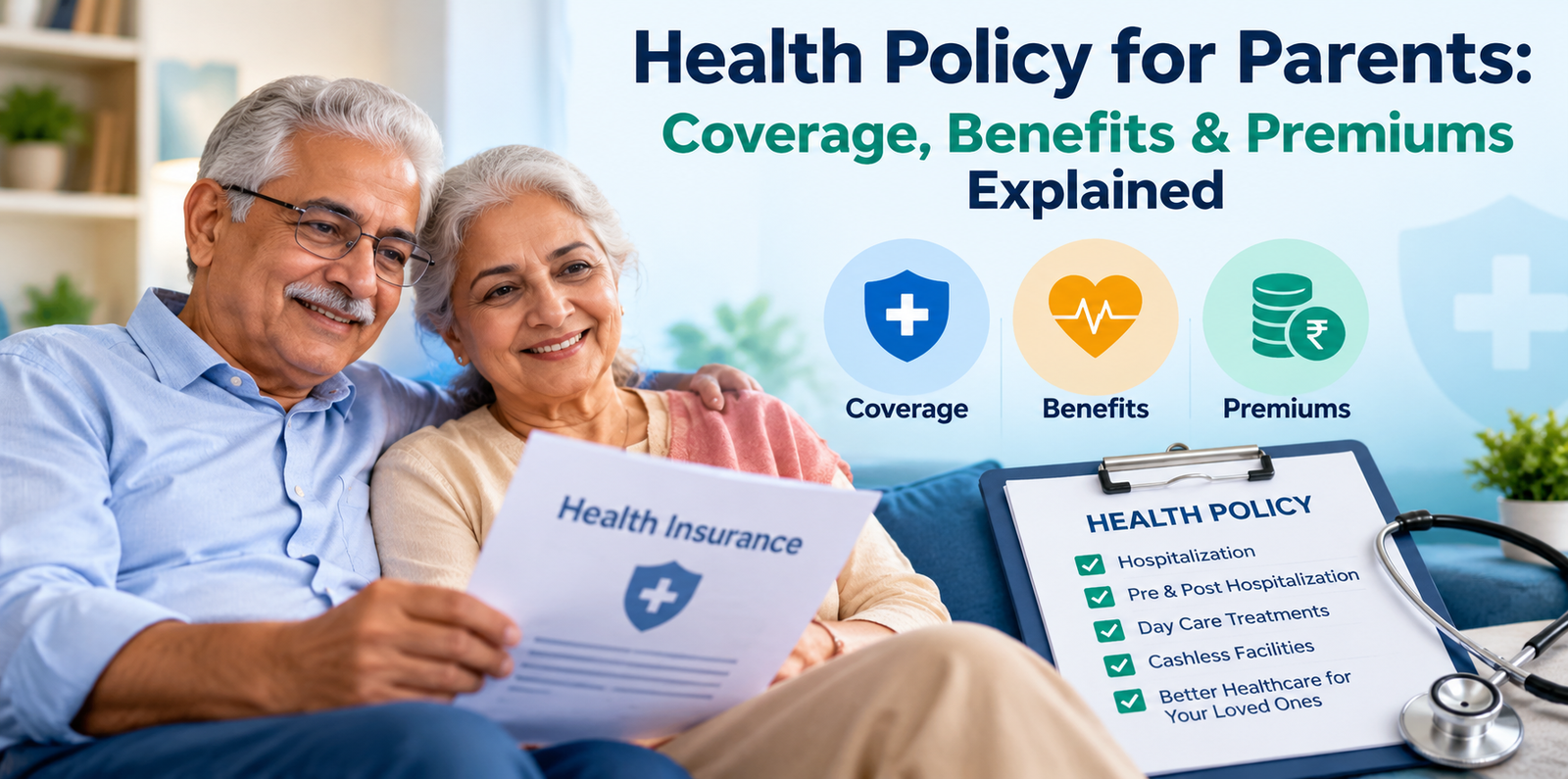
Health Policy for Parents: Coverage, Benefits & Premiums Explained
- 1 Why Should You Consider Separate Coverage for Parents?
- 1.1 What Does a Health Policy for Parents Usually Cover?
- 1.2 How Do Pre-Existing Conditions Affect Coverage?
- 1.3 What Factors Affect the Premium?
- 1.4 Why Are Co-Payments Important?
- 1.5 Why Should You Check the Hospital Network?
- 1.6 How Much Coverage Should You Consider?
- 1.7 What Should You Check Before Buying?
- 2 Conclusion
As parents grow older, their healthcare requirements can change. Regular medical consultations may become more common, and the possibility of hospitalisation or treatment for age-related conditions can increase. At the same time, medical expenses can place considerable pressure on household savings if adequate financial preparation is not in place.
This makes medical coverage an important consideration when planning for your parents’ long-term healthcare needs. However, choosing a policy should involve more than simply comparing premiums. Coverage limits, waiting periods, co-payments, hospital networks and exclusions can all affect how useful a policy is when medical care is actually required.
If you are exploring Health Insurance for your family, understanding how coverage for parents works can help you compare available options more carefully.
Why Should You Consider Separate Coverage for Parents?
Some family floater policies allow parents to be included along with other family members. While this can appear convenient, it may not always be the most suitable arrangement.
The premium of a family floater can be influenced by factors including the age and health profile of the insured members. Adding older parents may therefore affect the overall premium.
There is also the question of how the sum insured is shared. Under a family floater, multiple insured members generally use a common coverage amount. If one family member requires significant hospitalisation, a substantial portion of the available cover may be utilised.
A separate policy for parents can provide them with an independent sum insured and may make it easier to select features according to their particular healthcare requirements.
What Does a Health Policy for Parents Usually Cover?
The exact coverage depends on the insurer and policy selected, but medical policies commonly provide coverage for eligible hospitalisation expenses.
This may include expenses related to room charges, medical procedures, doctor fees, diagnostic tests and medicines used during an eligible hospital stay, subject to policy terms.
Certain policies may also cover specified pre-hospitalisation and post-hospitalisation expenses for defined periods. Day-care procedures that do not require a traditional 24-hour hospital stay may also be included when listed as eligible under the policy.
Ambulance expenses and other benefits may be available depending on the product.
Rather than assuming that a particular expense is covered, always check the policy wording, exclusions and applicable limits.
How Do Pre-Existing Conditions Affect Coverage?
Pre-existing medical conditions are particularly important when buying insurance for older parents.
If your parents have conditions such as diabetes, hypertension or other existing illnesses, these should be accurately disclosed when applying for coverage.
A policy may specify a waiting period before eligible expenses associated with declared pre-existing diseases become covered. The applicable period can vary depending on the product and prevailing regulations.
When comparing policies, therefore, do not look only at whether pre-existing conditions can eventually be covered. Check the applicable waiting period and other conditions attached to that coverage.
Accurate medical disclosure is also essential because incomplete or incorrect information can create difficulties during underwriting or claim assessment.
What Factors Affect the Premium?
Age is one of the major factors that can influence medical insurance premiums. Since health risks generally increase with age, policies covering older individuals can cost more than comparable coverage for younger people.
The chosen sum insured also affects pricing. A higher coverage amount generally results in a higher premium, although it also provides a larger financial limit for eligible medical expenses.
Medical history, location, policy type, deductible or co-payment structure, optional covers and other underwriting considerations may also influence the final amount.
When comparing a health policy for parents, consider the premium alongside the coverage provided rather than treating the lowest price as the deciding factor.
Why Are Co-Payments Important?
A co-payment requires the policyholder to bear a specified portion of an admissible claim, while the insurer pays the remaining eligible amount according to policy conditions.
For example, if a policy contains a percentage-based co-payment, you may need to contribute that percentage towards an admissible claim.
This can become particularly relevant when treatment expenses are substantial.
Some policies designed for older individuals may include mandatory co-payment requirements, while others may offer different structures. Before purchasing, check whether a co-payment applies and understand how it could affect your out-of-pocket expenses.
Why Should You Check the Hospital Network?
Access to appropriate hospitals can be especially important for ageing parents.
Check whether hospitals close to your parents’ residence are currently part of the insurer’s network. If they already visit particular hospitals or specialists, checking nearby network facilities can also help with planning.
At an eligible network hospital, cashless treatment may be available subject to authorisation and policy terms. This can reduce the need to arrange the entire eligible hospital expense upfront.
Hospital networks can change over time, so their current status should be verified with the insurer, particularly before planned treatment.
How Much Coverage Should You Consider?
There is no single sum insured that works for every parent.
Consider factors such as your parents’ ages, existing medical conditions, city of residence, healthcare costs in the area, existing employer or retirement-related medical benefits and your family’s ability to manage expenses not covered by insurance.
It can also be useful to consider future healthcare costs rather than selecting coverage solely according to today’s hospital expenses.
A very low sum insured may reduce the premium but could provide limited financial support if a significant hospitalisation occurs.
What Should You Check Before Buying?
Before choosing a policy, review the waiting periods, exclusions, co-payments, room eligibility, deductibles, sub-limits and conditions applicable to specific treatments.
You should also check the renewal provisions and understand whether medical tests or additional underwriting information are required at the time of application.
Most importantly, read the policy documents rather than relying only on a short benefits summary. This can help you understand both what the policy covers and situations where expenses may remain payable by your family.
Conclusion
Buying medical insurance for parents requires balancing coverage, affordability and their individual healthcare requirements. The cheapest policy may not necessarily provide the most suitable protection, particularly when waiting periods, co-payments and treatment-related limits are considered.
Compare the available sum insured, hospital network, coverage for pre-existing conditions, exclusions and out-of-pocket requirements before making a decision.
Choosing carefully while your parents are relatively healthy can also provide more time to understand and complete applicable waiting periods. Ultimately, the objective should be to find sustainable coverage that can support their healthcare needs without placing unnecessary pressure on the family’s finances.