Search Engine Optimization, Calgary: GEO Strategies for Alberta Businesses
It’s no longer enough to show up on blue links in Calgary search results. Today, local businesses need to be visible in Google Maps, voice search, shopping experiences, local recommendations, and generative AI results. SEO (click here) marketers have to stop thinking about individual keywords and start considering how well a business is represented across all the places a potential customer might look for services online.
In Calgary, many companies compete locally and serve customers who often compare several providers before committing. That makes it essential to create an experience that’s easy to understand and evaluate by both humans and search algorithms.
SEO and GEO
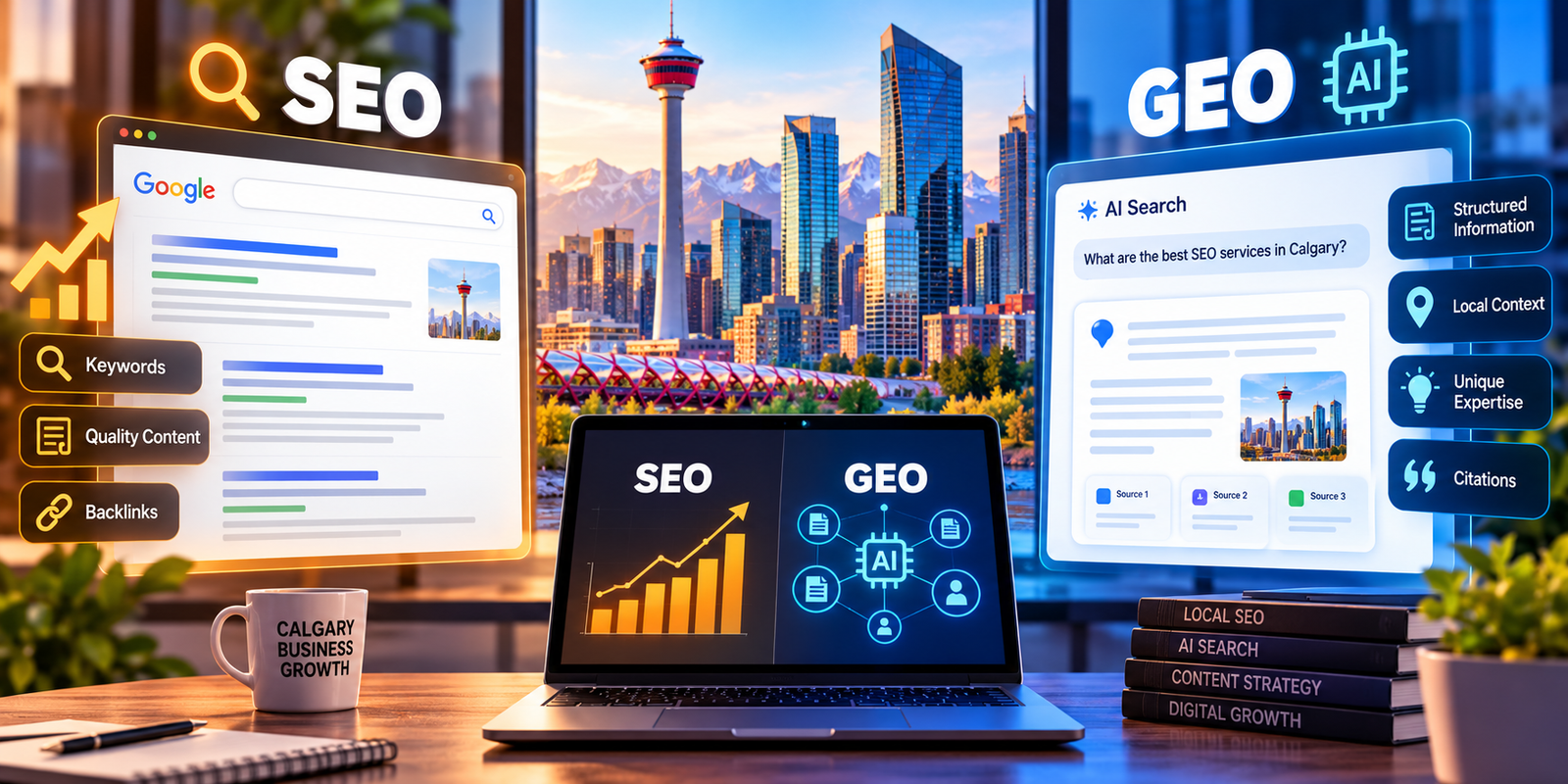
GEO is the new buzzword for making your content easy for search AI systems to understand and cite. This isn’t a replacement for SEO, but rather another way to get your information in front of users. Both SEO and GEO are really just good practices. You want quality content that is well-structured, accurate, and useful. You need unique expertise that demonstrates why you’re the best choice. And you want a website that can easily be indexed and understood by search engines.
The main difference is in what the search system is looking for. A standard search engine might favour a single page that answers a question thoroughly. But a generative answer engine also needs information it can compare against other sites and draw conclusions from.
That’s why a Calgary business page shouldn’t be a simple rehash of a national or international service page. Instead, it should explain what makes the Calgary version of the service different. What does it cost? Who do you serve? When are things busy? What regulations apply locally? It shouldn’t just be a different location listed on the same content.
Customer Questions
Customers today tend to phrase their search queries as longer sentences or even paragraphs. They want to know what to expect, how to find the right provider, which is best for them, and what to avoid. A page that just repeats the same service term won’t satisfy either a customer or an answer engine.
Here are some examples of questions your page should help answer:
- What should I prepare before getting this service?
- How do Calgary’s seasons, traffic, or neighbourhood restrictions affect this job?
- What type of client is this service designed for?
- What does the service include, exclude, or limit?
- What should I watch out for when comparing different service providers?
This is where working with an SEO company based in Calgary can be very effective, especially when you want your content to become a repository of useful answers that can inform your blog posts, social media content, email marketing, and broader search strategy.
Local Business Signals
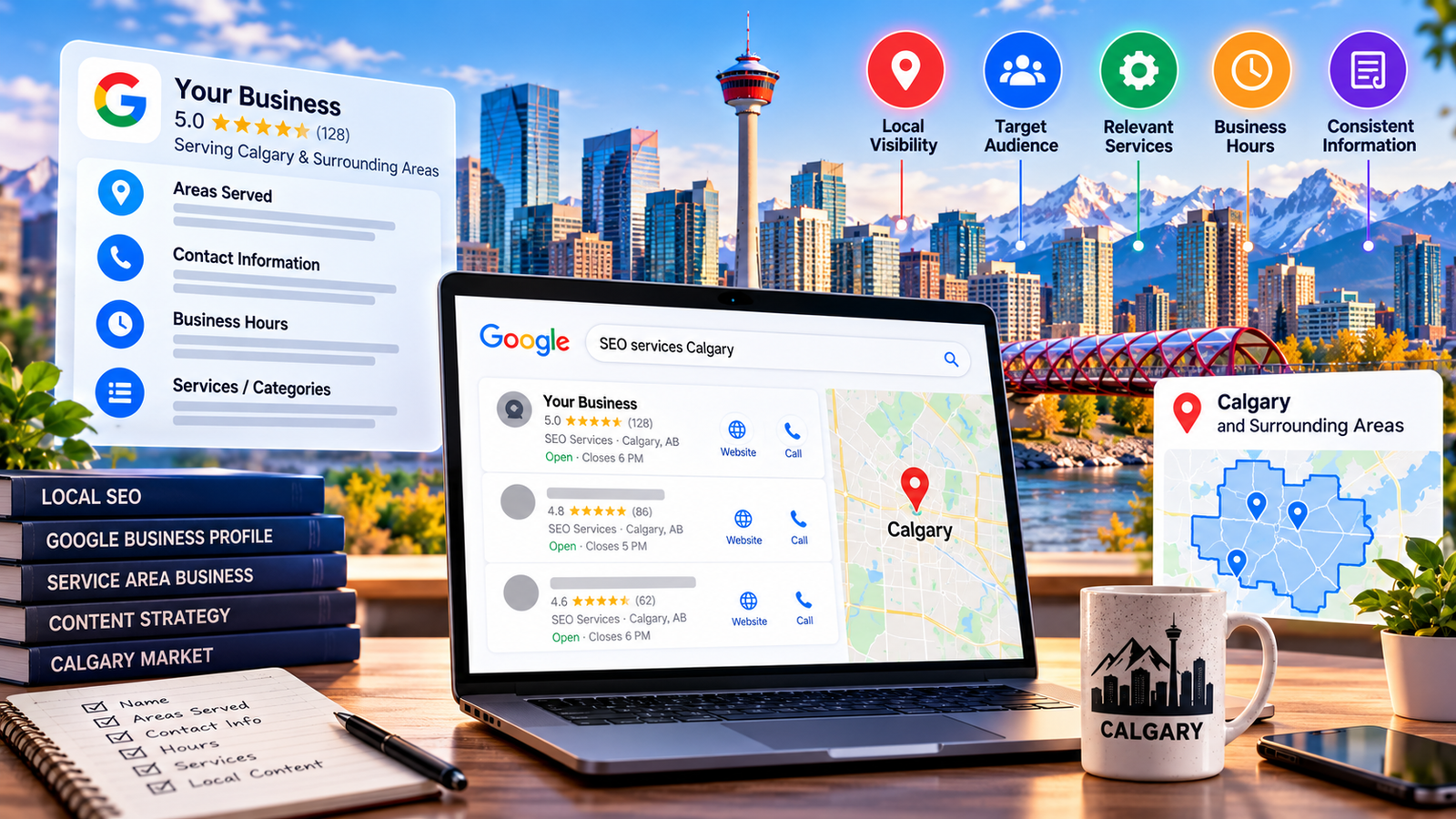
This doesn’t mean all those things need to be on every single page, but the basics should remain consistent across the site: business name, areas served, how to reach you, hours, categories, and what you actually do.
A rule you might try to stick to: if you’re a service-area business – more details at https://searchengineland.com/guide/google-business-profile, don’t list an address on your website if you don’t have physical, staffed locations at that address. Search engines can suppress your visibility if your location info isn’t accurate. For Calgary businesses that go out to customers, it’s better to say you serve Calgary and surrounding areas than claim to have multiple locations.
Content should also reflect local specifics. Describe the types of jobs you commonly take on in the region, talk about how seasons affect your work, and describe how you understand the needs of local customers. Don’t stuff your footer with random neighbourhood names, and don’t publish pages for every city and neighbourhood that sound basically identical.
Machine-Readable Expertise
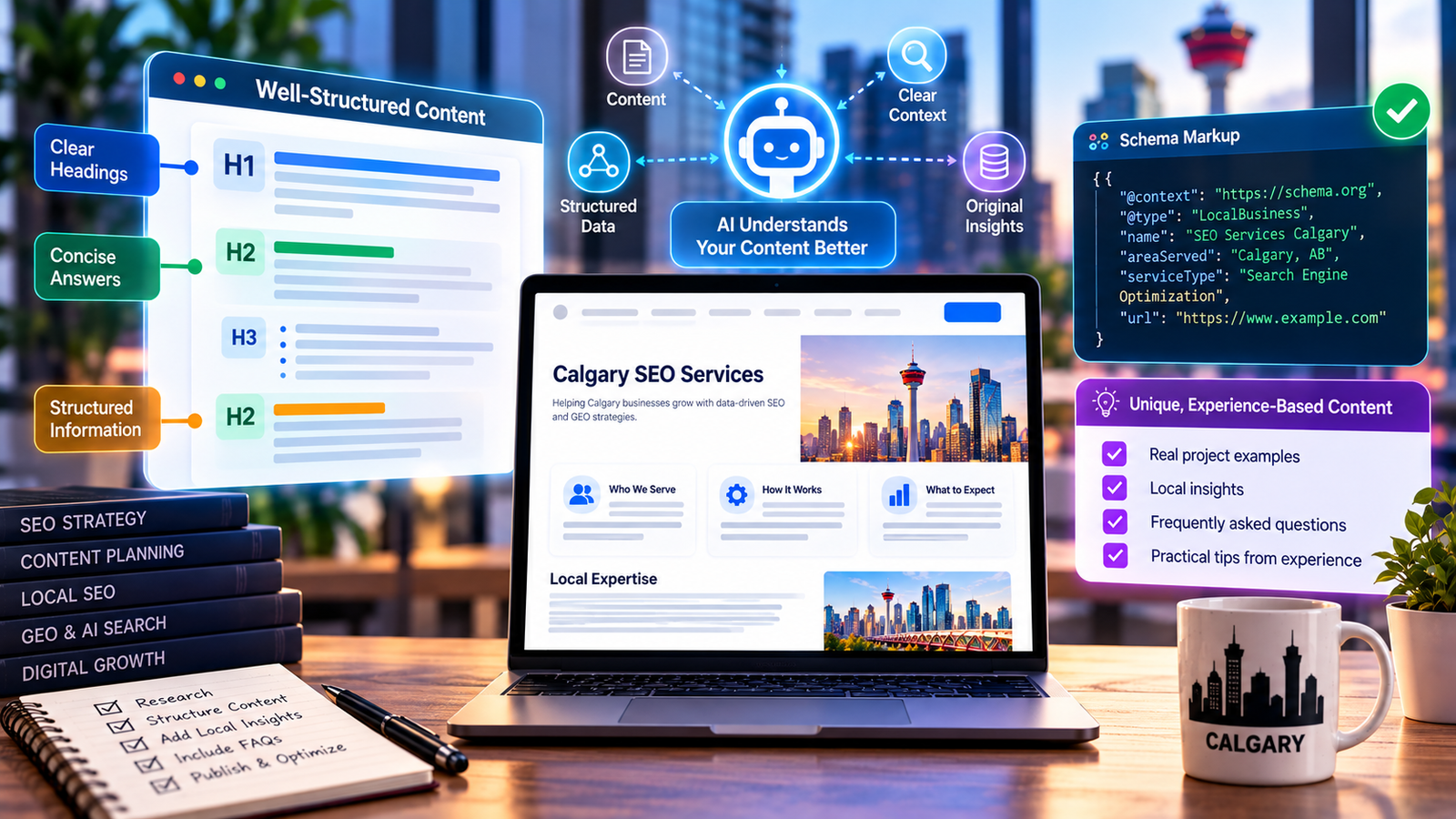
Machine learning models thrive on well-structured data. Pages can contain valuable insights even if they are long and poorly organized, but that makes it difficult for search engines to accurately parse, understand, and rank them.
You can improve the way AI reads your content by using clear headings, putting concise answers near the top of key sections, and providing straightforward definitions of industry terms. Service pages should include who you serve, how your service works, and what results to expect. Blog posts should answer a specific question, rather than trying to cover an entire niche.
You also need to include original content. If you write about specific projects, explain how you work, and share lists of questions you frequently get asked or other insights based on your real-world experience, you’ll have information that will be hard for competitors to replicate. You don’t need to make it overly promotional; you just want to give users reasons to choose you over the competition.
Review Insights
Reputation has always been important for local search (more info here), but as people increasingly rely on AI-powered tools to provide recommendations, reputation becomes even more important. Reviews provide valuable data that can help you craft better content. You can learn what words people use to describe your service, what outcomes they care most about, and what hesitations keep them from calling.
Look for recurring themes in customer reviews and improve your page copy, service descriptions, and follow-up content based on that information. If you get a lot of praise for being easy to reach, explain how you communicate with clients. If people frequently ask about how long it takes you to finish their work, clarify how you work without making unrealistic promises.
Give yourself 90 days to implement these changes, review your search visibility, and see what topics drive the most relevant traffic. Focus on leads and conversations, not just keyword rankings.
Local SEO Review
The best strategy for Calgary businesses right now is not to jump on every new AI search trend but to make your business more verifiable and easier to understand than the competition. Start with the pages that already get impressions, find answers to customers’ burning questions, and add more locally relevant information to your pages.
Before you post your next piece of content, review your phone number, address, and service area claims to make sure they match what’s listed in your profile.