How to Choose the Best Canon Camera and Video Camera for Your Needs
- 1 Understanding Your Creative Goals
- 2 Essential Features to Evaluate
- 2.1 1. Sensor Size and Image Processing
- 2.2 2. Autofocus Systems and Object Tracking
- 2.3 3. Lens Ecosystem and Optical Flexibility
- 2.4 4. Video Resolution, Frame Rates, and Color Profiles
- 2.5 5. Ergonomics, Build Quality, and Connectivity
- 2.6 6. Matching Gear to Your Experience Level
- 3 Final Considerations
Finding the right gear to capture your visual story can feel overwhelming given the wide array of choices available today. Whether you are stepping into creative imaging for the very first time, upgrading your current equipment, or expanding into professional film production, selecting the right setup is essential for achieving your creative vision. Canon has long established itself as a global leader in imaging technology, offering reliable tools tailored to every skill level, budget, and creative ambition.
Understanding Your Creative Goals
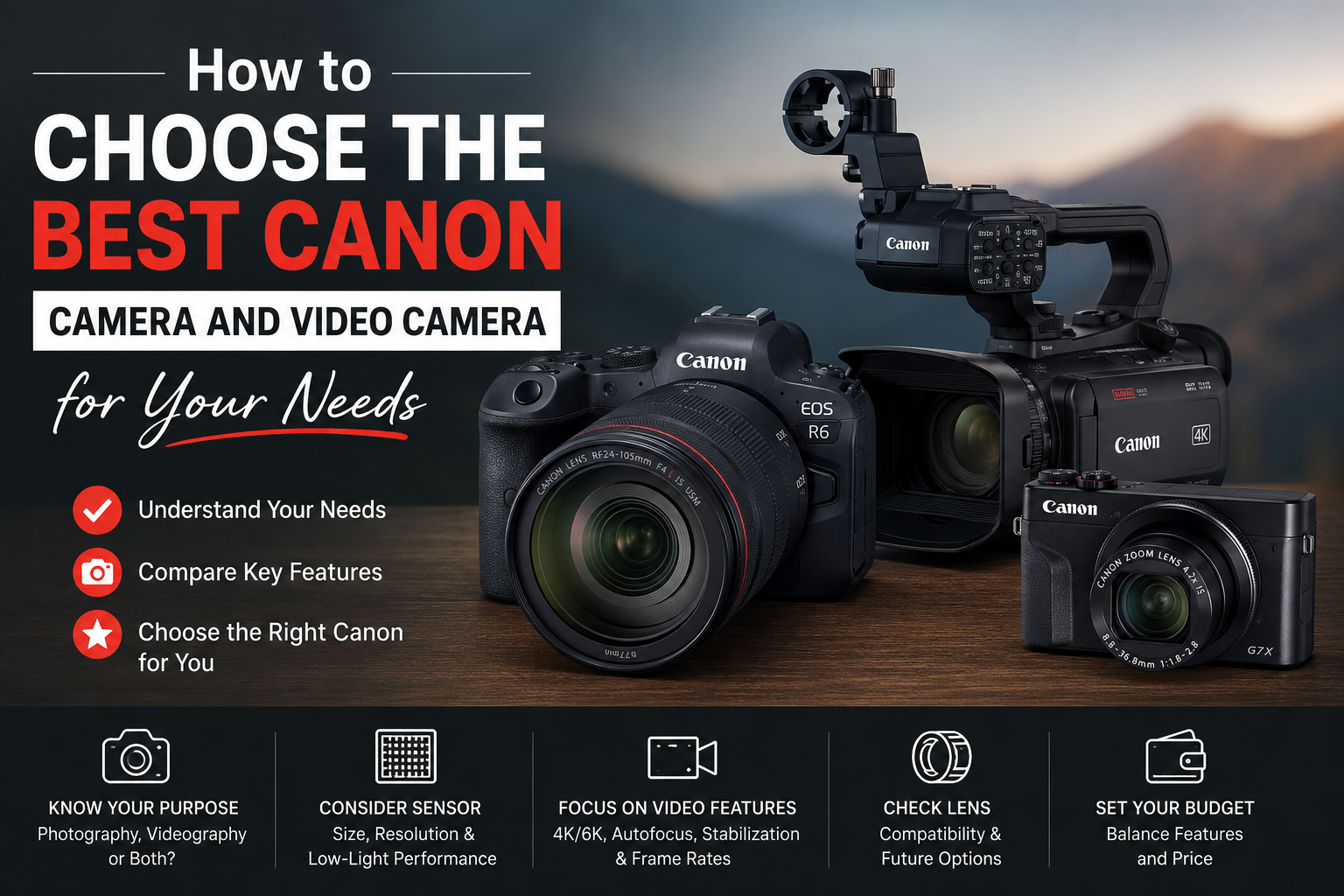
Before diving deep into technical specifications, take a moment to evaluate what type of content you plan to create most often. Are you primarily focusing on high-resolution still photography, dynamic video production, or a flexible blend of both visual mediums?
A high-performing camera designed primarily for still imagery will offer impressive resolution, rapid autofocus tracking, and reliable low-light performance. This makes it an excellent choice for portraiture, landscape photography, street shooting, and commercial photo projects.
On the other hand, if your primary goal involves documentary filmmaking, commercial videography, vlogging, or recording extended events, a dedicated video camera offers practical advantages. Dedicated video bodies feature built-in ND filters, professional audio connections, active cooling systems for long recording sessions, and physical controls optimized for fluid movement during video recording.
Essential Features to Evaluate
1. Sensor Size and Image Processing
Sensor size plays a significant role in determining dynamic range, low-light performance, and depth of field control. Full-frame sensors excel in capturing fine detail and providing clean images in low-light environments. APS-C sensors, meanwhile, allow for lighter, more compact bodies and provide a crop factor that gives extra reach for telephoto shooting, which is ideal for wildlife and sports enthusiasts. Canon provides versatile options across both formats to accommodate varying production needs.
2. Autofocus Systems and Object Tracking
Modern visual storytelling relies heavily on responsive autofocus. Advanced systems like Canon Dual Pixel CMOS AF offer precise, reliable focus tracking across the frame for both static photos and high-speed motion. If you shoot portraits, sports, or fast-paced video, look for models with advanced subject detection that tracks human eyes, animals, and vehicles seamlessly.
3. Lens Ecosystem and Optical Flexibility
Your choice of imaging body goes hand in hand with the lenses available to you. Canon RF and EF lens lineups offer access to an extensive range of prime, zoom, macro, and telephoto lenses. Choosing a system with robust optical options ensures that your equipment can grow alongside your expanding creative requirements.
4. Video Resolution, Frame Rates, and Color Profiles
For video producers, resolution and bitrates determine post-production flexibility. Look for options that support 4K resolution without heavy cropping, alongside higher frame rates for smooth slow-motion playback. Features such as Canon Log color profiles provide extended dynamic range, enabling greater creative control when grading colors in post-production.
5. Ergonomics, Build Quality, and Connectivity
Consider how the equipment feels in your hands during long shoots. Weather-sealed construction provides durability when working outdoors in challenging environments. Dual card slots offer immediate backup for important assignments, while integrated Wi-Fi and Bluetooth connectivity streamline your file transfer workflow.
6. Matching Gear to Your Experience Level
For beginner creators, intuitive user interfaces and light form factors encourage regular practice and experimentation without steep learning curves. Intermediate users often seek customizable physical buttons, improved stabilization, and enhanced low-light capabilities to handle varied shooting conditions. Professional creators require robust, reliable tools with uncompressed video outputs, high burst rates, and complete manual control over every technical parameter.
Final Considerations
Selecting the ideal setup comes down to aligning technical capabilities with your unique creative workflow. By carefully evaluating sensor performance, focus reliability, video specifications, and ergonomic fit, you can confidently select equipment that brings your creative vision to life.