Why Continuous Security Monitoring Matters More Than Ever
- 1 Cyber Threats Are Constantly Evolving
- 2 Faster Detection Can Limit the Damage
- 3 Businesses Need Visibility Around the Clock
- 4 Continuous Monitoring Supports a Proactive Approach
- 5 The Importance of Monitoring User and Entity Behavior
- 6 Cloud Environments Require Broader Monitoring
- 7 Continuous Monitoring Can Strengthen Incident Response
- 8 Automation Makes Continuous Monitoring More Practical
- 9 Monitoring Should Cover More Than the Network
- 10 Security Monitoring Also Supports Compliance and Accountability
- 11 The Human Element Still Matters
- 12 Security Cannot Be a Periodic Exercise
You can’t predict when your cybersecurity will be breached. An attack can begin late at night, during a public holiday, or while an internal IT team is dealing with an entirely different problem. For modern businesses, relying on occasional security checks is no longer enough.
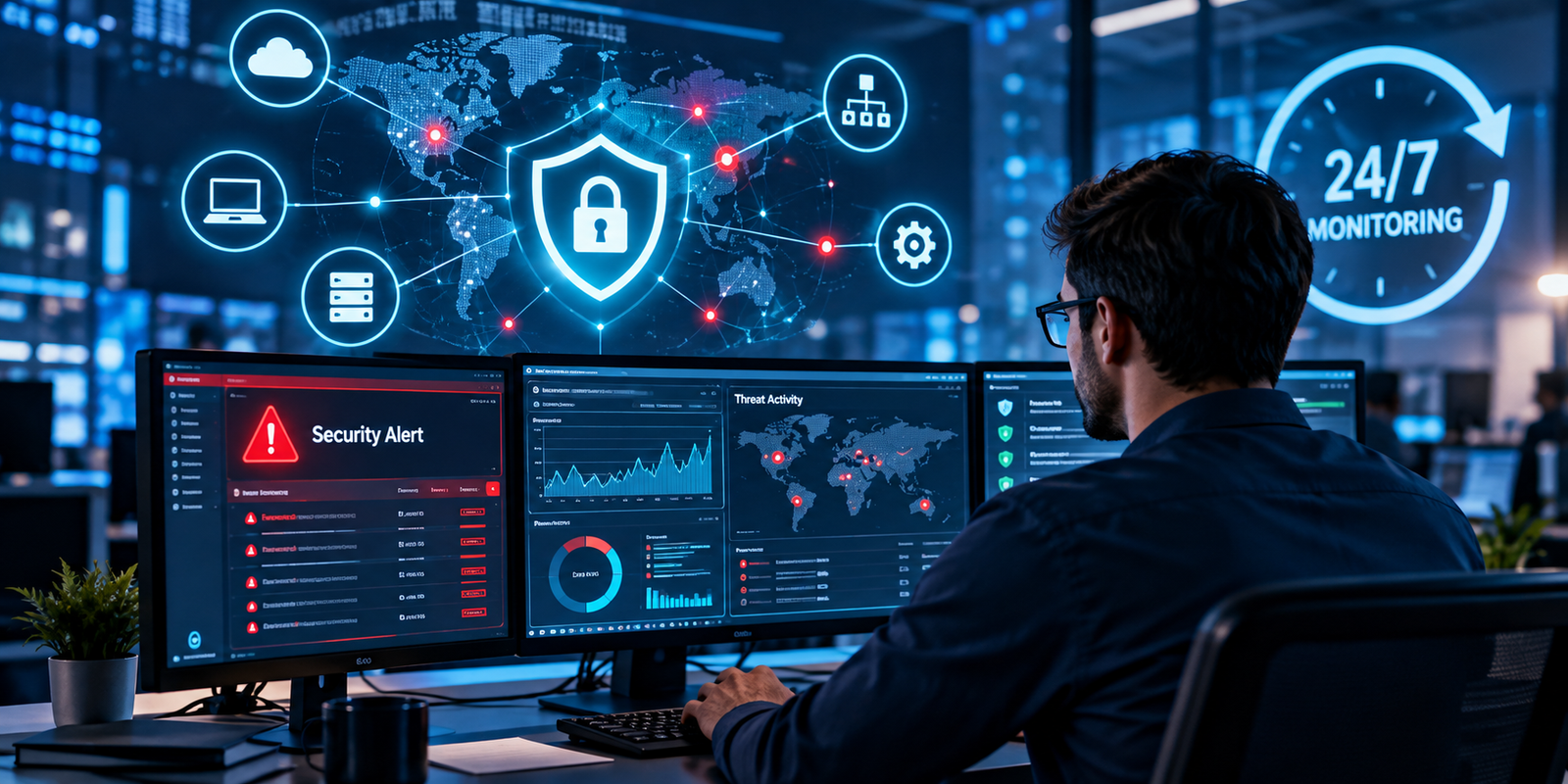
Continuous security monitoring gives companies ongoing visibility into their networks, endpoints, applications, cloud environments, identities, and other digital assets. Instead of waiting for obvious signs of an incident, security teams can identify suspicious behavior as it develops and respond before the damage escalates.
The need for continuous monitoring has grown alongside the complexity of modern IT environments. Businesses increasingly depend on cloud services, remote access, SaaS applications, connected devices, APIs, and third-party platforms. Every additional connection can introduce another opportunity for unauthorized access or misuse. A security strategy that only examines an environment periodically can easily miss what happens between those assessments.
Cyber Threats Are Constantly Evolving
Cybercriminals continually adjust their tactics to bypass existing security controls. Phishing, ransomware, credential theft, malware, and other threats can all evolve quickly, making it difficult for businesses to rely solely on traditional defensive measures.
Attackers also increasingly attempt to blend malicious activity with legitimate business behavior. A compromised account may be used to sign in through an approved application, while stolen credentials may allow an attacker to access systems without immediately triggering conventional malware defenses. This makes behavioral visibility increasingly important.
Continuous monitoring helps close this gap by looking for unusual activity in real time. This could include unexpected login attempts, abnormal data transfers, unauthorized access, unusual administrative actions, or significant changes in user behavior.
The objective is not simply to detect known threats. Effective monitoring can also highlight activity that does not match normal patterns, giving security teams an opportunity to investigate emerging risks.
For example, an employee who normally accesses a small group of applications during business hours may suddenly generate authentication requests from an unfamiliar location, access an unusual system, and download a large volume of data. None of these actions necessarily proves that an attack is taking place. However, when several unusual events occur together, they can provide an important signal for investigation.
Faster Detection Can Limit the Damage
The longer a cyber threat remains undetected, the more opportunity an attacker has to move through a network, access sensitive information, disrupt essential systems, or establish additional access mechanisms.
Continuous monitoring allows suspicious events to be identified and investigated much sooner. When teams receive useful security alerts promptly, they can isolate affected systems, investigate the cause, and take action to contain the threat.
This is particularly important because modern attacks are rarely limited to a single device. An attacker may begin with a compromised account, discover additional credentials, access an internal application, and then attempt to reach more valuable systems. Early detection can interrupt this progression before it becomes a larger incident.
Speed is particularly important when dealing with ransomware or compromised accounts. A rapid response can make the difference between an isolated security incident and a wider business disruption.
However, speed alone is not enough. Organizations also need alerts that contain meaningful context. A monitoring system that produces thousands of low-value notifications can overwhelm security teams and cause important events to be overlooked. Effective continuous monitoring therefore combines detection with prioritization, correlation, investigation, and response.
Businesses Need Visibility Around the Clock
Many organizations now operate across cloud platforms, remote devices, third-party applications, and traditional networks. This creates a larger and more complicated digital environment to protect.
At the same time, internal IT teams may not have the resources to watch every system around the clock. This is one reason businesses exploring continuous threat detection often start by asking what is MDR and how managed detection and response can provide additional monitoring and security expertise.
Greater visibility helps businesses understand what is happening across their environments rather than relying on individual security tools or periodic reviews.
The challenge becomes even greater for organizations with distributed workforces. Employees may connect from homes, offices, hotels, airports, and other locations while accessing cloud-based services from different devices. Security teams need to understand these connections without assuming that every unusual event represents an attack.
Continuous monitoring creates a more complete picture by bringing activity from different parts of the environment into the security process. Authentication events, endpoint activity, network traffic, cloud activity, application logs, and other signals can provide valuable context when examined together.
Continuous Monitoring Supports a Proactive Approach
Security teams should not have to wait for a breach before discovering weaknesses. Continuous monitoring can reveal recurring suspicious activity, vulnerable areas, and unusual patterns that deserve further investigation.
These insights can help organizations strengthen security controls, adjust access permissions, improve employee training, and prioritize vulnerabilities. Over time, monitoring therefore becomes more than a detection mechanism; it provides information that can shape wider cybersecurity decisions.
For instance, repeated failed authentication attempts against particular accounts may indicate that stronger authentication controls or additional access restrictions deserve attention. Similarly, recurring suspicious activity involving a particular application could encourage an organization to review its configuration, permissions, or integration with other systems.
This creates a feedback loop between monitoring and security improvement. Events observed today can influence security policies implemented tomorrow.
The Importance of Monitoring User and Entity Behavior
One of the most valuable aspects of continuous monitoring is the ability to establish a baseline for normal activity.
Every organization has its own patterns. Employees use particular systems, applications are accessed at predictable times, servers communicate with known services, and administrators perform certain types of operations. Monitoring can help establish these patterns and identify deviations that warrant investigation.
This does not mean that every unusual event should automatically be classified as malicious. Employees may legitimately work unusual hours, travel internationally, access new applications, or perform tasks outside their normal routines.
Instead, behavioral signals should be considered alongside other evidence. A single unusual login might be harmless, whereas an unusual login followed by privilege changes, suspicious downloads, and access to sensitive resources could deserve immediate attention.
This contextual approach can help security teams reduce unnecessary investigations while concentrating their resources on activity with stronger indicators of compromise.
Cloud Environments Require Broader Monitoring
Cloud adoption has changed the way businesses think about security visibility. Traditional network boundaries are less clearly defined when applications, databases, identities, and infrastructure are distributed across cloud environments.
A company may use multiple cloud services while employees access business applications through browsers and APIs. Infrastructure can also change rapidly as new resources are created, modified, or removed.
Continuous monitoring helps security teams keep track of this changing environment. Instead of assuming that yesterday’s configuration remains accurate today, organizations can observe ongoing activity and identify unexpected changes.
Cloud monitoring can also help identify issues such as unusual authentication activity, unexpected administrative changes, suspicious API usage, and access to resources that fall outside normal operational patterns.
Continuous Monitoring Can Strengthen Incident Response
Detection is only one part of cybersecurity. Once a potentially malicious event has been identified, organizations need a process for determining what happened and deciding how to respond.
Continuous monitoring can provide valuable information during this investigation. Security teams may be able to determine when unusual activity began, which accounts or devices were involved, what systems were accessed, and whether similar activity occurred elsewhere.
This evidence can shorten the time required to understand an incident and help teams make better-informed containment decisions.
It can also support post-incident analysis. After an incident has been contained, organizations can examine monitoring data to understand how the activity developed and where existing controls failed to prevent or detect it earlier.
That information can then be used to improve future detection rules, access controls, response procedures, and employee awareness programs.
Automation Makes Continuous Monitoring More Practical
Monitoring large environments manually is difficult. Modern security operations therefore increasingly rely on automation to process large volumes of security data.
Automated systems can collect events from multiple sources, correlate related activities, identify patterns, and generate alerts based on predefined rules or behavioral indicators. Some environments can also automate specific response actions, such as isolating an endpoint or disabling a compromised credential, when predefined conditions are met.
Automation does not eliminate the need for security professionals. Instead, it can help analysts spend less time reviewing routine events and more time investigating incidents that require human judgment.
The quality of automation matters, however. Poorly configured detection rules can generate excessive false positives, while overly restrictive rules may allow important activity to go unnoticed. Continuous monitoring should therefore be regularly tuned as the organization, technology environment, and threat landscape change.
Monitoring Should Cover More Than the Network
A common misconception is that continuous security monitoring primarily means watching network traffic. Network visibility is important, but modern environments require a much broader perspective.
Endpoints, identities, cloud resources, applications, databases, email systems, privileged accounts, and third-party connections can all provide important security signals.
An attacker may not generate obvious network activity if they are operating through a legitimate cloud application or compromised account. In such cases, identity and application-level signals may provide stronger evidence than traditional network monitoring alone.
A comprehensive monitoring strategy therefore considers the relationships between users, devices, applications, and systems rather than treating every component as an isolated security domain.
Security Monitoring Also Supports Compliance and Accountability
Many organizations operate under regulatory, contractual, or industry-specific security requirements. Continuous monitoring can support these obligations by helping businesses maintain better visibility into security events and system activity.
Monitoring records can provide useful evidence during internal investigations, security reviews, audits, and incident response activities. They can also help organizations demonstrate that security controls are being actively observed rather than simply configured and forgotten.
The exact monitoring and retention requirements vary by industry, jurisdiction, and regulatory framework. Organizations should therefore determine which obligations apply to their specific operations rather than assuming that one monitoring model satisfies every requirement.
The Human Element Still Matters
Technology cannot completely eliminate cybersecurity risk. Employees, administrators, contractors, and third-party users interact with business systems every day, and legitimate access can sometimes be misused or compromised.
Continuous monitoring can provide another layer of visibility into these interactions, but organizations still need clear security policies, appropriate access controls, employee awareness, and well-defined incident response procedures.
The strongest security programs generally treat monitoring as part of a larger defense strategy rather than as a standalone product. Technology provides signals, while trained personnel and established processes determine how those signals should be interpreted and acted upon.
Security Cannot Be a Periodic Exercise
As businesses become increasingly dependent on connected systems and digital services, security threats can emerge at any time. Periodic scans and manual checks still have value, but they provide only a snapshot of an environment that is constantly changing.
Continuous security monitoring provides the ongoing visibility needed to detect suspicious behavior sooner and support faster incident response. By maintaining awareness of activity across their systems, businesses can move from reacting to obvious incidents toward identifying and addressing threats before they cause serious disruption.
The value of continuous monitoring ultimately comes from visibility, context, and timely action. It helps organizations understand what is happening across increasingly complex digital environments and gives security teams more opportunities to investigate suspicious activity before it develops into a larger incident.
For businesses operating with cloud infrastructure, remote employees, third-party applications, and constantly changing digital assets, cybersecurity cannot realistically be treated as a once-a-month or once-a-quarter activity. Security needs to operate alongside the business continuously, adapting as systems, users, and threats change.