How to Leverage Technology to Automate Your Airbnb Business Operations
- 1 Algorithmic Pricing That Thinks Faster Than You Can
- 2 Guest Messaging on Autopilot (Without Sounding Robotic)
- 3 Unified Channel Management: No More Tab Juggling
- 4 Physical Automation: Hardware That Works While You’re Away
- 5 Turnover Logistics Without the Group Texts
- 6 Accounting That Runs in the Background
- 7 The Practical Path Forward
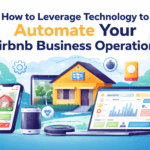
Picture this: it’s 11 PM, a guest just messaged asking for the Wi-Fi password, your cleaner forgot to confirm tomorrow’s turnover, and you’re manually refreshing three different booking calendars. Sound familiar? For hosts juggling even two or three properties, this chaos is the norm. Yet the tools to automate your Airbnb business have matured rapidly, and the hosts who adopt them are pulling ahead in both revenue and quality of life.
Short-term rental technology has quietly transformed from a handful of clunky apps into a sophisticated ecosystem. Algorithms now fine-tune your nightly rate while you sleep. Messaging bots greet guests with warmth and precision that rivals a concierge desk. Companies like MasterHost built their entire operation around these innovations, proving that smart automation actually enhances the guest experience rather than cheapening it. Here’s a practical look at the tools worth your attention, whether you manage one listing or twenty.
Algorithmic Pricing That Thinks Faster Than You Can
Flat-rate pricing is the silent profit killer in short-term rentals. Charging $175 every night sounds simple, but simplicity has a cost. You’re practically giving away peak weekends and scaring off budget travelers on quiet midweek nights.
Platforms such as PriceLabs, Beyond Pricing, and Wheelhouse crunch thousands of data points per hour: comparable listings, local event calendars, seasonal booking curves, and even last-minute demand spikes. A Vancouver condo, for instance, could see its suggested rate climb 40% during the Vancouver International Film Festival, only to settle back down on a foggy Monday in October.
Getting started requires roughly 60 minutes. Plug in your listing, define your floor and ceiling rates, and the software takes over. Hosts who make this single switch frequently report revenue gains between 10% and 40% within their first quarter. That return alone funds every other piece of technology on this list.
Guest Messaging on Autopilot (Without Sounding Robotic)
Response speed matters more than most hosts realize. Airbnb’s search algorithm actively favors listings where the host replies within one hour, pushing faster responders higher in results. But no one wants to be tethered to their phone around the clock.
That’s where platforms like Hospitable, Host Tools, and Guesty step in. You craft message sequences for each milestone of a stay: confirmation, pre-arrival details, a friendly mid-trip nudge, checkout instructions, and a review prompt. The software fires each one at precisely the right moment, weaving in personalized details like the guest’s first name and their unique door code.
What separates these tools from a crude autoresponder is contextual awareness. When a guest writes something unexpected, say a question about late checkout or pet policies, the system pauses its sequence and alerts you. You handle the personal touch; the software handles everything predictable. That partnership between human warmth and machine reliability is what consistently produces five-star feedback.
Unified Channel Management: No More Tab Juggling
Cross-posting your property on Airbnb, Vrbo, and Booking.com is a proven way to boost occupancy. It also introduces a logistical headache that keeps hosts awake at night: the dreaded double booking.
Channel management software like Hosty, Lodgify, Hostaway, and Guesty eliminates that risk by synchronizing calendars, pricing, and availability across platforms in real time. The moment a reservation lands on Vrbo, your Airbnb and Booking.com calendars lock those dates instantly.
Most of these tools bundle a unified inbox as well. Rather than hopping between three apps to answer guest questions, everything funnels into a single screen. Hosts running more than two listings routinely describe this feature as the one that gave them their evenings back.
Physical Automation: Hardware That Works While You’re Away
Software handles the digital side, but a handful of smart devices can automate the physical parts of hosting just as effectively.
- Keyless entry systems from brands like August, Yale, or Schlage Encode let you generate time-sensitive access codes for every reservation. Codes activate at check-in and deactivate at checkout, which means no more hiding keys under doormats or racing across town for a handoff.
- Decibel monitoring devices such as Minut and NoiseAware measure ambient sound levels without ever recording conversations. If noise crosses your preset threshold, you receive an instant alert, giving you time to intervene before neighbors file a complaint.
- Connected thermostats from Ecobee or Nest allow you to program energy-saving settings between guests, then warm or cool the space before the next arrival. Hosts operating in Vancouver’s damp, chilly winters commonly shave $30 to $60 off monthly heating bills per property with this one upgrade.
At $100 to $300 per device, each pays for itself within a few months through lower utility bills, fewer guest friction points, and reduced manual coordination.
Turnover Logistics Without the Group Texts
Ask any multi-property host what drains the most energy, and the answer is almost always cleaning coordination. Confirming availability, chasing photo proof, restocking supplies, all while back-to-back bookings leave a two-hour window between guests.
Turnover platforms like TurnoverBnB, Properly, and Breezeway trigger an automatic notification to your cleaning crew the instant a checkout occurs. Cleaners open the app, follow a custom checklist, snap verification photos, and mark the job done. You see a green checkmark on your dashboard without typing a single message.
Advanced features push this even further. Some tools auto-assign the nearest available cleaner, monitor supply levels for essentials like linens and toiletries, and generate detailed inspection logs. For anyone looking to scale beyond three or four properties, this layer of coordination is what separates a side hustle from a real business.
Accounting That Runs in the Background
Few things cause more host headaches than tax season. Platform payouts arrive on unpredictable schedules, cleaning fees blur with supply costs, and that emergency plumber receipt from August is buried somewhere in your email.
Financial tools like Stessa, Ownerly, and QuickBooks Self-Employed integrate directly with booking platforms. Every payout, expense, and receipt lands in its proper category without manual entry. Come year-end, your accountant receives organized reports instead of a frantic spreadsheet cobbled together over a weekend.
Beyond taxes, these dashboards reveal which properties actually earn their keep, where spending is creeping up, and whether a particular listing deserves continued investment or a strategic exit.
The Practical Path Forward
Resist the urge to implement everything in a single weekend. Pick the bottleneck that frustrates you most and solve it first.
Bleeding revenue on flat pricing? Start there. Drowning in repetitive guest messages? Automate that channel. Cleaning coordination consuming your Sunday mornings? Fix that layer before anything else.
The compounding effect is real. Hosts who stack pricing, messaging, and turnover automation typically cut their per-property workload from roughly 15 hours a week down to fewer than five. Those reclaimed hours can fuel portfolio growth, property upgrades, or simply the freedom that attracted you to Airbnb hosting in the first place.
No piece of software will replicate the personal hospitality that earns glowing reviews. What technology will do is strip away the repetitive operational weight so you can focus your energy where it genuinely counts: making every guest feel welcome.