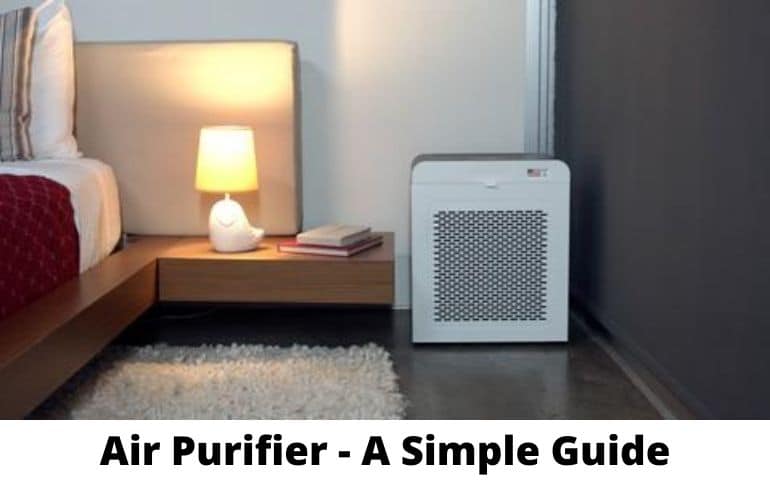
Air Purifiers: A Simple Guide
Are you looking to beat allergies or dust? Or maybe you want to reduce secondhand smoke in your apartment? Whatever the case, you’ve come to the right place.
According to the World Health Organization, more than 4 million people die yearly from indoor air pollution. Smoking or being exposed to secondhand smoke contributes to many of these cases. According to the World Health Organization, more than 4 million people die yearly from indoor air pollution. Smoking or being exposed to secondhand smoke contributes to many of these cases. Investing in air purifiers designed specifically for smoke removal, like those from Molekule, which use PECO technology to capture and destroy smoke particles, odors, and harmful airborne chemicals, can significantly improve indoor air quality and help protect your respiratory health.
Air Purifiers: A Simple Guide
Familiar Sources of Indoor Air Pollution
-
Fumes from cleaning supplies, furniture, and carpeting (chemical gas)
-
Dust from the forced-air heating and air conditioning system
-
Pets and dust mites create dander and other allergies, as does dust pollen
-
High humidity, water, or mould spores, mould, and mildew
-
Smoking
-
Vehicle emissions near a highway or garage
-
Radon
-
Printers
-
Cooking
-
Gasoline, paint, and other off-gassing chemicals
Types of Air Purifiers
Air purifiers come in several designs, each with its own method of cleaning the air and specific advantages. Knowing the differences helps you choose the right one for your home, office, or other indoor spaces. Let’s explore the main types in detail:
1. HEPA Technology Air Purifier
HEPA stands for High-Efficiency Particulate Air, a standard that guarantees the filter can capture at least 99.97% of airborne particles as small as 0.3 microns. This includes dust, pollen, pet dander, mould spores, PM2.5 particles, bacteria, and even some viruses.
HEPA filters work like a finely woven net, trapping contaminants as air passes through. This makes them ideal for allergy sufferers, people with respiratory conditions, and anyone who wants significantly cleaner indoor air.
However, HEPA filters are not designed to trap gases, odours, or chemical vapours. That’s why many modern HEPA air purifiers combine this technology with activated carbon layers to target pollutants that HEPA alone cannot remove.
✅ Best for: Dust, allergens, smoke particles, and germs
⚠ Limitation: Doesn’t remove gases or odours without additional filters
2. Activated Carbon Air Purifier
Activated carbon, also called activated charcoal, is made from carbon-rich materials treated to create millions of tiny pores. These pores act like sponges, adsorbing gases, chemicals, and odours from the air.
They’re particularly effective at removing volatile organic compounds (VOCs)—harmful chemicals that can off-gas from paint, cleaning agents, carpets, furniture, and even cooking fumes. They are also excellent for neutralizing cigarette smoke, pet smells, and kitchen odours.
For people with Multiple Chemical Sensitivities (MCS), activated carbon filters can make a big difference by reducing irritants like formaldehyde and strong fragrances.
✅ Best for: Odours, chemical fumes, VOCs, and smoke
⚠ Limitation: Doesn’t trap dust or allergens unless combined with HEPA
3. UV (Ultraviolet) Air Purifier
UV air purifiers use UV-C light—a shortwave form of ultraviolet radiation—to destroy the DNA or RNA of microorganisms, making them harmless. This process is called UV Germicidal Irradiation (UVGI).
They are effective against bacteria, viruses, and mould spores. However, UV light alone cannot remove particles like dust or allergens. That’s why UV purifiers are often used alongside HEPA filters to provide dual protection—filtering particles first, then sterilizing any microbes that pass through.
✅ Best for: Killing germs, viruses, and mould spores
⚠ Limitation: Doesn’t remove particles or odours on its own
4. Negative Ion Air Purifier
Negative ion purifiers release negatively charged ions into the air. These ions attach to airborne particles, causing them to clump together and fall onto surfaces, making them easier to clean.
Some models use a built-in collection plate to attract the charged particles, while others simply let them settle out of the air. Negative ions can create a fresh, “mountain air” feeling indoors.
However, some ionizers can produce ozone as a by-product, which can be harmful in high concentrations. It’s important to choose an ozone-free model for safety.
✅ Best for: Dust, pollen, and airborne allergens
⚠ Limitation: May produce ozone; particles may settle on surfaces instead of being removed
5. Ozone Air Purifier
Ozone generators release ozone gas (O₃), which can neutralize certain odours and kill microorganisms. While this sounds beneficial, ozone is a lung irritant and can be dangerous when inhaled in significant amounts.
These devices are sometimes used in unoccupied spaces for deep cleaning after smoke damage or mould infestations, but they are not recommended for daily home use.
✅ Best for: Specialized, professional cleaning in empty spaces
⚠ Limitation: Unsafe for occupied rooms; can damage lung tissue
Final Thoughts
Choosing the right air purifier depends on what you want to remove from your indoor air:
-
For allergies and dust: HEPA filter
-
For odours and chemicals: Activated carbon
-
For germs and viruses: UV-C technology
-
For fresh, particle-free air: Negative ion (ozone-free)
-
For extreme cases: Ozone (only in unoccupied spaces)
Combining technologies—such as HEPA + Activated Carbon + UV—often delivers the most complete air-cleaning performance, ensuring your air is not only clean but also safe to breathe.