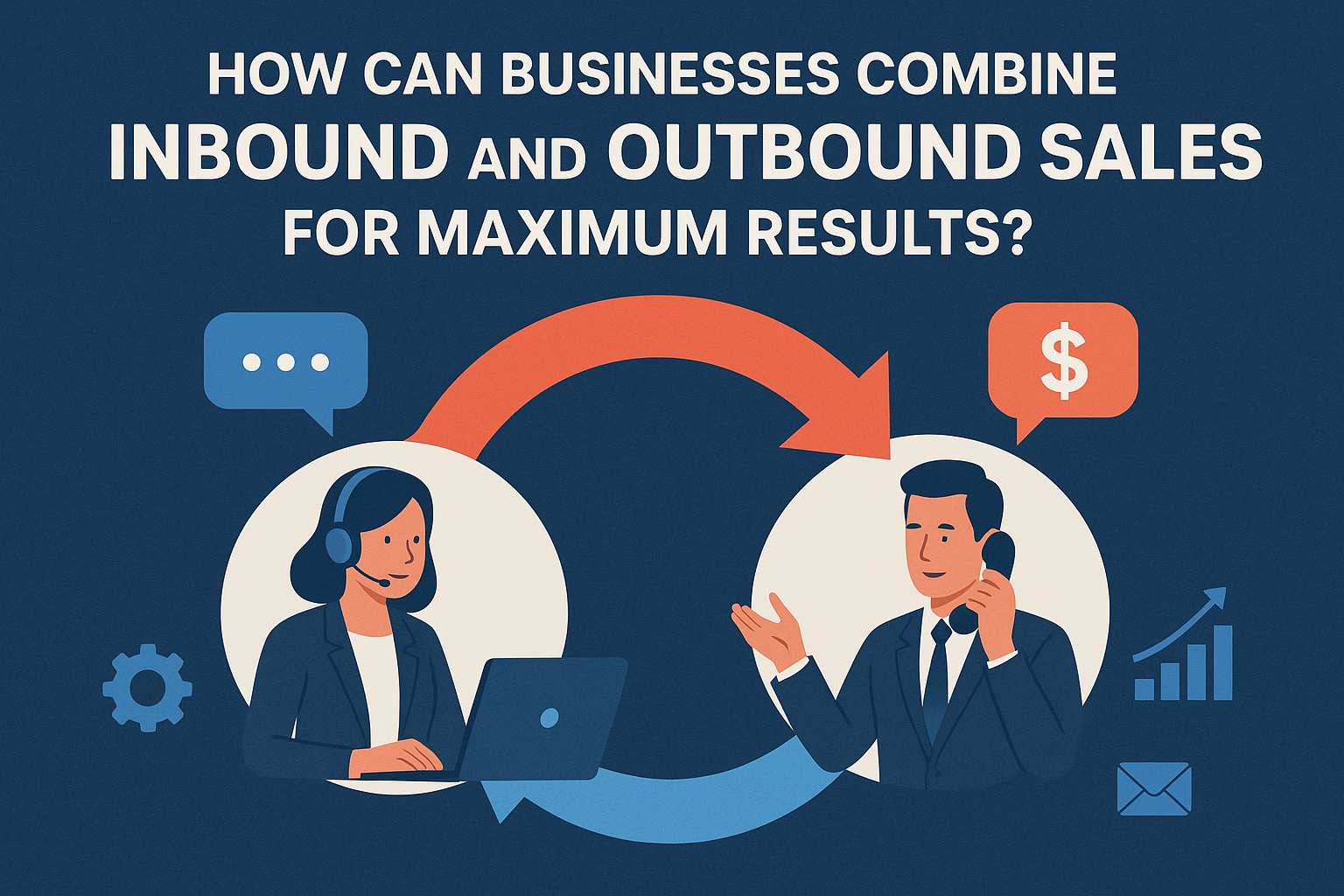
How Can Businesses Combine Inbound and Outbound Sales for Maximum Results?
- 1 Understanding the Core Difference Between Inbound and Outbound Sales
- 2 The Benefits of Combining Inbound and Outbound Sales
- 3 Practical Strategies for Integrating Inbound and Outbound Sales
- 3.1 1. Use Inbound Data to Drive Outbound Targeting
- 3.2 2. Leverage Content Assets in Outbound Conversations
- 3.3 3. Align Sales and Marketing Teams with a CRM
- 3.4 4. Blend Event Marketing with Social Media Campaigns
- 3.5 5. Migrate Some Field Sales to Video Meetings
- 3.6 6. Personalize Outbound Follow-Ups Based on Inbound Behavior
- 3.7 Common Pitfalls and How to Avoid Them
- 3.8 Measuring Success: Metrics to Track
- 3.9 Case Example: Combining Strategies for Higher ROI
- 4 Final Thoughts
In a fast-paced and competitive marketplace, relying solely on one sales approach can limit growth potential. According to HubSpot, 29% of marketers actively invest in content marketing to attract inbound leads, while Salesforce reports that 92% of all customer interactions still happen over the phone—an outbound channel. These figures highlight a simple truth: both inbound and outbound sales remain highly relevant. The key to unlocking greater success lies in combining the strengths of each into a cohesive, data-driven strategy.
This article explores how businesses can achieve maximum results by strategically integrating inbound and outbound sales, creating a system that not only captures interest but also converts prospects into loyal customers.
Understanding the Core Difference Between Inbound and Outbound Sales
Before blending the two approaches, it’s important to understand their fundamental differences:
- Inbound Sales: Customers find you through valuable, relevant content, SEO, social media, and other channels that answer their needs or questions. It’s often considered less intrusive and attracts more qualified leads.
- Outbound Sales: Your business initiates contact with potential customers through calls, emails, advertising, events, or direct outreach. This method enables you to target specific demographics and expand your market reach proactively.
While inbound nurtures interest, outbound accelerates engagement. When combined, they create a powerful feedback loop where inbound generates warm leads, and outbound closes them with personalized, timely interaction.
The Benefits of Combining Inbound and Outbound Sales
Merging inbound and outbound methods creates a synergy that improves overall performance in several key ways:
- Maximized Lead Conversion Rates: Inbound marketing attracts prospects already interested in your offerings, while outbound sales provides the push they need to commit. This shortens the sales cycle and increases close rates.
- Stronger Personalization: Inbound builds awareness and trust, but outbound allows for tailored one-on-one conversations that address individual needs and pain points.
- Expanded Market Reach: Outbound lets you target new demographics that might not find you organically, while inbound ensures you stay visible and credible once awareness is established.
- Consistent Brand Messaging: A unified strategy ensures that your content, outreach, and follow-ups all work toward the same positioning and messaging goals.
Practical Strategies for Integrating Inbound and Outbound Sales
1. Use Inbound Data to Drive Outbound Targeting
Your inbound marketing activities—content downloads, form fills, website visits—produce valuable behavioral data. Sales teams can use this information to prioritize outbound efforts, reaching out to leads who have already engaged with your brand.
Example: If a prospect downloads a whitepaper on industry trends, an outbound call or email can reference that resource and offer a relevant solution.
2. Leverage Content Assets in Outbound Conversations
High-quality, relevant content isn’t just for inbound campaigns—it can strengthen outbound interactions too. Sales reps can share blog articles, case studies, or videos during follow-up to reinforce credibility and provide additional value.
Tip: Maintain a content library organized by buyer persona and stage in the sales funnel so reps can quickly deliver tailored materials.
3. Align Sales and Marketing Teams with a CRM
A shared CRM platform enables both inbound and outbound teams to track interactions, avoid duplicating efforts, and nurture leads cohesively. Platforms like HubSpot, Salesforce, or Zoho CRM allow for full visibility of each lead’s journey.
Benefit: Streamlined communication ensures that prospects receive consistent, non-repetitive messaging.
4. Blend Event Marketing with Social Media Campaigns
Tradeshows, networking events, and webinars are prime opportunities for outbound engagement. Amplify their impact by running inbound campaigns on social media before, during, and after the event.
- Before: Announce your attendance and offer meeting slots.
- During: Share live updates, interviews, or behind-the-scenes content.
- After: Follow up with attendees using personalized emails or social DMs referencing the event.
5. Migrate Some Field Sales to Video Meetings
Video conferencing tools like Zoom, Microsoft Teams, or Google Meet allow outbound teams to connect with more prospects in less time. This method saves travel costs, increases scheduling flexibility, and complements inbound efforts by offering a more personal touch than email.
Pro Tip: Use insights from inbound lead scoring to prioritize who gets one-on-one video consultations.
6. Personalize Outbound Follow-Ups Based on Inbound Behavior
Outbound follow-up should build on, not repeat, what a lead already knows. For example, if a prospect attended your webinar on cost-saving strategies, reference key points from the session in your outreach and offer a one-on-one discussion to go deeper.
Common Pitfalls and How to Avoid Them
While integrating inbound and outbound sales is powerful, businesses often make mistakes that dilute results:
- Repeating the Same Messaging: Repetition can bore or frustrate prospects. Always add new insights with each touchpoint.
- Overloading Prospects with Information: Keep communications concise and relevant, especially in outbound follow-ups.
- Ignoring Lead Nurturing: Not every lead is ready to buy immediately. Use inbound drip campaigns to keep prospects engaged until they’re sales-ready.
- Poor Coordination Between Teams: Sales and marketing misalignment can lead to inconsistent branding or lost opportunities. Regular strategy meetings can keep everyone on the same page.
Measuring Success: Metrics to Track
To gauge the effectiveness of a combined strategy, monitor:
- Lead-to-Customer Conversion Rate: How many inbound leads close through outbound efforts.
- Sales Cycle Length: The time from first touch to sale.
- Engagement Rates: Email open/click rates, call connect rates, and social media interactions.
- Content Utilization: How often sales reps use inbound content in outbound communications.
- ROI by Channel: The revenue generated relative to spend for both inbound and outbound tactics.
Case Example: Combining Strategies for Higher ROI
A mid-sized SaaS company implemented a dual approach: inbound marketing through SEO-rich blog content, and outbound sales targeting prospects who engaged with that content. Leads who downloaded case studies were prioritized for outbound calls.
Within six months, the company reported:
- A 35% increase in lead conversion rates.
- A 22% reduction in the average sales cycle.
- A 40% higher ROI compared to using inbound alone.
This success stemmed from tight integration between teams, data-driven targeting, and consistent follow-up.
Final Thoughts
Inbound and outbound sales each have unique strengths, but their true power emerges when they’re combined. Inbound attracts and educates, outbound engages and closes. Together, they create a seamless journey from curiosity to commitment. By integrating inbound and outbound sales within a unified CRM, personalizing follow-ups, and aligning teams, businesses can increase conversions, shorten sales cycles, and achieve maximum ROI.
If your business is ready to elevate its sales strategy, start by auditing your current processes, fostering collaboration between marketing and sales, and using technology to bridge the gap between attraction and conversion. The result will be a more resilient, responsive, and revenue-generating sales engine.