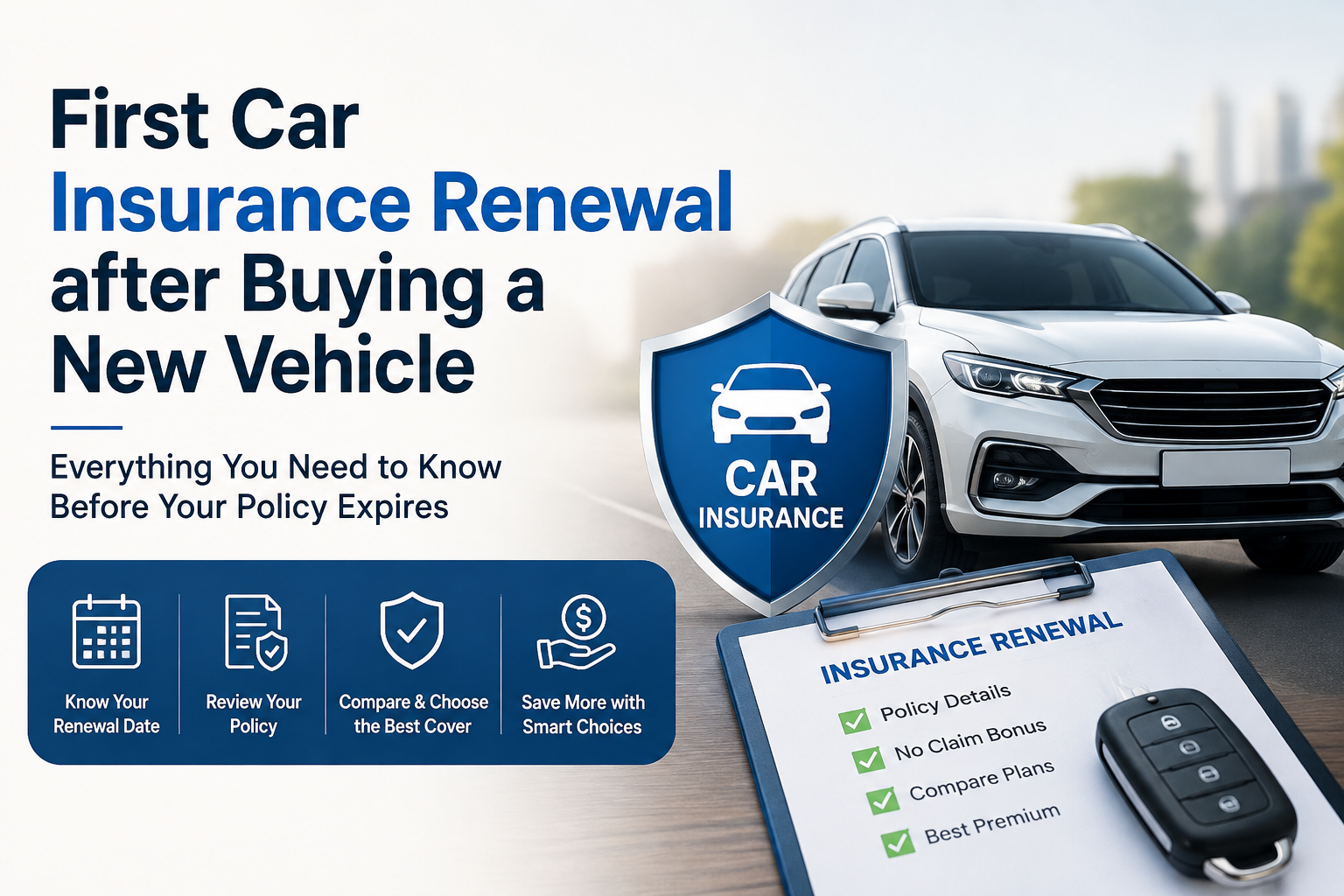
First Car Insurance Renewal after Buying a New Vehicle: What Needs Rechecking?
- 0.1 Recheck the Insured Declared Value (IDV)
- 0.2 Verify Your No-Claim Bonus (NCB)
- 0.3 Review Your Coverage Type
- 0.4 Reassess Your Add-On Covers
- 0.5 Check Your Deductible Amount
- 0.6 Verify Personal Accident Cover
- 0.7 Update Vehicle and Policyholder Details
- 0.8 Review Policy Exclusions and Coverage Limits
- 0.9 Check the Cashless Garage Network and Claim Process
- 0.10 Compare Renewal Quotes before Renewing
- 1 Conclusion
The first insurance renewal is an important checkpoint in a new car’s ownership journey. A year of actual driving can reveal whether the original policy still suits your daily use, parking conditions and financial comfort. Renewal should therefore involve more than accepting the existing terms without review.
By checking the cover, vehicle details and claim-related services carefully, you can keep the policy relevant while avoiding gaps, unsuitable add-ons, incorrect information and unnecessary surprises during future journeys, claims and unexpected repairs.
Recheck the Insured Declared Value (IDV)
IDV represents the insured value used for total loss or theft claims and is fixed at the beginning of the policy period. Check whether the proposed IDV reasonably reflects the vehicle’s current value before you renew car insurance online.
- Avoid selecting an unusually low IDV merely to reduce premium.
- Check the value of declared accessories.
- Review how the chosen IDV affects protection.
Verify Your No-Claim Bonus (NCB)
A claim-free first year may make you eligible for a no-claim bonus on the own-damage premium. Confirm that the renewal quote records it correctly, particularly when changing insurers.
- Match the NCB with your claim history.
- Do not claim a bonus unsupported by policy records.
- Keep the previous policy and renewal notice available.
- Seek correction before completing the renewal payment.
Review Your Coverage Type
New cars generally receive long-term third-party cover, while their own-damage component may require renewal sooner. Check both relevant expiry dates carefully beforehand. Do not assume third party car insurance protects your vehicle against accidental damage.
- Confirm whether own-damage cover is continuing.
- Check the remaining third-party policy period.
- Consider broader protection based on vehicle use.
- Avoid accidental duplication of active insurance cover.
Reassess Your Add-On Covers
The add-ons selected at purchase may not remain equally useful after a year of ownership. Review each one against the car’s age, driving pattern, parking location and likely repair needs.
- Retain covers that address realistic ownership concerns.
- Check eligibility conditions for every carefully chosen add-on.
- Remove benefits that duplicate existing assistance services.
- Read claim limits, applicable conditions and deductibles carefully.
Check Your Deductible Amount
A deductible is the portion of an admissible claim that you pay. Your policy may include a compulsory deductible and, where selected, a voluntary deductible. Recheck both amounts carefully before renewal.
- Confirm each amount shown in the policy schedule.
- Assess whether a voluntary deductible remains affordable.
- Understand its effect on claim-time expenses.
- Avoid choosing it only for a premium reduction.
Verify Personal Accident Cover
Personal accident cover for the owner-driver should be checked rather than added automatically. The requirement may depend on ownership, driving status and whether adequate qualifying personal accident protection already exists elsewhere.
- Confirm whose name appears as the insured owner-driver.
- Check valid driving licence and ownership details.
- Review the cover shown in the schedule.
- Avoid paying twice for overlapping eligible protection.
Update Vehicle and Policyholder Details
Small data errors can create avoidable difficulties during policy servicing or claims. Check the renewal proposal and schedule against the registration certificate and your current contact information carefully.
- Verify registration, chassis and engine details.
- Correct the owner’s name and address.
- Update mobile number and email address.
- Declare approved accessories or vehicle modifications.
- Request endorsements for all relevant material changes.
Review Policy Exclusions and Coverage Limits
Policy wording can change across insurers and products, even when the broad cover appears similar. Read the renewal documents to understand when protection applies and what conditions must be followed.
- Review geographical and usage restrictions.
- Check limits attached to add-on benefits.
- Understand depreciation and consumable treatment.
- Note claim-intimation and document requirements.
- Consider every listed benefit subject to policy terms.
Check the Cashless Garage Network and Claim Process
A nearby cashless garage can make accident repairs more manageable, but network arrangements may change. Check current availability and understand how a claim must be reported.
- Search for authorised garages near regular travel routes.
- Confirm towing and roadside assistance procedures.
- Save the claim helpline and policy number.
- Understand survey, approval and repair steps.
- Keep reimbursement requirements as a backup.
Compare Renewal Quotes before Renewing
Renewal quotes may differ in IDV, deductibles, add-ons, service access and own-damage premium. Compare the complete offer rather than focusing on one figure alone.
- Use the same coverage inputs for a fair comparison.
- Check insurer and policy details carefully.
- Review claim support and garage access.
- Confirm the applicable NCB before payment.
- Choose policy terms that suit your present driving needs.
Conclusion
Your first car insurance renewal is a chance to correct assumptions made when the vehicle was new. Check the active policy periods, IDV, NCB, deductibles, add-ons and personal details before paying. Give equal attention to garage access, claim steps and policy conditions, since these shape the experience after an incident. A careful renewal decision keeps the cover aligned with how you now use, protect and maintain the car, subject to all applicable policy terms and stated eligibility requirements at renewal.