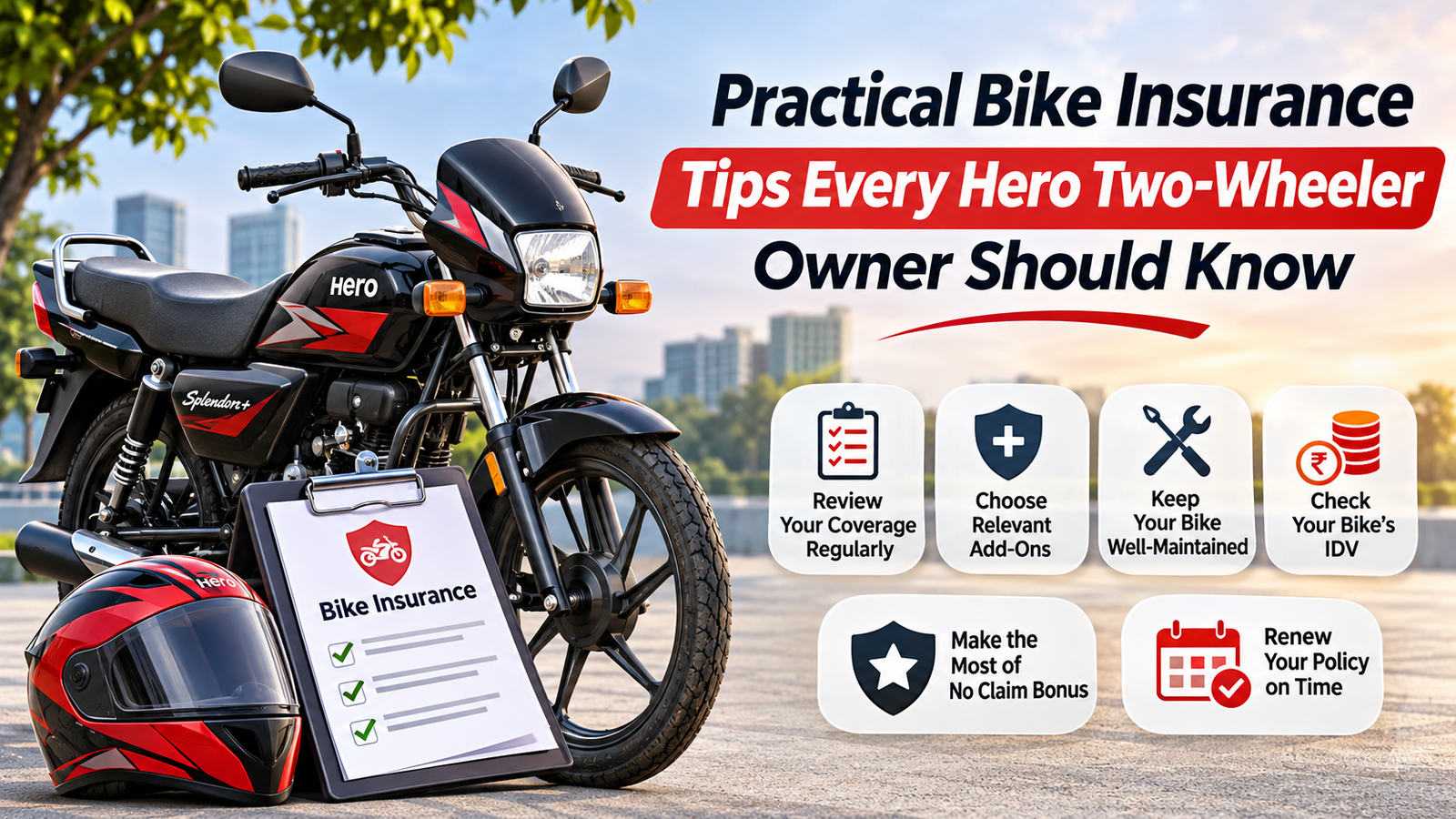
Practical Bike Insurance Tips Every Hero Two-Wheeler Owner Should Know
- 1 Does Your Insurance Policy Still Match Your Riding Habits?
- 2 Understand the Difference Between Third-Party and Comprehensive Insurance
- 3 Which Add-Ons Should You Consider for Your Hero Two-Wheeler?
- 4 Why Is Regular Bike Maintenance Important Alongside Insurance?
- 5 Why Should You Review Your Bike’s Insured Declared Value?
- 6 Check Your No Claim Bonus Before Renewal
- 7 Review Policy Exclusions, Deductibles, and Claim Conditions
- 8 Keep Your Vehicle and Personal Details Accurate
- 9 Compare Renewal Options Before Making a Decision
- 10 Why Timely Renewal Matters
- 11 Conclusion
Owning a Hero two-wheeler involves more than regular servicing, refuelling, and keeping the vehicle in good running condition. Insurance is another important aspect of responsible bike ownership, helping riders manage certain financial risks associated with accidents, theft, and other covered events. However, purchasing a policy and renewing it every year should not be the end of the process. Your insurance requirements can change as your riding habits, vehicle condition, and daily travel arrangements evolve.
A policy that suited your needs when you purchased your Hero motorcycle may not necessarily provide the most appropriate protection several years later. Changes in commuting distance, parking conditions, repair costs, and the age of your vehicle can influence the type of cover worth considering. Reviewing your two-wheeler insurance periodically helps you understand your existing protection, identify potential gaps, and make informed decisions when renewal approaches.
Whether you own a Hero Splendor, Passion, Glamour, Xtreme, or another model, understanding the important elements of your insurance policy can help you manage ownership more confidently.
Does Your Insurance Policy Still Match Your Riding Habits?
The way you use your Hero two-wheeler today may be considerably different from how you used it when you first purchased it. Perhaps you originally bought the bike for occasional trips but now depend on it for your daily commute. Alternatively, you may have changed jobs, moved to a different neighbourhood, or started travelling longer distances on weekends.
These changes can affect the practical considerations involved in selecting insurance coverage.
For example, someone who rides a motorcycle through congested urban roads every day may face different exposure to minor collisions than someone who uses a bike occasionally in a less crowded area. Similarly, a vehicle parked outdoors overnight may have different theft and weather-related exposure from one kept inside a secure garage.
Review your typical riding distance, regular routes, parking arrangements, and frequency of use before renewing your policy. Consider whether the existing coverage remains appropriate for your circumstances and whether any additional protection would be useful.
You should also ensure that your insurer has accurate information about your vehicle and its usage wherever disclosure is required. If you have made modifications to your motorcycle, check whether they need to be reported under the policy terms.
The objective is not necessarily to purchase more insurance every year. Instead, it is to ensure that the protection you pay for remains relevant to your actual requirements.
Understand the Difference Between Third-Party and Comprehensive Insurance
One of the most important decisions when reviewing Hero bike insurance is understanding the difference between third-party and comprehensive coverage.
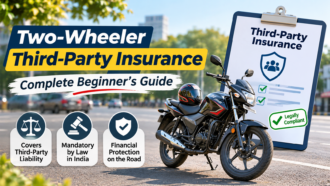
Third-party insurance covers specified legal liabilities arising from injury, death, or property damage caused to another party, subject to the applicable law and policy terms. In India, third-party liability insurance is mandatory for using a two-wheeler on public roads.
However, third-party insurance generally does not cover damage to your own motorcycle. If your Hero bike is damaged in an accident, you may have to pay for its repairs yourself unless another applicable source of compensation is available.
Comprehensive insurance combines third-party liability protection with coverage for damage to your own vehicle, subject to the policy’s terms, conditions, exclusions, and deductibles. Depending on the policy, covered events may include accidents, fire, theft, and certain natural or external calamities.
This distinction is particularly important for riders who depend on their motorcycles for daily transportation. An unexpected repair bill or the loss of a stolen vehicle can create an additional financial burden.
When comparing policies, examine the actual coverage rather than relying on the product name alone. Check the events covered, exclusions, deductibles, claim conditions, and applicable limits. These details determine how the policy may respond when you need to make a claim.
Which Add-Ons Should You Consider for Your Hero Two-Wheeler?
Optional add-ons can extend the protection available under an eligible insurance policy. Their availability, pricing, eligibility requirements, and benefits vary by insurer and policy type, so it is important to read the applicable wording before making a selection.
Zero Depreciation Cover
Vehicle components can lose value through depreciation over time. During a claim, depreciation on eligible replaced parts may affect the amount payable under a standard policy.
Zero depreciation cover is designed to reduce or eliminate the applicable depreciation deduction on covered parts, subject to the add-on’s terms and exclusions. This can be useful for owners who want to limit certain out-of-pocket expenses when repairing their motorcycles after an insured accident.
However, zero depreciation does not automatically mean that every repair expense will be reimbursed in full. Deductibles, excluded components, uncovered damage, and other policy conditions may still apply. The add-on may also have vehicle-age or claim-related restrictions.
Engine Protection Cover
Engine protection cover may provide additional protection against specified engine-related damage that would not ordinarily be covered under every standard policy. Depending on the wording, the cover may address certain losses associated with events such as water ingress or lubricant leakage following an insured incident.
This option may be worth examining if you regularly ride through waterlogged roads or live in an area that experiences heavy monsoon rainfall.
Nevertheless, engine protection is not a substitute for routine maintenance. Mechanical breakdown caused by ordinary wear and tear, neglect, or excluded circumstances may remain outside the scope of cover. Read the specific conditions carefully before purchasing this add-on.
Roadside Assistance
Roadside assistance can be useful when a motorcycle becomes immobilised during a journey. Depending on the package, services may include assistance for a breakdown, towing, flat tyres, battery-related problems, or other specified roadside emergencies.
This cover may be particularly valuable for riders who commute long distances or frequently travel outside their home city. Having access to assistance can make an unexpected breakdown easier to manage.
Before selecting it, check the service area, distance limits, number of permitted requests, and any additional charges. Also verify whether the assistance provider can support your motorcycle’s model and the locations where you usually travel.
Ultimately, the best add-ons are those that address realistic risks associated with your riding habits rather than simply increasing the number of benefits listed in your policy.
Why Is Regular Bike Maintenance Important Alongside Insurance?
Insurance and maintenance serve different purposes, but both contribute to responsible motorcycle ownership. Insurance provides financial protection against specified risks, while maintenance helps keep the vehicle mechanically sound and identifies developing problems before they become more serious.
Follow the servicing schedule recommended by Hero MotoCorp for your particular model. Pay attention to tyre condition, brake performance, engine oil, lights, battery health, chain adjustment, and other components specified in the owner’s manual.
Tyres deserve particular attention because tread wear and incorrect tyre pressure can affect grip, handling, and braking. Similarly, worn brake components or malfunctioning lights can compromise safety, especially during heavy traffic or night-time riding.
Regular maintenance also gives you an opportunity to identify unusual noises, fluid leaks, vibration, or other changes in performance. Addressing such problems promptly may help prevent further mechanical damage.
Keep service invoices, repair bills, and records of major component replacements in an organised location. These documents provide a useful history of the work performed on your Hero motorcycle and can help you track maintenance requirements over time.
It is important to understand that insurance generally does not cover ordinary servicing, routine wear and tear, or every mechanical failure. A well-maintained vehicle and a suitable insurance policy therefore complement each other without replacing one another.
Why Should You Review Your Bike’s Insured Declared Value?
The Insured Declared Value, commonly known as IDV, represents the value assigned to your vehicle for insurance purposes under the applicable policy framework. For a standard comprehensive policy, it is particularly relevant when determining compensation for a total loss or theft, subject to policy terms and conditions.
A motorcycle generally depreciates as it gets older. Consequently, its IDV usually decreases over time, although the actual amount depends on the applicable valuation method and policy arrangements.
Checking the IDV before renewing your Hero bike insurance helps you understand the insured value being used for your vehicle. It also allows you to compare quotations more meaningfully.
For example, two policies may offer similar-looking premiums but use different IDVs. A lower premium may appear attractive initially, yet the difference in insured value could affect the financial outcome in a total-loss or theft claim.
At the same time, selecting the highest available IDV without considering the insurer’s valuation rules is not necessarily the right approach. The declared value should be consistent with the applicable insurance guidelines and the vehicle’s relevant valuation criteria.
Ask the insurer for clarification if the IDV appears inconsistent with the vehicle’s age, model, or other relevant details. Understanding how the figure has been calculated is more useful than choosing a policy solely because its premium is lower.
Check Your No Claim Bonus Before Renewal
The No Claim Bonus, or NCB, is another important factor to examine when renewing an eligible motor insurance policy.
Under applicable motor insurance terms, NCB rewards eligible policyholders for claim-free experience by providing a discount on the own-damage premium. It is generally associated with the policyholder rather than being a transferable discount attached permanently to the motorcycle itself, and its application is subject to the relevant rules.
A claim during the policy period may affect the bonus available at renewal, depending on the circumstances and policy conditions. This makes it worthwhile to check the NCB shown in your renewal quotation instead of assuming that the figure is correct.
If you have maintained a claim-free record, confirm that the applicable discount has been reflected accurately. If you are switching insurers, check the documentation or declaration required to establish your eligible NCB.
You should also consider the financial implications of making a small claim. For minor damage, the repair cost, deductible, potential effect on NCB, and applicable claim conditions may all influence whether claiming is worthwhile.
This does not mean that you should avoid making a legitimate claim simply to preserve a discount. Instead, understanding the numbers helps you make a more informed decision based on your individual circumstances.
Review Policy Exclusions, Deductibles, and Claim Conditions
The benefits listed in an insurance brochure are only part of the picture. Policy exclusions, deductibles, and claim conditions are equally important because they determine the limits of the protection available.
A deductible is the amount that you may have to bear yourself when making an eligible claim. Depending on the policy, there may be a compulsory deductible and an additional voluntary deductible that you choose in exchange for a possible premium reduction.
A higher voluntary deductible can lower the premium, but it also increases your potential out-of-pocket expense when a claim occurs. Choose this option only after considering whether you could comfortably pay the deductible if necessary.
You should also understand common exclusions. Depending on the policy wording, these may include ordinary wear and tear, certain mechanical failures, consequential losses, or damage arising in circumstances specifically excluded by the contract.
Other important conditions can concern the validity of the driving licence, permitted vehicle use, disclosure of relevant information, and compliance with claim procedures.
Reading these sections before renewal helps prevent misunderstandings about what the insurer will and will not cover. If a clause is unclear, request an explanation from the insurer rather than relying on assumptions.
Keep Your Vehicle and Personal Details Accurate
Even a suitable insurance policy can create avoidable complications if important information is inaccurate or outdated.
Check the registration number, vehicle make and model, engine and chassis details where recorded, policyholder information, and other relevant particulars against your official documents. Confirm that any applicable changes have been reported to the insurer in accordance with the policy requirements.
If you have changed your address, review whether the updated information needs to be recorded. This is particularly relevant if your motorcycle is now regularly kept at a different location.
You should also ensure that the policy documents are accessible when needed. Keeping a digital copy on your phone and another secure copy elsewhere can make it easier to retrieve policy information during an emergency or when contacting the insurer.
Maintain the insurer’s customer service details and understand the procedure for reporting an accident, theft, or other insured event. Prompt reporting and compliance with the applicable claim process can help reduce administrative difficulties.
Compare Renewal Options Before Making a Decision
Renewal is an opportunity to evaluate whether your existing policy continues to offer appropriate coverage. Rather than accepting the first quotation you receive, compare available options using consistent criteria.
Start by checking the type of policy, IDV, own-damage protection, applicable NCB, deductibles, and included add-ons. Then examine the insurer’s claim process, repair arrangements, service network, and any relevant restrictions.
For example, a policy with a lower premium may have a different deductible, a lower IDV, or fewer optional benefits. Another policy may cost more but offer features that are more relevant to your circumstances.
Consider how repairs would be handled if your motorcycle were damaged. Where cashless repair facilities are offered, check which workshops participate in the insurer’s network and whether a suitable workshop is accessible to you.
Cashless settlement remains subject to the insurer’s procedures, claim approval, applicable limits, and policy conditions. It should not be interpreted as a guarantee that every repair expense will be covered without payment from your side.
Compare the total value of the coverage rather than focusing exclusively on the premium. The aim is to find a policy that balances suitable protection, practical claim support, and a reasonable cost.
Why Timely Renewal Matters
Allowing your two-wheeler insurance to expire can create unnecessary complications. Riding without the legally required third-party insurance can result in penalties under applicable law, while a lapse in own-damage coverage can leave you financially exposed to losses that occur during the uninsured period.
Start reviewing your policy before its expiry date. This gives you enough time to compare quotations, verify vehicle details, understand the renewal terms, and resolve any discrepancies.
If your policy has already expired, do not assume that coverage continues automatically. Contact the insurer to understand the renewal or inspection requirements and confirm when the policy becomes effective.
Keep in mind that an insurance policy does not necessarily cover an incident that occurred before the applicable coverage began. Accurate policy dates and confirmation of the effective period are therefore essential.
Planning renewal in advance is a straightforward way to avoid last-minute decisions and maintain continuity wherever possible.
Conclusion
Your Hero bike insurance policy should reflect your current riding habits, the value of your motorcycle, and the risks you want to manage. Reviewing the type of coverage, available add-ons, Insured Declared Value, No Claim Bonus, deductibles, and policy exclusions helps you understand the protection you already have and identify areas that may need attention.
Regular maintenance, accurate vehicle records, and timely renewal are equally important parts of responsible ownership. By comparing policies carefully and understanding the applicable terms before making a decision, you can choose coverage that suits your Hero two-wheeler without paying for benefits that do not meet your needs.
Ultimately, effective insurance planning is not simply about finding the cheapest premium or selecting the largest number of add-ons. It is about understanding the protection available, knowing its limitations, and keeping your policy aligned with the way you use your motorcycle.