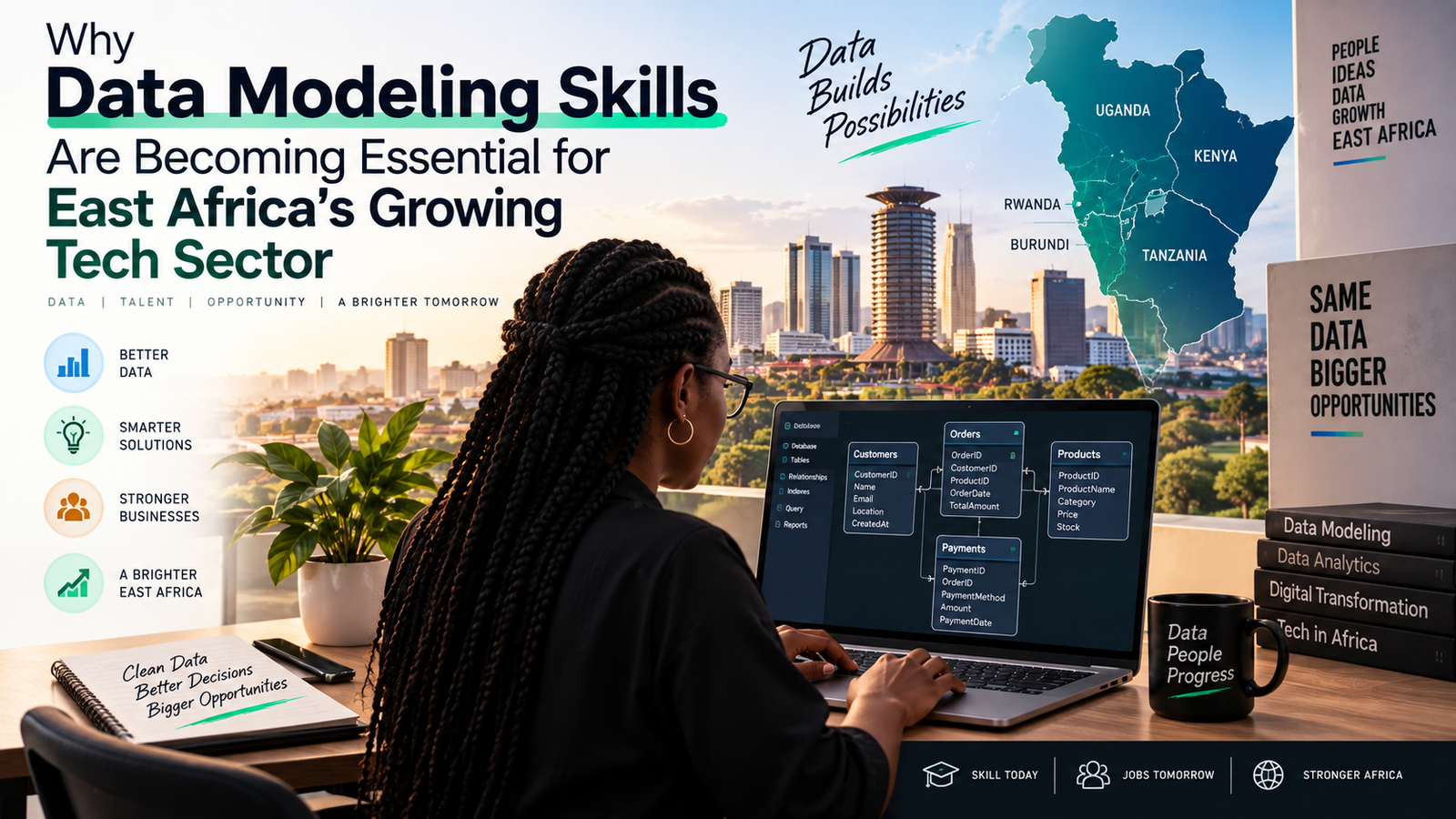
Why Data Modeling Skills Are Becoming Essential for East Africa’s Growing Tech Sector
Kampala’s tech scene has spent the last few years talking about AI. Fewer conversations have touched on something more basic: whether the data feeding those AI systems is actually structured well enough to be useful.
That gap is starting to show. Banks, telecoms, and fintech startups across the region are collecting more data than ever, but many still struggle to turn it into decisions. The bottleneck isn’t usually the tools. It’s the people who know how to shape raw data into something a business can query reliably.
The Data Boom Nobody Fully Prepared For
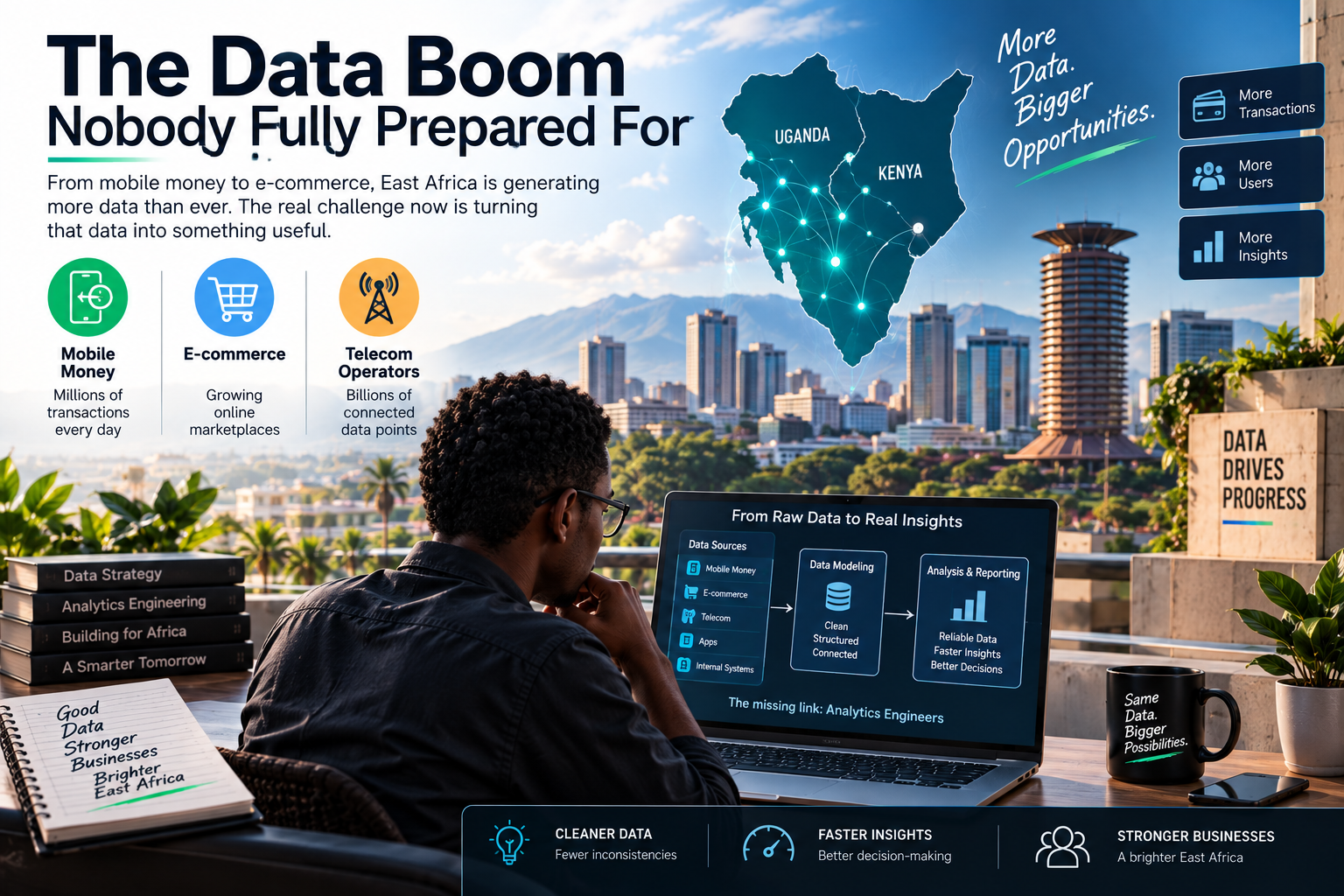
Mobile money platforms, e-commerce apps, and telecom operators across Uganda and Kenya now generate transaction volumes that would have been unthinkable a decade ago. Every tap, transfer, and click produces a record somewhere. The challenge has shifted from collecting data to organizing it in a way that supports fast, trustworthy reporting.
Local firms have responded by hiring data analysts and, increasingly, data engineers. But there’s a role in between those two that gets overlooked: the analytics engineer, someone who designs how data is modeled before anyone runs a query against it. Without that layer, dashboards can break, numbers may not match across teams, and analysts often spend more time reconciling data than analyzing it.
What Data Modeling Actually Involves

Writing a SQL query and designing the table structure that query runs against are two different skills. Data modeling is the discipline of building that structure: defining what a “row” represents, how tables relate, and how history gets tracked over time. Done well, it means a finance team and a marketing team can pull numbers from the same warehouse and get answers that actually agree.
In practice, this means decisions about star schemas versus more normalized designs, how to handle a customer’s changing subscription tier over time, and whether to use surrogate or natural keys for joins. These aren’t academic questions. They show up constantly in tools like dbt, which has become a standard part of the modern data stack across fintech and telecom data teams regionally and globally.
From Raw Tables to Usable Models
Most companies start with what’s often called the “swamp” stage: raw exported tables from whatever system produced them, sitting untouched in a warehouse. Turning that into something usable involves staging the data, cleaning it, then building intermediate and mart-level tables with clear grains and keys.
Skip that step, and reporting becomes fragile. A single ambiguous join can quietly double-count revenue for months before anyone notices. This kind of issue tends to happen more often than many teams realize.
The Skills Gap Behind the Job Postings
Job listings across East Africa’s tech sector increasingly ask for “data modeling experience” alongside SQL and Python. Yet many bootcamps and university programs still teach querying without teaching design. Graduates can write a SELECT statement but haven’t been taught how to structure fact and dimension tables, or when a slowly changing dimension pattern actually applies.
Education providers outside the region have started addressing this directly. Analytics Engineering, for instance, publishes a curriculum built specifically around Data Modeling Techniques, covering star schemas, fact and dimension design, and the trade-offs analysts face when structuring dbt projects. Whether local learners access that kind of material or something built regionally, the underlying skill gap is the same.
What This Means for Data Teams and Career Changers
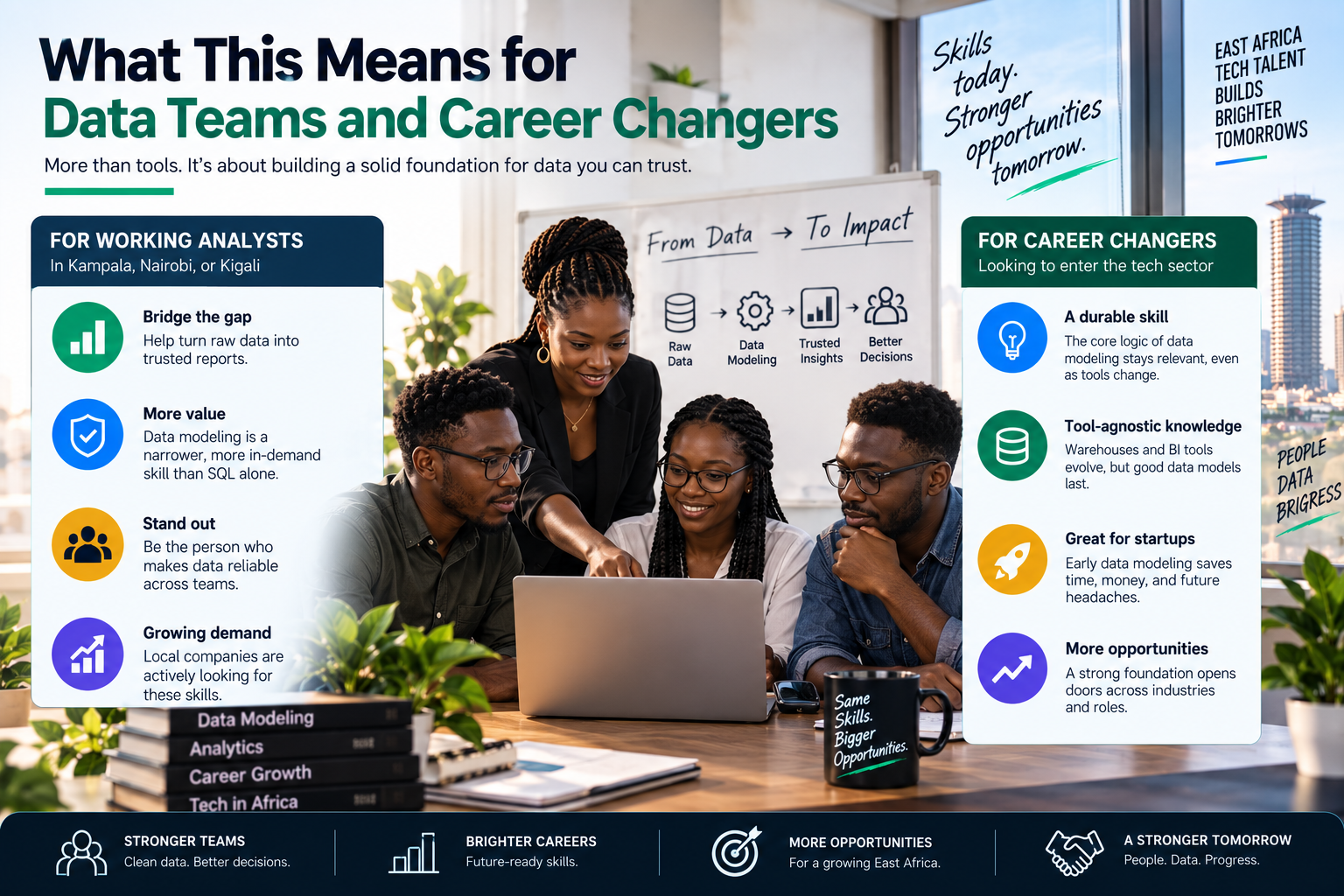
For working analysts in Kampala, Nairobi, or Kigali, this represents an opening. Companies need people who can bridge the gap between “we have data” and “we can trust this report.” That’s a narrower, more valuable skill set than general SQL proficiency alone.
For career changers eyeing the tech sector, data modeling can also be a more durable skill than tool-specific knowledge. Warehouses and BI tools change every few years. The logic behind organizing fact tables around business events, and dimensions around the entities that describe them, tends to hold up regardless of which platform a company adopts next.
Startups in particular stand to benefit from having at least one person on the team who thinks this way early. Retrofitting a data model after years of ad hoc reporting tends to be expensive. Doing it right from the start is often more cost-effective.
How to Choose a Path Into This Skill
Not everyone needs a formal course to pick this up. Some analysts learn modeling by working through open-source dbt projects and reading warehouse schema documentation. Others prefer structured practice with graded exercises and worked solutions, since modeling mistakes aren’t always obvious until a query returns the wrong number.
Whichever path someone chooses, a few questions are worth asking before committing time or money. Does the material cover real trade-offs, like when to normalize versus denormalize, rather than just theory? Does it include hands-on practice with an actual warehouse, not just slides? And does it address slowly changing dimensions, a pattern that trips up even experienced analysts the first few times they encounter it?
Short, structured practice tends to beat scattered reading. A single well-designed project, built end to end, usually teaches more than a dozen tutorials skimmed in isolation.
Final Thoughts
As East Africa’s fintech, telecom, and retail sectors keep generating more transactional data, the demand for people who can model it properly is likely to grow alongside the demand for analysts who can query it. Companies hiring today would do well to test for modeling judgment specifically, not just SQL fluency, when evaluating data candidates.
For professionals looking to stand out in a crowded analytics job market, building real modeling skill matters. That kind of skill, the kind that holds up under a messy production warehouse, may end up mattering more than any single tool on a resume.