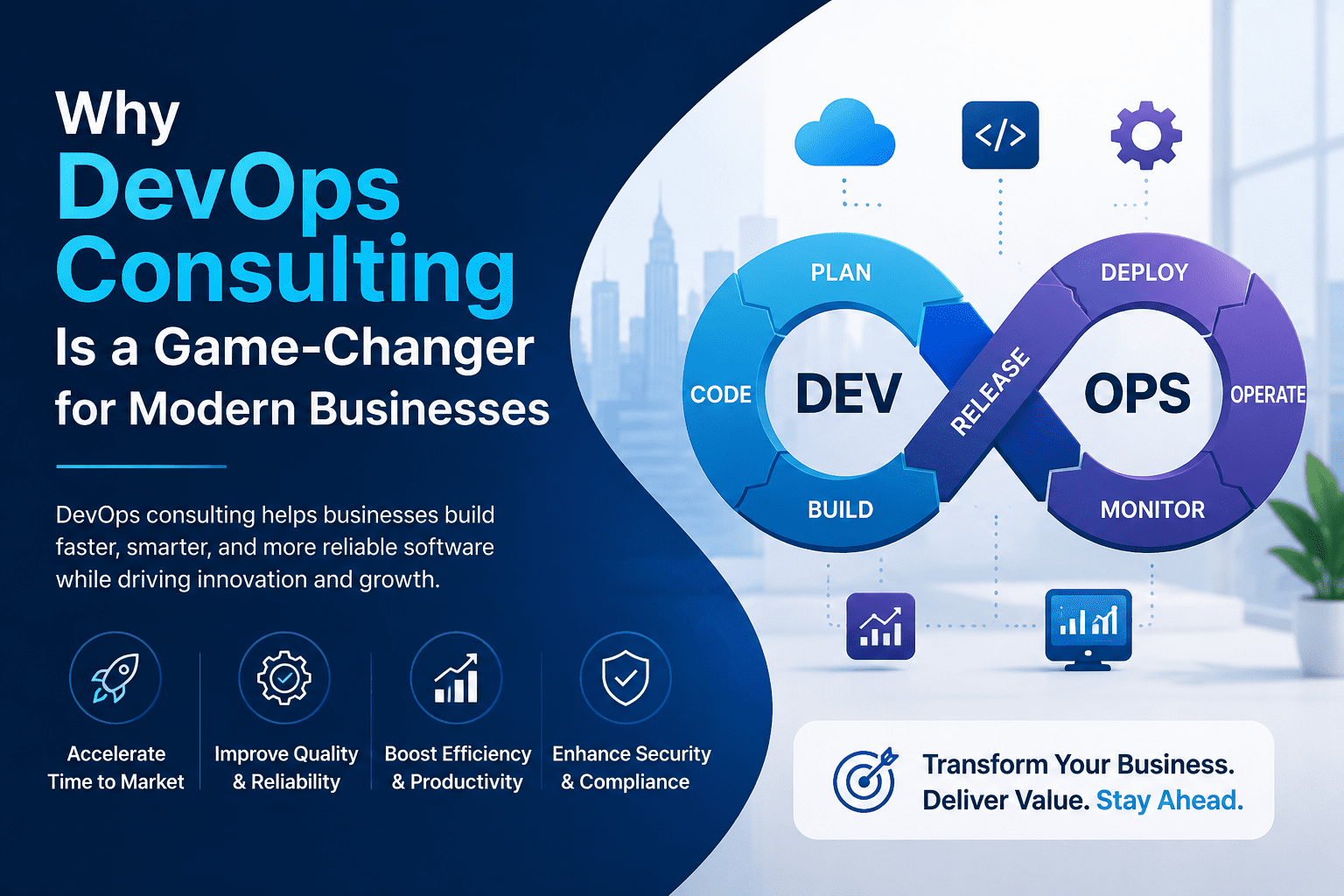
Why DevOps Consulting Is a Game-Changer for Modern Businesses
- 1 The Problem with Traditional IT Structures
- 2 How DevOps Changes the Way Businesses Operate
- 2.1 The Power of Automation and Continuous Delivery
- 2.2 Cloud Infrastructure and Scalability
- 2.3 Why Businesses Need DevOps Consulting
- 2.4 Improving Security and Reliability
- 2.5 The Business Impact of DevOps
- 2.6 Building a Future-Ready Organization
- 3 Conclusion
In today’s fast-moving digital economy, businesses can no longer afford slow software releases, unstable systems, or disconnected IT teams. Customers expect seamless digital experiences, rapid updates, and reliable services around the clock. Companies that fail to adapt often struggle with delays, rising operational costs, and declining customer trust. This is why DevOps has become one of the most valuable strategies for modern organizations looking to improve efficiency and stay competitive.
However, implementing DevOps successfully requires more than installing new tools or automating deployments. It demands a complete shift in culture, processes, and collaboration. This is where professional DevOps consulting plays a critical role in helping businesses transform their operations and achieve long-term success.
The Problem with Traditional IT Structures
Many organizations still operate with development and operations teams working separately. Developers focus on creating and releasing new features, while operations teams prioritize system stability and security. Although both groups have important responsibilities, the lack of collaboration often creates tension and inefficiency.
Developers may push updates quickly without understanding production risks, while operations teams may delay deployments due to concerns about downtime or failures. This disconnect leads to slow release cycles, communication gaps, repeated troubleshooting, and frustration across departments.
Over time, these inefficiencies affect the entire business. Product launches take longer, customer issues increase, and innovation slows down. In competitive industries, even small delays can result in lost opportunities and reduced market share.
How DevOps Changes the Way Businesses Operate
DevOps bridges the gap between development and operations by creating a culture of collaboration, shared responsibility, and continuous improvement. Instead of functioning as isolated departments, teams work together throughout the software lifecycle.
This approach encourages faster communication, quicker problem-solving, and better alignment between technical and business goals. DevOps practices also help organizations become more agile, allowing them to adapt rapidly to customer demands and market changes.
One of the biggest strengths of DevOps is its focus on automation. Repetitive manual tasks such as testing, deployment, infrastructure management, and monitoring can be automated, reducing errors and improving consistency across environments.
The Power of Automation and Continuous Delivery
Automation is one of the core foundations of DevOps. Modern DevOps environments rely heavily on Continuous Integration (CI) and Continuous Delivery (CD) pipelines to streamline software development and deployment.
With CI/CD practices, every code update is automatically tested and validated before reaching production. This significantly reduces the risk of deployment failures and allows businesses to release updates faster and more confidently.
Instead of waiting weeks or months for major software releases, organizations can deploy smaller updates continuously. This provides several advantages:
- Faster delivery of new features
- Improved product quality
- Reduced downtime
- Faster bug fixes
- Better customer experiences
- Lower operational risks
Businesses also gain the ability to respond quickly to industry changes and customer feedback, which is essential in highly competitive markets.
Cloud Infrastructure and Scalability
DevOps works exceptionally well alongside cloud technologies. Cloud-native infrastructure gives businesses the flexibility to scale resources based on demand while maintaining system reliability and performance.
Traditional infrastructure often requires expensive hardware investments and lengthy setup times. In contrast, cloud platforms allow organizations to scale services instantly, improve disaster recovery, and optimize costs more effectively.
Combined with DevOps practices, cloud infrastructure enables businesses to deploy applications rapidly, monitor performance in real time, and maintain high availability even during periods of heavy traffic.
This combination creates a more resilient and responsive business environment capable of supporting long-term growth.
Why Businesses Need DevOps Consulting
While many companies understand the benefits of DevOps, implementing it successfully can be challenging. DevOps transformation involves technical modernization, workflow redesign, cultural change, and ongoing optimization.
Without the right expertise, organizations often face common problems such as:
- Poor tool integration
- Incomplete automation
- Resistance to cultural change
- Security vulnerabilities
- Inefficient deployment pipelines
- Lack of measurable results
Experienced DevOps consultants help organizations avoid these obstacles by creating tailored strategies based on business objectives and technical requirements.
This is where a trusted partner like Itekako makes a difference. Their expert DevOps consulting service guides organisations through the transition, ensuring not only that the right tools and pipelines are deployed but also that teams adopt sustainable ways of working. The guidance of an experienced partner eliminates common pitfalls and accelerates the ROI of transformation.
Rather than relying on trial and error, businesses gain access to proven methodologies, industry best practices, and technical expertise that accelerate results and reduce risks.
Improving Security and Reliability
Modern DevOps practices also integrate security directly into the development lifecycle through a model often called DevSecOps. Instead of treating security as a final step before deployment, security testing and compliance checks are embedded throughout the entire process.
This proactive approach helps organizations identify vulnerabilities earlier, reduce security risks, and maintain stronger protection against cyber threats.
At the same time, continuous monitoring and automated alerting improve system reliability. Teams can quickly detect performance issues, respond to incidents faster, and minimize service disruptions before they impact customers.
For businesses that rely heavily on digital services, improved reliability directly contributes to customer trust and brand reputation.
The Business Impact of DevOps
DevOps is not simply an IT improvement strategy — it is a business growth driver. Organizations that adopt DevOps successfully often experience major improvements in productivity, operational efficiency, and overall performance.
Some of the key business benefits include:
- Faster time-to-market
- Reduced infrastructure costs
- Increased deployment frequency
- Higher employee productivity
- Better collaboration between teams
- Improved customer satisfaction
- Stronger system stability
- Enhanced innovation capabilities
By eliminating bottlenecks and improving operational agility, businesses can focus more on growth and innovation instead of constantly fixing technical problems.
Leadership teams also benefit from better visibility into development performance, system health, and operational metrics, allowing for smarter strategic decisions.
Building a Future-Ready Organization
As technology continues to evolve, businesses must become more adaptable and efficient to remain competitive. Organizations that continue relying on outdated workflows and manual processes risk falling behind faster-moving competitors.
DevOps helps companies build a future-ready foundation by combining automation, collaboration, scalability, and continuous improvement into a unified operating model.
The transition may seem complex, but with the guidance of experienced DevOps consultants, businesses can modernize their infrastructure, optimize workflows, and create a culture focused on innovation and agility.
Conclusion
Modern businesses need speed, reliability, and flexibility to succeed in an increasingly digital marketplace. DevOps provides the framework needed to achieve these goals by transforming the way teams collaborate, deliver software, and manage infrastructure.
However, successful DevOps adoption requires the right strategy, expertise, and leadership. Partnering with experienced consultants allows organizations to avoid costly mistakes and accelerate their transformation journey with confidence.
Companies looking to improve operational performance, reduce deployment risks, and scale more efficiently can benefit significantly from expert guidance. With the right DevOps consulting partner, businesses can unlock faster growth, stronger stability, and long-term competitive advantage.
If your company is ready to accelerate delivery, strengthen stability, and modernise its culture, contact Itekako today to learn how expert DevOps consulting can unlock the next stage of your growth.