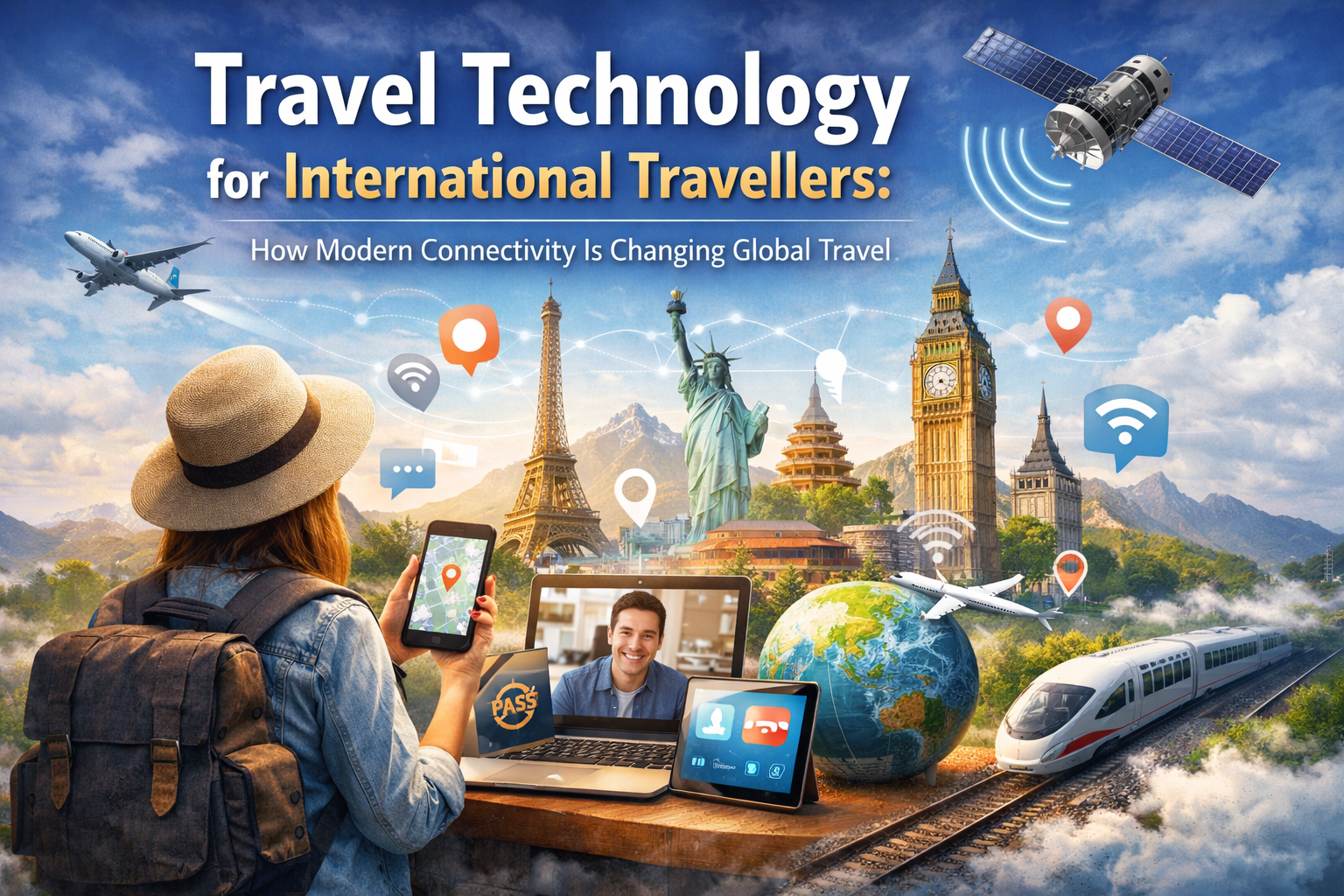
Travel Technology for International Travellers: How Modern Connectivity Is Changing Global Travel
- 1 The Traditional Connectivity Problem
- 2 The Digital Connectivity Shift
- 3 Understanding eSIM Technology for Travel
- 4 Advantages Over Physical SIM Cards
- 5 Practical Connectivity Scenarios
- 6 Current State of Mobile Internet Abroad
- 7 Looking Forward: The Future of Travel Connectivity
- 8 Connectivity as Infrastructure
International travel has always required careful planning, but staying connected while abroad has historically presented unique challenges. For today’s travellers—whether digital nomads working remotely, business professionals attending conferences, or tourists navigating unfamiliar cities—reliable mobile internet abroad isn’t just convenient. It’s essential infrastructure that shapes how we experience foreign destinations.
The ability to access maps, translation apps, ride-hailing services, and communication platforms has fundamentally changed what international travel looks like. Yet the technology enabling this connectivity has evolved dramatically over the past decade, moving from expensive roaming fees and physical SIM card swaps to more sophisticated digital solutions that activate with a few screen taps.
The Traditional Connectivity Problem
Anyone who travelled internationally before 2020 likely remembers the anxiety of landing in a foreign airport without data access. The traditional options were universally frustrating.
International roaming through your home carrier typically meant paying $10-15 per day for limited data, or facing bill shock when charges appeared weeks later. Many travellers simply kept their phones in airplane mode, transforming their primary communication device into an expensive camera.
Physical local SIM cards offered better rates but required multiple inconveniences. You needed to find a mobile store, navigate language barriers, present identification, and physically swap the tiny card—all while hoping you wouldn’t lose your home SIM in the process. Airport SIM card kiosks seemed convenient but charged premium prices for tourist-targeted packages.
The fundamental issue wasn’t just cost. It was the friction between wanting instant connectivity the moment you landed and the practical realities of acquiring it.
The Digital Connectivity Shift
Travel technology for international travellers has transformed alongside broader telecommunications changes. The smartphone itself created demand for constant connectivity, while global data infrastructure expanded to meet it.
Mobile network technology evolved from 3G to 4G LTE to 5G, increasing speeds and reducing costs. International agreements between carriers improved, though roaming remained expensive. Cloud services meant travellers could access files and applications from anywhere, assuming they had bandwidth.
More recently, the physical infrastructure of mobile connectivity itself began changing. The small plastic SIM cards that had been standard since the 1990s started giving way to embedded SIM technology, where the SIM functionality exists as programmable hardware within the device itself.
This shift from physical to digital represented more than technical specifications. It changed the entire user experience of international connectivity.
Understanding eSIM Technology for Travel
An eSIM (embedded SIM) is a tiny chip soldered directly into modern smartphones, tablets, and smartwatches. Unlike traditional SIM cards that you insert and remove, eSIMs are permanent hardware components that can be programmed digitally with carrier information.
For travellers, this means downloading a data plan the same way you’d download an app. You purchase connectivity for your destination, receive a QR code or activation code, scan it with your phone, and the eSIM profile installs automatically. No physical cards, no store visits, no swapping.
The technology works by storing multiple carrier profiles simultaneously. Your home number can remain active for calls and texts while a second eSIM profile handles data in the country you’re visiting. Most modern smartphones support this dual-SIM functionality.
For readers interested in the technical details, resources like how eSIM technology works explain the underlying protocols and standards that enable this digital transformation.
Advantages Over Physical SIM Cards
The advantages of eSIM travel technology extend beyond convenience, particularly for travellers who rely on mobile internet abroad for navigation, communication, and remote work.
Physical SIM cards require planning or accepting the first option available at your destination. If that airport kiosk charges twice the going rate, you’re paying it. eSIMs allow price comparison across multiple providers from your home, purchasing when rates are optimal.
The environmental angle matters too. Traditional SIM cards involve plastic manufacturing, packaging, and distribution networks. Digital eSIM profiles eliminate this physical supply chain.
Security improves as well. Physical SIM cards can be removed from stolen phones, but eSIMs require device access and authentication to modify. For business travellers handling sensitive communications, this matters.
Perhaps most significantly, eSIMs solve the multiple-destination problem. Travelling through several countries in one trip no longer means buying and swapping SIM cards repeatedly. You can maintain active plans for different regions simultaneously, or add new destinations as your itinerary changes. These modern connectivity tools represent a fundamental improvement in how travel technology for international travellers operates across borders.
Practical Connectivity Scenarios
The real impact of improved travel connectivity becomes clear in specific situations.
Navigation represents the most obvious use case. Gone are the days of printing Google Maps screenshots or purchasing expensive standalone GPS devices. Real-time navigation through unfamiliar cities, including public transit directions and walking routes, requires constant data access. When you’re trying to find your hotel at midnight in a neighborhood you’ve never visited, connectivity isn’t optional.
Ride-hailing apps like Uber, Grab, or regional equivalents have become primary transportation methods in many cities. These require working data to request rides, track drivers, and process payments. Without connectivity, you’re back to negotiating taxi fares in languages you may not speak.
For remote workers and digital nomads, stable mobile internet serves as backup connectivity when hotel or coworking wifi fails. Video calls, file uploads, and cloud application access need reliable bandwidth. Having a separate data connection independent of local wifi infrastructure provides crucial redundancy.
Messaging apps have replaced expensive international SMS. WhatsApp, Signal, and similar platforms require data but enable free communication with contacts worldwide. This matters for coordinating group travel, updating family about itinerary changes, or handling emergencies.
Regional connectivity needs vary significantly. Travellers visiting the United States encounter a complex carrier landscape dominated by three major networks—AT&T, Verizon, and T-Mobile—each with different coverage patterns across the country’s vast geography. Coverage in major cities like New York or San Francisco is comprehensive, but rural areas and national parks often experience significant gaps, making pre-arrival research essential for travellers planning cross-country trips or visits to remote destinations. Resources like the USA travel eSIM guide address these network-specific considerations and help travellers understand which carriers provide optimal coverage for their intended routes.
Current State of Mobile Internet Abroad
Today’s international connectivity landscape offers unprecedented options, though quality varies by destination.
Most modern smartphones support eSIM technology, including recent iPhone models (XS and later), Google Pixels, Samsung Galaxy devices, and others. Compatibility should be verified before purchasing eSIM plans, as older devices and some regional variants lack the necessary hardware.
Coverage has expanded significantly. Where eSIM providers once covered 50-60 countries, current networks span 150+ destinations. Rural coverage still lags behind cities, but major travel destinations generally offer solid connectivity.
Pricing has become competitive. Many eSIM providers charge $5-15 per gigabyte, with regional or global plans offering better rates for multi-country trips. This undercuts traditional roaming while matching or beating local SIM card prices.
Speed and reliability now rival domestic connections in most developed markets. 4G LTE is standard, with 5G available in major cities. The quality gap between tourist connectivity and resident connectivity has largely disappeared.
Looking Forward: The Future of Travel Connectivity
Several trends suggest where travel technology is heading.
Satellite connectivity integration will expand. Services like Starlink and emerging smartphone satellite features promise coverage in remote areas that lack cell towers entirely. This matters for adventure travel, maritime connectivity, and emergencies.
Blockchain-based roaming agreements could enable seamless carrier switching without user intervention, automatically selecting the optimal network in each location. Early trials of decentralized connectivity networks suggest this isn’t far off.
Wi-Fi 6E and future standards will improve public network performance, though security concerns around public wifi mean cellular data will remain preferable for sensitive applications.
The physical SIM card will likely disappear entirely within five years. Apple has already released iPhone models without SIM trays in certain markets, signaling the industry direction. As eSIM adoption reaches critical mass, the infrastructure supporting physical cards will gradually shut down.
AI-powered network optimization may automatically balance connectivity across available networks—cellular, wifi, and satellite—selecting the fastest and most cost-effective option moment by moment.
Connectivity as Infrastructure
Travel technology for international travellers has fundamentally shifted from luxury to necessity. Modern international travel assumes connectivity, with entire service ecosystems—from transportation to accommodation to dining reservations—built around the expectation that visitors have working data access.
The evolution from expensive roaming and physical SIM cards to instant digital connectivity represents more than technological progress. It reflects changing expectations about how we move through the world, how we navigate unfamiliar places, and how we maintain our digital lives across borders.
For travellers today, the question isn’t whether to stay connected abroad, but which technology will deliver that connectivity most efficiently. As eSIM adoption grows and alternatives emerge, international connectivity becomes increasingly seamless—exactly as essential infrastructure should be.