PDF vs Word for Business Reports: Which Format Works Better and Why
- 1 Understanding the Purpose of Each Format
- 2 PDF vs Word: Key Differences for Creating Business Reports
- 2.1 1. Layout and Design Consistency
- 2.2 2. Editing and Collaboration
- 2.3 3. Security and Compliance
- 2.4 4. Compatibility and Accessibility
- 2.5 5. File Size and Optimization
- 2.6 Why PDF Is the Preferred Format for Final Business Reports
- 2.7 When Word Still Has the Advantage
- 2.8 Automating PDF Report Generation in .NET
- 3 Conclusion: Choosing the Right Tool for Each Stage
In business environments where reports drive decisions and communication, choosing the right document format is more important than it seems. From financial summaries to project updates and performance reviews, the format you choose can shape how information is read, shared, and trusted.
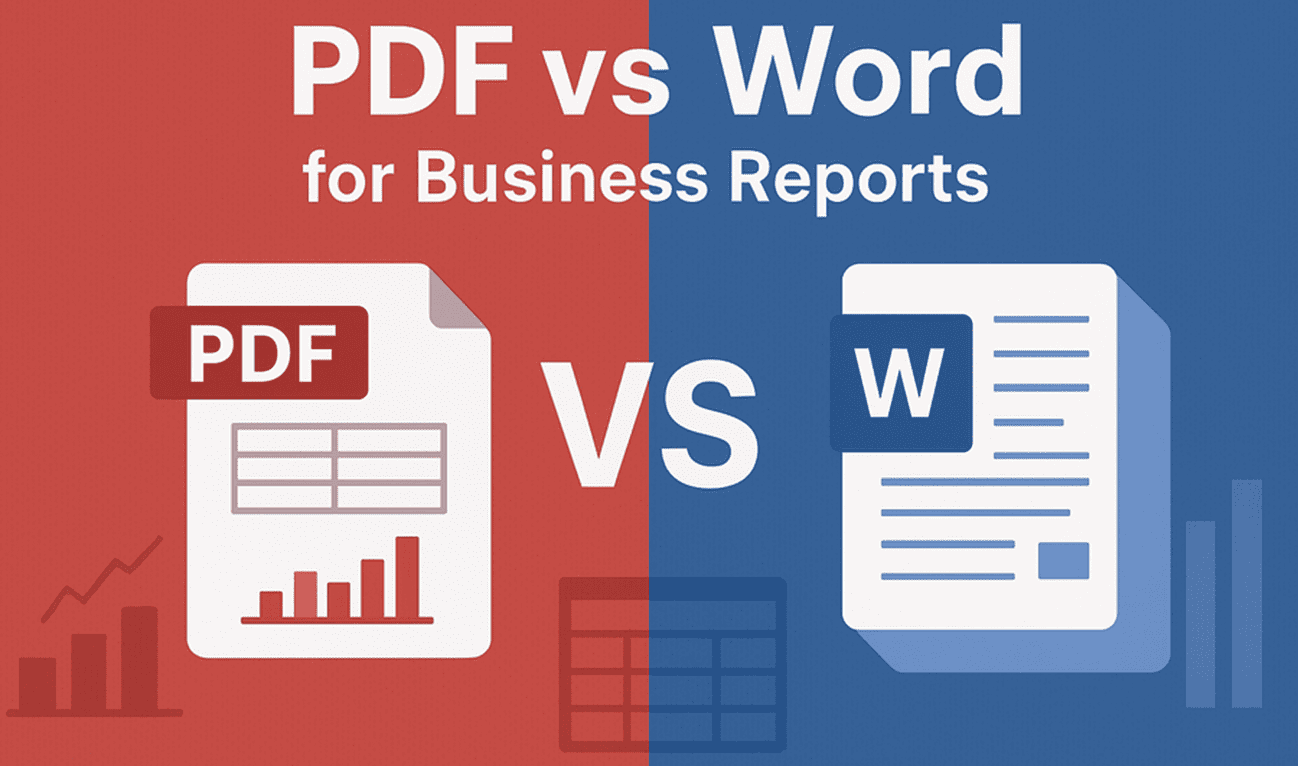
Two of the most common formats—PDF and Word—often compete for dominance. Word files are widely used for drafting and editing, while PDFs are known for their fixed layout and professional presentation. But when it comes to business reports, which one truly works better?
Let’s explore their key differences, strengths, and when to use each format to achieve the best results.
Understanding the Purpose of Each Format
Microsoft Word (DOC/DOCX) is designed for creation and collaboration. It allows users to easily edit, comment, and co-author documents in real time. Word’s flexible structure makes it ideal for reports that require frequent updates or team input.
On the other hand, the Portable Document Format (PDF) was developed to preserve document fidelity—ensuring your file looks the same on any device, operating system, or printer. PDFs lock in fonts, layouts, and graphics, providing a consistent viewing experience across platforms.
In short:
- Word = editable and flexible.
- PDF = consistent and professional.
PDF vs Word: Key Differences for Creating Business Reports
1. Layout and Design Consistency
One of PDF’s strongest advantages is its fixed layout. Once exported, everything—from images to tables—appears exactly as intended. In contrast, Word documents may shift formatting when opened on different systems, especially if fonts or templates are missing.
For reports that require a polished look—such as board presentations or client deliverables—PDF ensures uniformity and credibility.
2. Editing and Collaboration
Word excels in collaborative editing. With built-in track changes, comments, and cloud integration, teams can efficiently refine a draft. PDF files, by contrast, are typically used once editing is complete, though annotation tools can support review processes.
In short, Word is for creation, and PDF is for finalization.
3. Security and Compliance
PDFs provide superior security options, including password protection, digital signatures, and restricted access permissions. This makes them ideal for confidential business reports, contracts, and audit documents.
Word files, while editable, are more prone to accidental modifications or data leaks if shared externally.
4. Compatibility and Accessibility
Word documents require compatible software to open correctly, whereas PDFs can be viewed natively on almost any device. PDF also supports accessibility features like tagged text and screen reader compatibility, aligning with modern compliance standards.
5. File Size and Optimization
PDFs can be compressed efficiently without compromising quality—useful for large reports with images or charts. Word files can sometimes bloat due to embedded objects and version tracking.
Why PDF Is the Preferred Format for Final Business Reports
For most organizations, PDF has become the standard format for finalized documents. It conveys professionalism, ensures layout integrity, and safeguards information.
Whether sending a report to management or archiving project data, PDFs deliver a sense of permanence and reliability that Word files lack. Moreover, PDFs are widely accepted in legal, financial, and governmental contexts due to their unalterable nature.
When Word Still Has the Advantage
Despite PDF’s dominance, Word remains valuable during the drafting and collaborative stages.
- Teams can co-edit documents dynamically.
- Managers can leave feedback through comments.
- Formatting changes are quick and reversible.
For iterative work or early-stage planning, Word remains the more efficient choice. The key is knowing when to switch from Word to PDF in your workflow.
Automating PDF Report Generation in .NET
As businesses grow, manual document creation becomes inefficient and error-prone. That’s where PDF automation comes in.
Organizations developing internal tools or reporting systems on the .NET platform can automate the generation of professional PDF reports directly from their applications.
For developers working on .NET-based systems, libraries such as Spire.PDF for .NET enable automated PDF creation and formatting—helping teams generate consistent, professional reports at scale. This not only improves consistency but also saves hours of manual formatting effort.
By integrating automated PDF generation into business applications, companies can streamline report production and maintain a unified, professional document standard across departments.
Conclusion: Choosing the Right Tool for Each Stage
Whether you’re an IT manager, a developer, or a business professional, understanding when to use Word and when to finalize in PDF can significantly improve your workflow efficiency. And if your organization relies on automated reporting or document management, integrating PDF automation tools within your system ensures that every report remains consistent, secure, and professional — a hallmark of efficient business communication.