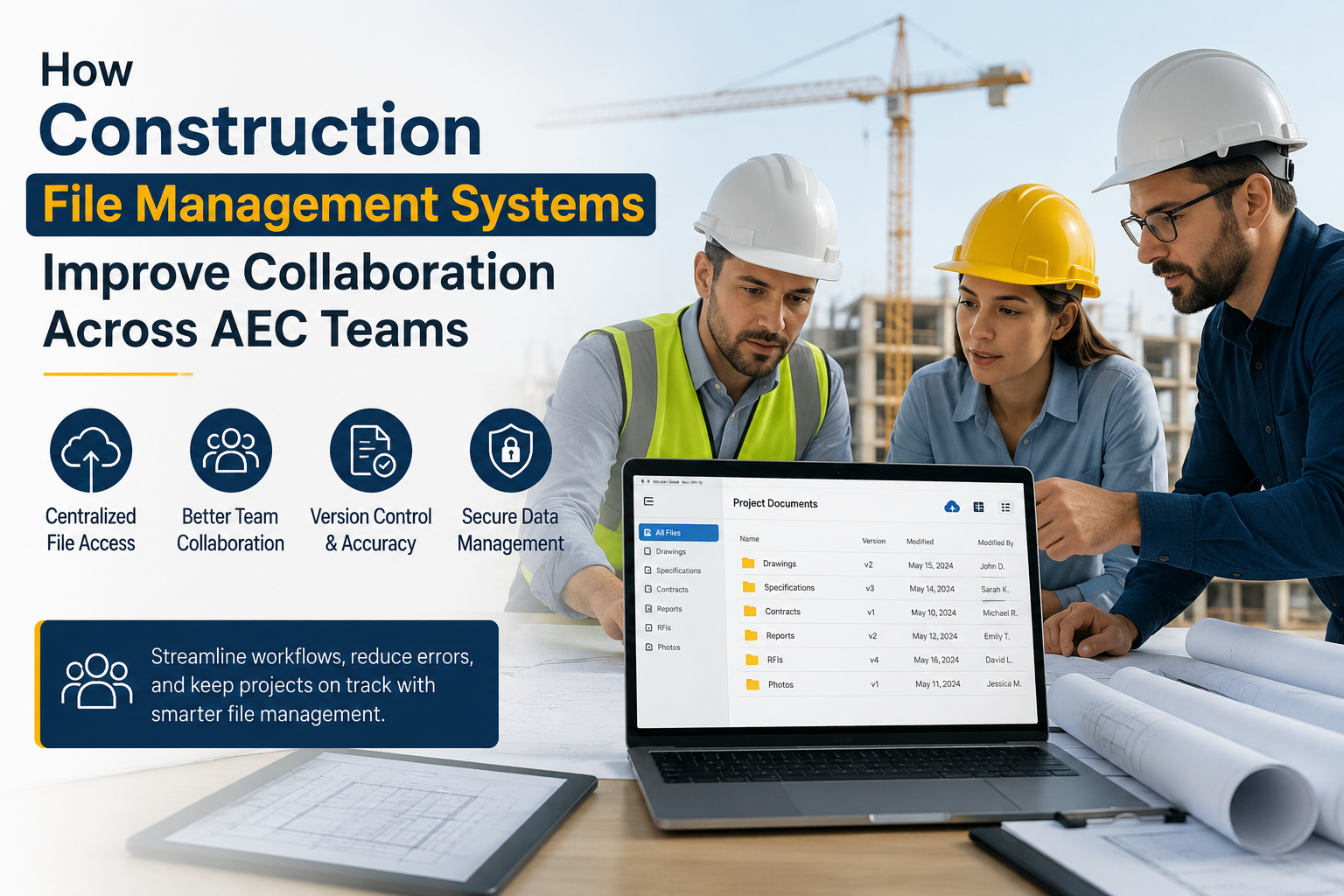
How Construction File Management Systems Improve Collaboration Across AEC Teams
Construction projects generate a volume of documentation that most industries find difficult to manage even in a stable, controlled environment. The challenge on a construction project is that the environment is neither stable nor controlled. Teams are distributed across the site, the design office, the client location, and multiple subcontractor operations. Documents change frequently, sometimes multiple times a day on fast-moving projects. And the consequences show up as rework, delays, and disputes that affect both cost and schedule.
A construction file management system addresses this environment specifically, and understanding what it does and how it differs from generic file storage is the starting point for organizations evaluating whether to implement one.
What a Construction File Management System Actually Does
A construction file management system is not a shared drive with a folder structure. The distinction matters because a shared drive can store files and make them accessible, but it cannot control who can access the files, enforce version discipline across a team that may include dozens of external parties, or provide the audit trail that construction projects need when questions arise about who had access to what and when.
A purpose-built system for construction file management adds the governance layer that file storage alone does not provide. Access permissions can be set by role, project phase, or document type, which means subcontractors see only the documents relevant to their scope. Version control ensures that when a drawing is revised, the new version is clearly identified and the previous version is retained in history rather than overwritten. Notifications alert relevant team members when documents they depend on have been updated, which closes the communication gap that causes teams to work from outdated information without realizing it.
For AEC teams that work with external consultants and subcontractors, the ability to extend controlled access to external parties without giving them access to the full project file system is particularly relevant. Construction projects routinely involve ten to twenty or more separate organizations, and managing their access to project documentation through email and shared drives creates version control problems that accumulate throughout the project lifecycle.
How Collaboration Improves Across the Project Team
Collaboration on a construction project is not only about communication but about having a shared understanding of the current state of the project documentation at any given point, which allows different teams to work in parallel without producing conflicting outputs.
When a structural engineer revises a drawing in response to a coordination issue, the mechanical and electrical teams working on the drawing need to know about the revision and should have access to the new version before they progress. A file management system notifies relevant parties of document updates and provides immediate access to new versions, closing this loop in a way that email-based document distribution cannot.
Egnyte’s construction file management approach is built around the controlled access and version management requirements of AEC project teams. The full picture of what a construction file management system covers in terms of functionality and how it applies across different project team structures is available through this guide, which goes into the specific document governance requirements of construction projects in more detail.
What Good Implementation Looks Like
The benefits of a construction file management system are most fully realized when the system is set up consistently across the full project team from the beginning rather than introduced partway through a project to address a specific problem. A folder structure and naming convention established at project kickoff, applied consistently by all parties, produces a document environment that stays organized through the project rather than one that requires periodic cleanup as the file volume grows.
Training for team members who are less familiar with document management discipline is part of a successful implementation. The most capable file management system produces limited benefit if team members continue to circulate documents by email outside the system, which is the behavior pattern that a well-implemented system and appropriate training need to address together rather than relying on the technology alone.