A Manual for Novices Learning SFM Compile for Custom 3D Models and Animation
- 1 What Is SFM Compile?
- 1.1 Why Does SFM Compile Matter?
- 1.2 SFM Compile Workflows: The Foundations
- 1.2.1 1. File Organisation for SFM Compile
- 1.2.2 2. Choosing Correct Compiling Instruments
- 1.2.3 3. Compiler Configuration
- 1.2.4 4. Gathering the model
- 1.2.5 5. Investigating and resolving problems
- 1.3 Common SFM Compile Issues: Troubleshooting
- 1.3.1 File Path Mistakes
- 1.3.2 Inappropriate Texture
- 1.3.3 Animation Backtracking Problems
- 1.3.4 Crashes in Compilers
- 1.4 Advanced Advice for Maximum SFM Compile Optimisation
- 1.4.1 Minimising Model Complexity
- 1.4.2 Leveraging LOD Models
- 1.4.3 Sort Asset Libraries
- 1.4.4 Regularly updating tools
- 2 Final Thought
You can use environments, objects, and custom characters that aren’t in SFM’s normal inventory with SFM Compile. It makes sure that the rendering, lighting, and physics interactions in SFM are right.
Source Filmmaker (SFM), which was made from Valve’s animation suite, is a good 3D graphics program. As an artist, one of the coolest things about SFM is that it lets you use your own models, textures, and animations in your work. By changing raw resources into SFM-compatible formats, this process, which is called “SFM compile,” aims to make sure that integration and speed are perfect.
If you have the right tools, strategy, and knowledge, even if you’re new to SFM compilation as an art form, you can get results that are similar to those of pros. This guide will walk you through the whole SFM build process, from start to finish. It will help you with all the tools, methods, and troubleshooting you need.
What Is SFM Compile?
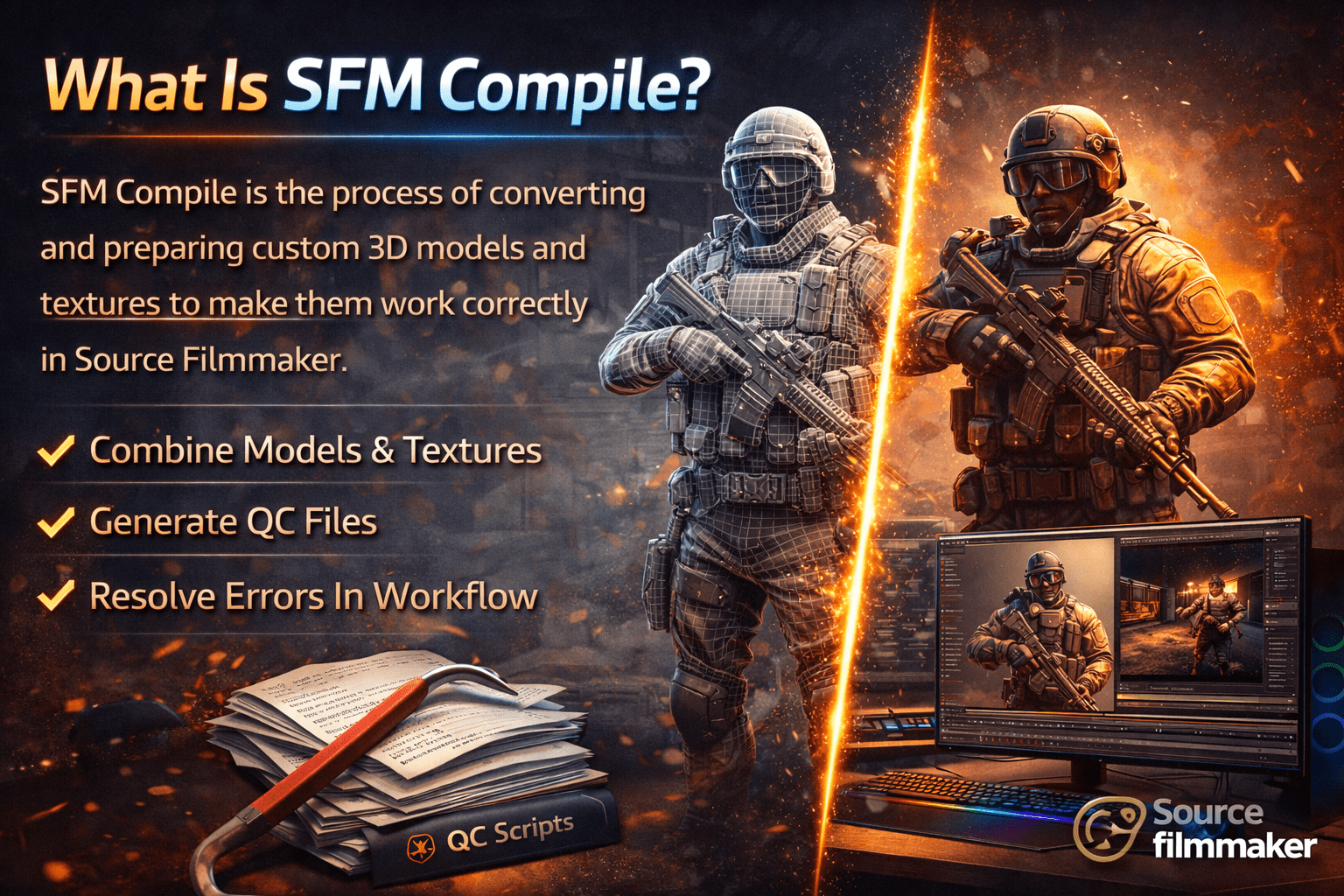
To get 3D models, animations, and images ready to use in Source Filmmaker, one must do an SFM Compile. The process makes sure that the unique content works with the software, which improves the quality of the project and speeds up the workflow. When compilation works, rendering is faster, load times are shorter, and writers can make more changes.
Why Does SFM Compile Matter?
- It lets you use custom characters, props, and settings that aren’t in SFM’s normal library.
- SFM makes sure that the rendering, lighting, and physical interactions are right.
- Cuts down on file size and speeds things up, which means less lag and crashes.
- It helps make sure that the standard of the animation stays the same across multiple projects.
SFM Compile Workflows: The Foundations
Taking a thorough approach to gathering assets for SFM is likely to work.
1. File Organisation for SFM Compile
- Putting files in the right order before assembly cuts down on mistakes and makes the process easier.
- Keep all of your model files (.SMD and .DMXX) in a different folder called 3D.
- Type of texture (e.g., “diffuse,” “normal,” “specular”) should be used to sort and group textures (.TGA).
- Putting your QC (QuakeC) script files in a neat folder will make it easier to get to them.
2. Choosing Correct Compiling Instruments
- A graphics tool for compiling and decomposing Source Engine models that is easy to use.
- A plugin for Blender Source Tools lets you export 3D models from Blender into forms that can be used with SFM.
- A tool for changing image files to the Valley Image Format (VTF)
3. Compiler Configuration
- By giving model paths, you can be sure that the QC file correctly connects images and models.
- Using collision models to set up how things will interact.
- Animated motions for dynamic models must be planned, and animation patterns must be specified.
4. Gathering the model
- Use Crowbar to get the model together and look for mistakes.
- You can change textures in the VTF file with VTFEdit.
- Please bring the completed model into SFM and make sure it can be tested.
5. Investigating and resolving problems
- Bring the model into SFM and then check the rendering, physics, and movements.
- Check for missing textures, bad scaling, or issues with the motion.
- Please look over the Crowbar mistake records and make any necessary changes to the QC file.
Common SFM Compile Issues: Troubleshooting
File Path Mistakes
Most of the time, wrong file names are to blame for compilation errors. Make sure that all of the files in your QC file are listed properly and that all of your assets are kept in the right places.
Inappropriate Texture
If the texture is missing or doesn’t match, it could make the result worse. Make sure that each texture is linked and that the QC file is set up properly.
Animation Backtracking Problems
If the animations aren’t playing right, please check the QC file to make sure the sequence names and frame rates are set properly. Also, make sure that the model works with the motion files.
Crashes in Compilers
Common reasons for compiler crashes are old tools or defective assets. Staying current on your program and validating your source files helps you avoid this type of issue.
Advanced Advice for Maximum SFM Compile Optimisation
Minimising Model Complexity
High polygon count models could severely affect load times and resource use. Reduce the polygons in your models such that their quality is unaffected.
Leveraging LOD Models
Level of Detail (LOD) models dynamically adjust their model complexity based on camera distance, thereby optimising efficiency. This approach shines for large projects.
Sort Asset Libraries
Organise your assets so that compilation is simple. Descriptively titled files and directories help to avoid misinterpretation.
Regularly updating tools
Common in revised tool versions are performance enhancements and bug fixes. Keep yourself updated so you may gain from them.
Final Thought
For artists who want to push Source Filmmaker to its limits, learning how to compile SFM is essential. When you know the basics, have the right tools, and follow best practices, adding models, textures, and movements to your projects will be a breeze. The process promises better outcomes and improved performance, which also opens up more creative options.
FAQs
What is the SFM compiler, and how does it function?
SFM compiles raw 3D assets into forms suitable for Source Filmmaker. It entails file organisation, setting configuration, and model and texture compilation using Crowbar for flawless integration.
How can I create SFM’s unique models?
Prepare source files, build a QC file, then utilise tools like Crowbar or Blender Source Tools to translate assets into SFM-compatible formats to compile custom models.
Which tools are best for SFM compiling?
Among the better tools for SFM compilation are VTFEdit, Blender Source Tools, and Crowbar. From model export to texture conversion, every tool fulfills a distinct need.
How may I fix SFM build problems?
Examining file paths, confirming QC file setups, and making sure textures are properly connected help to correct common mistakes. Updating your tools can also help with compatibility problems.