How Rapid-Deploy Infrastructure Is Transforming Remote Operations
Remote work moves fast, and the places you end up rarely make it easy. You need infrastructure that can keep up with changing conditions, protect your gear, and be ready for your team the second they land. Rapid-deploy systems are becoming essential for anyone working in remote spots. They give you something stable, flexible, and dependable, no matter where the job takes you.
Remote work has gotten more complicated. Teams doing disaster response, research trips, energy projects, or even big construction jobs need infrastructure that can handle whatever gets thrown at them. Traditional buildings? Too slow to put up, and half the time you can’t even get the equipment to the site. That’s why crews are looking for faster, more flexible options.
Rapid-Deploy Solutions For Remote Missions
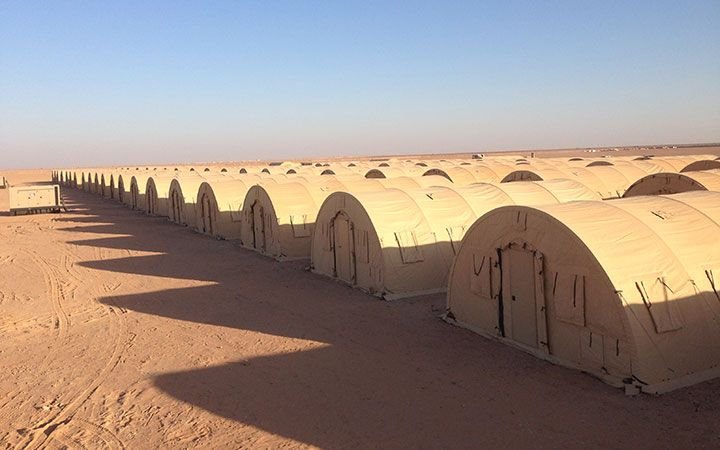
Remote missions often need structures that perform several functions at once, and rapid-deploy systems have become useful for that reason. A turnkey base camp offers a flexible solution and can be delivered as a complete package and arranged into a working site that supports both people and equipment. These systems provide sleeping quarters, hygiene facilities, planning rooms, medical stations, and secure storage in one modular footprint, giving teams a dependable starting point when they cannot rely on nearby infrastructure.
Modern remote work depends on technology that performs consistently in unpredictable environments. Communication systems, power units, climate-control technology, and portable data tools all need stable conditions to function. A structure that goes up quickly, withstands rough weather, and protects sensitive equipment can determine whether a mission stays productive or loses momentum. Engineers developing these systems focus on materials and designs that maintain performance in heat, cold, or high humidity, and they build components that ship compactly and deploy with minimal effort.
Teams also need flexibility when project demands shift. A layout that suits one phase of an operation may not suit the next. Rapid-deploy structures can expand or reorganise without forcing long stoppages. Their mobility helps crews adapt to changing conditions and stay focused on timelines. This adaptability becomes a major advantage in regions where terrain, weather, or supply delays make traditional construction unrealistic.
Stable Environments For Modern Technology
Remote operations rely heavily on equipment that cannot function reliably in uncontrolled environments. Field sensors, drones, portable servers, communication arrays, and lab-grade instruments all need protection from temperature swings and excess moisture. Rapid-deploy structures provide a climate-controlled interior that allows devices to work within safe limits. Reliability improves when sensitive equipment has a predictable environment.
Teams working in harsh climates also benefit from stable indoor conditions during extended missions. A controlled workspace reduces fatigue and helps crews plan their tasks more effectively. Daily briefings, data analysis, equipment checks, and technical operations all run more smoothly when the space supports both concentration and safety. These controlled environments strengthen the overall rhythm of a mission and help maintain steady productivity during long deployments.
Adapting To Fast-Paced Field Requirements
Remote work rarely follows a predictable pattern. Conditions change quickly. Weather shifts. Supply lines become delayed. New priorities emerge. Rapid-deploy infrastructure supports this reality by giving teams the ability to set up, dismantle, or relocate without major downtime. Structures that travel with the team or expand when needed offer a strategic advantage in environments where flexibility is essential.
Research crews working in extreme climates often rotate between multiple stations during a single season. Exploratory projects in energy or mineral extraction move from one drill site to another. Disaster response teams relocate as conditions evolve. Rapid-deploy solutions make these transitions smoother and allow crews to maintain consistent infrastructure across shifting locations.
Strength Through Engineering And Design
The success of rapid-deploy systems stems from engineering that prioritises strength and simplicity. Frames built from advanced alloys and composite materials handle wind, snow load, and seismic activity. Insulated panels maintain stable temperatures and reduce energy consumption. Doors, floors, and connection systems are designed for repeated assembly. The result is a structure that behaves like mobile equipment while offering the durability of permanent architecture.
Organisations value this combination because it improves operational resilience. Missions can continue when conditions shift without warning. Essential tools remain protected from the elements. Teams remain productive and safe. Infrastructure is no longer the weak link in a remote mission. It becomes an asset that strengthens every part of the operation.
A Shift Toward Smarter Field Infrastructure
Rapid-deploy systems reflect a broader move toward smarter, more responsive field infrastructure. Remote work is expanding across industries, from science and exploration to construction and emergency management. These teams rely on facilities that support modern technology and adapt to whatever the environment demands.
The ability to build a functional site quickly gives organisations an edge in planning and execution. Rapid-deploy infrastructure has moved from a niche option to a central component of modern remote operations. Its influence continues to grow as technology pushes deeper into harsh and isolated regions.