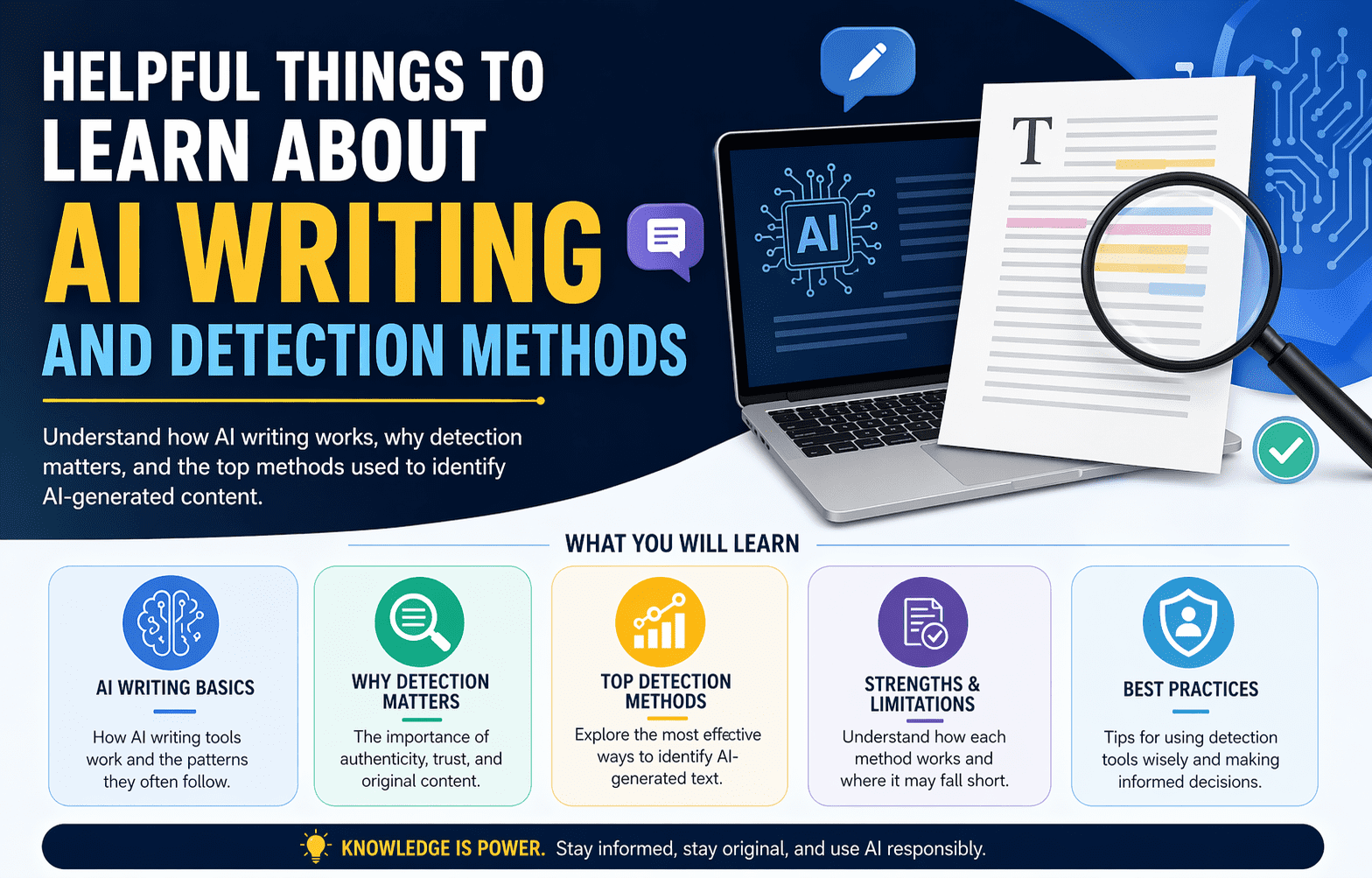
Helpful Things To Learn About AI Writing And Detection Methods
- 1 What AI Writing Really Means
- 2 How Detection Methods Work
- 2.1 What Detectors Usually Look At
- 2.2 Why Detection Is Pattern-Based
- 2.3 Where The Keyword Fits In Naturally
- 3 How To Make AI-Assisted Writing Feel More Human
- 3.1 Add Personal Logic And Real-Life Examples
- 3.2 Use Mixed Sentence Length
- 3.3 Rewrite Generic Lines In Simple Words
- 4 Why Learning Both Topics Is Useful
- 5 Final Thoughts
Are you trying to understand how AI writing works and how people check it in simple words?
Many people have this same question now. AI writing is becoming a normal part of daily work, study, and content planning. It can help with ideas, structure, rewriting, and clear wording.
At the same time, detection methods are also growing as a way to review text patterns. Both topics are useful to learn because they help people write with more care, more clarity, and more confidence.
AI writing is not magic. It works by reading patterns from a large amount of text and then giving a reply based on the prompt. When a person gives a clear instruction, the tool can create content in a quick and readable form.
Still, the best results usually come when a real person adds thought, feeling, context, and personal sense to the final draft. That mix often makes the writing more natural and more useful for readers.
What AI Writing Really Means
AI writing is simply text created with the help of an AI tool. It can be a full article, a short caption, an email draft, a product note, or even a headline idea. In daily use, many people use AI to save time during the first draft stage.
How AI Creates Text
AI reads the words in your prompt and then predicts what kind of text should come next. It does this step by step, line by line, based on language patterns.
If your instruction is clear, the output is also usually clear. If your instruction is short or mixed, the answer may feel too general. That is why a simple and direct prompt often gives a better result.
Why People Like Using AI Writing
People like AI writing because it helps them start faster. Sometimes the hard part is not writing the whole article. The hard part is starting the first line. AI can help break that first block.
It can also help with tone, grammar, sentence flow, and fresh content ideas. For busy writers, students, support teams, and small business owners, this feels very practical.
Why Human Editing Still Matters
A human touch gives the text warmth and sense. Real people know the small details of culture, local talk, reader mood, and daily life examples. AI can help with structure, but people make the message feel alive.
When someone checks the draft, adds personal examples, and changes plain lines into natural lines, the result usually feels much better. As more and more people begin to use AI to write content, there is also a worry that the quality and human nature of published content will start to dwindle. For businesses, for publishers, and for large content-producing teams, an AI content detector can be a huge asset for them as they review the many drafts of content to be published. The detector can alert the human writer or publisher to content that has been written by AI for further human touches before it goes live to the public.
How Detection Methods Work
Detection methods are used to study text patterns and estimate how the content may have been written. These methods are not about fear. They are mainly used for review, learning, and quality checks in many settings.
What Detectors Usually Look At
A detector often checks language patterns such as sentence rhythm, word choice, repetition, and predictability. Some tools also review how even the sentence style feels across the full article.
If the text looks too uniform from start to end, a detector may mark it as more likely to be AI-assisted. If the text has natural variation, personal detail, and a more human flow, it may appear different to the system.
Why Detection Is Pattern-Based
Detection tools do not read the mind of the writer. They study signals in the text. This is an important point. A detector gives an estimate, not a life story of how the draft was made.
That is why many people use a detector as one review step and not as the only final answer. In simple words, it is like checking weather signs. It gives useful clues.
Where The Keyword Fits In Naturally
Some people search online for a ChatGPT detector when they want to review a draft before publishing or submitting it. This kind of tool is usually used to understand text patterns and to check if the writing feels too machine-shaped.
Used calmly and practically, it can help a writer improve sentence variety and make the article feel more personal.
How To Make AI-Assisted Writing Feel More Human
The best AI-assisted writing usually does not stay in raw form. A person reads it, thinks about it, and reshapes it in a natural voice. This is where simple changes can do a lot.
Add Personal Logic And Real-Life Examples
When you add a small daily-life example, the writing starts sounding more real. For example, instead of saying a tool helps with writing, you can say it helps when you sit with tea, open the laptop, and do not know how to start the first paragraph. That small picture makes the text feel close to the reader.
Use Mixed Sentence Length
Human writing usually has a soft mix. Some lines are short. Some are longer. Some sound direct. Some sound reflective. This small change can make the article smoother and warmer. AI drafts often improve a lot after this one edit.
Rewrite Generic Lines In Simple Words
If a line feels too formal, just make it plain. Use words people say in normal talk. Write like you are explaining the topic to a friend or cousin. This style is easier to read and easier to trust.
Simple writing is not weak writing. In fact, simple writing often stays in the reader’s mind longer.
Why Learning Both Topics Is Useful
When you learn about AI writing and detection methods together, you get a more complete view. You understand how text is created and how it is reviewed. This helps you write with more care. It also helps you edit with more smart thinking.
Better Writing Habits
Once you know how AI text can sound, you start noticing the value of human revision. You become more aware of tone, flow, sentence change, and reader comfort. This can improve your writing skills steadily and practically.
Better Content Quality
Detection methods can push writers to polish their content more carefully. That is a good thing. It means people may spend a little more time making the article useful, clear, and human. In the end, the reader gets cleaner and more thoughtful content.
Final Thoughts
AI writing and detection methods are both useful to learn in today’s content space. AI can help with speed, structure, and idea support. Detection methods can help with review and polish.
When both are used with care, the result can be clear, readable, and helpful. The best path is simple: use AI as support, keep your own voice in the draft, and edit with honest human sense. That balance often creates content that feels natural, warm, and easy to trust.