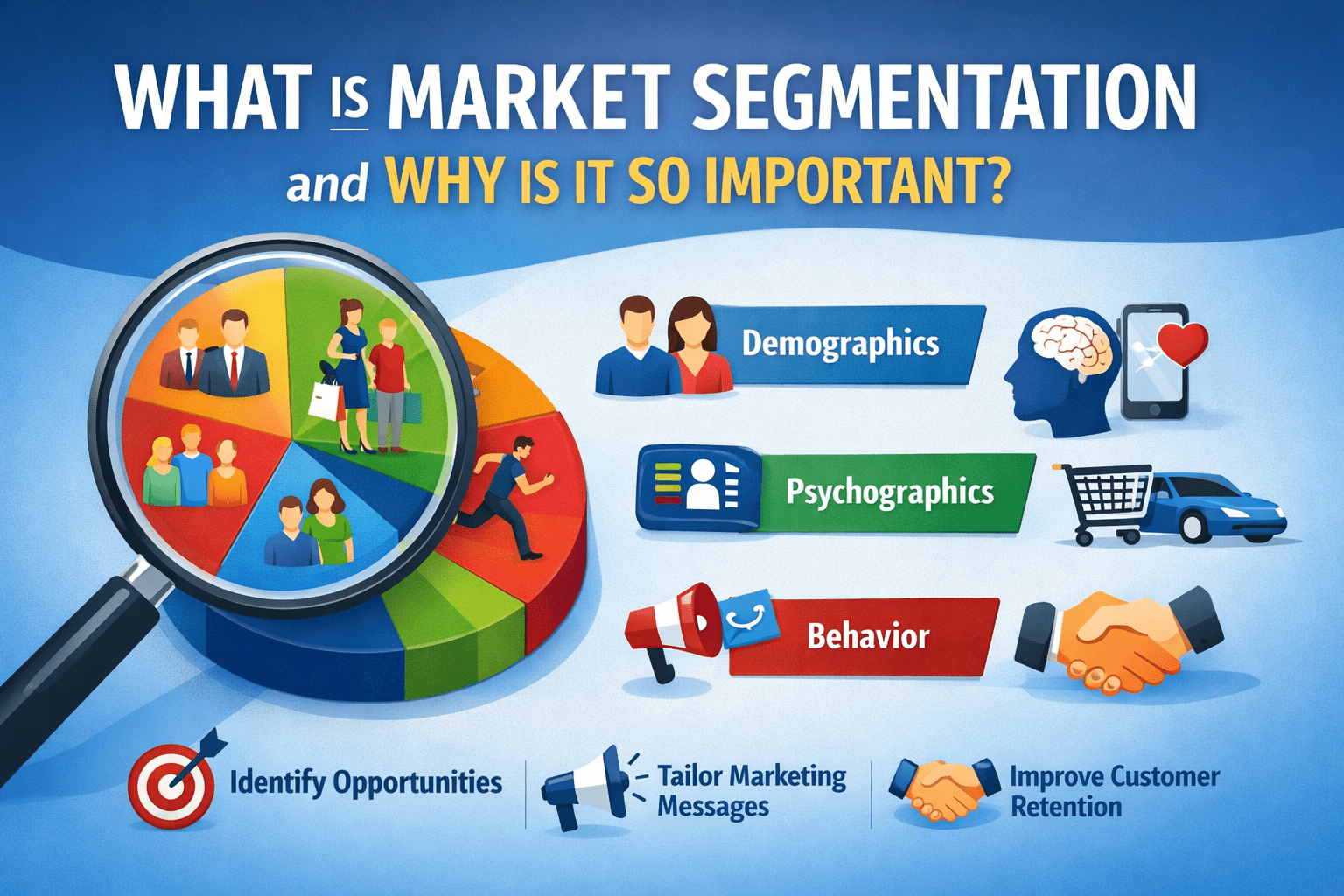
What is Market Segmentation and Why is It So Important?
- 1 What Is Market Segmentation?
- 2 Why Is Segmenting Markets Important?
- 3 Market Segmentation Has Advantages
- 4 Using an Example to Make Market Segmentation Clear
- 5 How To Start Segmenting Your Market
- 6 How To Divide The Market Effectively: Steps To Follow
- 7 Examples Of How To Use Market Segmentation
- 8 The Bottom Line
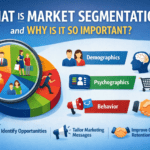
In today’s tough business world, it’s important to reach your target group with personalized products and messages. One strong way to reach this goal is through market segmentation. Companies use this approach to divide the market into smaller, easier-to-handle pieces so they can better meet the specific needs, wants, and habits of their customers. This helps companies make better products, get customers more involved, and run more targeted advertising efforts.
What is market segmentation? What are some examples of it? What are the different types of it? What are the benefits of it? Read on to know more…
What Is Market Segmentation?
Several divided groups help companies to more precisely focus their activities. Through concentrating on smaller segments, businesses may create customized marketing messages, create customized products, and satisfy the particular wants of their target market. Delivering customized marketing and improving customer satisfaction depend on this; hence, increasing sales and income finally results from improved customer contentment.
Why Is Segmenting Markets Important?
Good marketing plans depend mostly on effective market segmentation. It helps companies create accurate client profiles and grasp their audience. Companies can improve communication and involvement by separating a big market into smaller, more defined groups, hence raising consumer loyalty and happiness.
Furthermore, segmentation helps companies best allocate their marketing funds. Companies can concentrate on particular consumer groups instead of squandering money on wide-ranging, unfocused advertising, therefore increasing their return on investment (ROI). Advanced market segmentation also enables website personalisation, therefore producing unique consumer experiences and increasing income generation.
Market Segmentation Has Advantages
Three main advantages of market segmentation consist of:
- Segmenting the market helps companies to more precisely craft their messages. This helps businesses reach the proper audience with pertinent material, hence increasing engagement and conversion rates.
- Understanding the particular needs of every consumer group helps companies to offer more customized goods and services, hence raising customer satisfaction. This degree of customisation increases consumer loyalty and satisfaction.
- Targeting the appropriate audience with the appropriate products and marketing campaigns helps companies improve conversion rates. Customer loyalty increases, and profitability leaps forward.
Using an Example to Make Market Segmentation Clear
Use Nike as an example of a well-known brand to show what market segmentation means. Nike has a wide range of customers, including athletes, fitness fans, and people who just like to shop. Nike doesn’t have a “one-size-fits-all” approach; instead, it uses market segmentation to make products that are tailored to different groups.
Nike uses the following methods for segmentation:
- Because these things are so important, Nike divides people into groups based on their age, gender, and stage of life. As an example, their products are made for people of different ages: junior athletes (who care about stylish designs and celebrity endorsements), middle-aged fitness fans (who care about high-performance shoes and avoiding injuries), and seniors (who care about comfortable walking shoes that put joint health first).
- And when Nike does psychographic classification, they also think about why people play sports. Some players might care more about style or comfort than performance, but others might put performance first. Nike wants to appeal to a wide range of people who want to work out by making both high-performance gear and stylish clothes that can be worn every day. Another way that Nike gets out to people who care about the environment is by making products that last.
- Nike can reach specific groups of people with relevant ads, create loyalty programs, offer discounts to customers who buy from them again and again, and encourage two-way contact through targeted email campaigns by looking at what customers do.
This multifaceted approach helps Nike’s marketing because it avoids the problems of randomly targeting people and instead focuses on the groups that are most likely to be interested and buy.
Also Read – Top 10 Advantages of Salesforce Field Service for Your Business
How To Start Segmenting Your Market
Market segmentation is an ongoing process that needs to be tweaked and improved all the time. If a business wants to start, it can take these steps:
- These are some good places to find this information: customer surveys, social media insights, website activity tracking, and customer relationship management systems. If you put all of this information together, you might get a full picture of the habits and traits of the people you want to reach.
- Setting goals is the first thing you need to do to make a market segmentation plan work. It’s important to you that your business makes more money, gets more customers, and becomes better known. Your attempts to segment will be guided by clear goals.
- When picking segmentation criteria, think about the goals you have for your business. When picking segmentation methods (demographic, behavioral, and psychographic), think about the business goals you want to reach. Pick the things that are most relevant to what your viewers want and need.
- Make a detailed buyer persona for each group you want to reach. In these profiles, you should include information about the person’s background, behavior, problem areas, and personal interests. If your marketing staff has a well-rounded personality, they will be better able to connect with and talk to each group.
- Make marketing strategies that speak to each group of people by using your personas and market segments. Make sure that your messages, offers, and materials are tailored to their specific needs.
To see how well your work is going, keep an eye on key performance indicators (KPIs) like return on investment (ROI), customer contact, conversion rates, and more. You can improve your segmentation plan and future ads by making better use of the information you have collected.
How To Divide The Market Effectively: Steps To Follow
These steps should be taken if you want your market segmentation plan to work:
- Make sure you can measure your amounts so you can see how well they’re working. After getting this information, you can figure out how big, valuable, and likely to grow each section is.
- Make sure that the marketing platforms you’ve chosen can reach the groups you want to reach. Your segmentation approach should be based on how each group normally gets information.
- Market Segments with a Lot of Untapped Potential: Pay close attention to the market segments that have the most room to grow in the future. You should only put your money into those whose markets are big enough and whose buyers have enough power to make your money back.
In order to keep market segmentation fresh, it is important to keep changing and making it better. It is important to keep an eye on your groups, tweak your strategy, and respond to changes in the market if you want to stay competitive.
Examples Of How To Use Market Segmentation
As you can see from these real-life cases, market segmentation helps businesses do better with their marketing:
- Spotify: The music streaming service uses information about its users, like what they listen to, where they are, and what styles they like, to make suggestions, playlists, and ads that are specifically made for them.
- Procter & Gamble (P&G) uses parenting styles and views about child care to divide parents into different groups so they can market Pampers diapers.
The Bottom Line
To sum up, market segmentation is very helpful for businesses that want to reach specific groups of people with personalized, targeted marketing. Marketers can get more people to interact with their ads and make more money by making them more relevant to the habits, needs, and traits of different groups of customers.
Market segmentation is an important strategy for businesses of all sizes because it has so many benefits that outweigh the few problems it has.