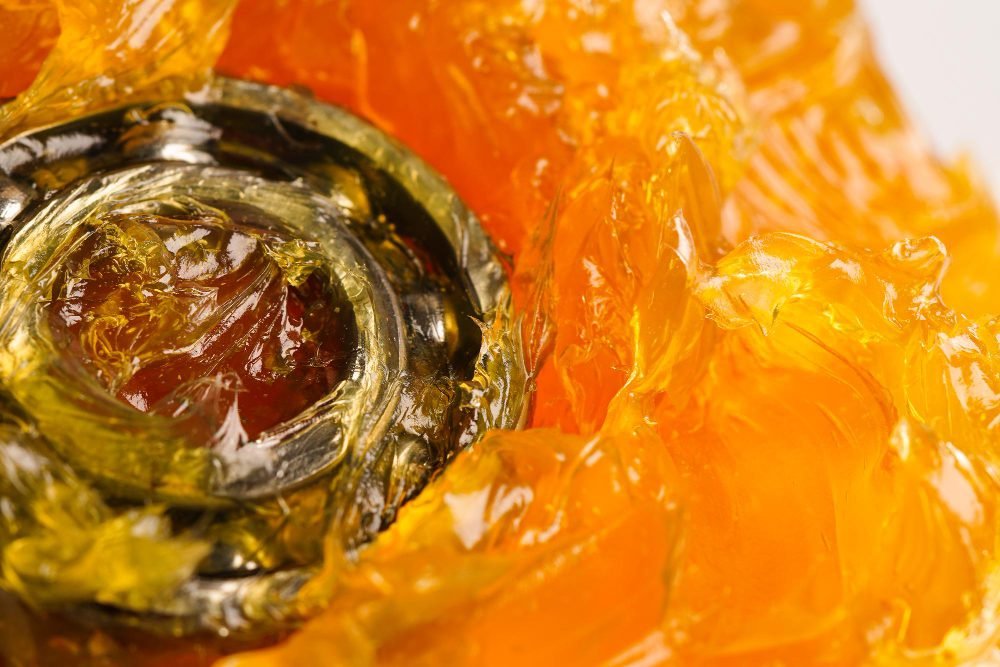
Grease For High-Temperature Applications
Grease is a semi-solid lubricant that is used to reduce friction and wear between two moving parts. There are different types of greases available based on the properties, application, and composition. Some of the greases are Lithium grease, Calcium grease, Aluminium grease, Polyurea grease, Graphite grease, Molybdenum disulfide grease, and bio-based grease.
The main components of grease are a base oil, a thickener, and additives. The oil helps to lubricate the moving parts while the thickener holds the grease in place. Certain properties of grease can be enhanced by using additives.. Additives can be used to improve properties like corrosion resistance, oxidation resistance, and more.
The main function of grease is to lubricate the moving parts without leaking due to the centrifugal action. Grease should be able to perform under the operating temperature conditions. However, standard greases cannot be used in high-temperature applications.
At elevated temperatures, the oil in the grease gets oxidised and may crack and become ineffective. The thickener in the grease breaks down at high temperatures. Therefore, for high-temperature applications, you have to use high-temperature grease.
High-temperature grease is designed to maintain consistency, adhesion, and lubricating properties even at elevated temperatures.
Key properties of high-temperature grease

- High-temperature grease is resistant to degradation and does not lose its lubricating properties even at elevated temperatures.
- It can maintain its viscosity even at high temperatures without becoming too thin or running off.
- It can be formulated to resist oxidation and chemical breakdown, which can occur at high temperatures.
- Additives can be used to enhance the properties of high-temperature grease, like anti-wear agents, rust inhibitors, and extreme pressure additives.
Selecting a high-temperature grease for an application
Before selecting a high-temperature grease for your application, you should consider a few factors.. This is important for ensuring the longevity and reliability of the moving parts.
- Before selecting a high-temperature grease, you should ensure that it can function effectively within the specific temperature range of your application.
- For better thermal stability, you should select greases with a synthetic base oil. Synthetic oil performs better than mineral oils at elevated temperatures.
- Select grease with the right NLGI (National Lubricating Grease Institute) grade to ensure proper lubrication and smooth operation of the parts. Check the manufacturer’s recommendation to ensure optimal performance.
- Select t grease with good oxidation resistance to prevent it from breaking down and forming harmful products at high temperatures.
- Select a grease that is compatible with the existing lubricants to avoid any degradation or chemical reaction.
- You should also consider how the grease is going to be applied, whether manually or automatically. Select a grease that best suits your application requirements.
- You should consider the availability and the cost-effectiveness of the grease you select.
Applications of high-temperature grease
High-temperature grease is used in various automotive and industrial applications. It is used in bearings and gears operating at high temperatures, furnaces and oven components, charging cranes, converters, and more. In the automotive industry, it is used in chassis lubrication, wheel lubrication, engines, and more. It is also used in equipment exposed to heat, such as dryers, hot air fans, and kilns.
Example
The bearings in rolling mills operate at a high temperature of around 130° C. In such applications, high-temperature grease for bearings is used. To get the best results, the lubricating point is first cleaned, and the corrosion protection is removed.
The grease is filled in the bearings in such a way that all the moving surfaces are covered. The slow-moving bearings are completely covered, while the normal bearings are filled to 1/3rd of the housing. If the old grease has not been removed, then the amount of new grease to be added should be limited to avoid over-lubrication.
The grease maintains a lubricating film at high temperatures and ensures smooth operation of the bearings. Relubrication of the moving parts depends on factors like working temperature, load, and speed. At longer lubrication intervals, all of the old grease should be replaced.
Conclusion
Standard grease is used to lubricate the moving parts in machinery. For high-temperature applications, you need to use a specially designed grease called ‘High-temperature grease’. This grease can function effectively at elevated temperatures without breaking down or leaking. You should select a high-temperature grease based on the requirements of your application.
High-temperature grease can be used for long-term lubrication where the moving parts are subjected to high temperatures. Different types of high-temperature greases are available based on the type of machinery and components. Some of the high-temperature greases are Lithium complex greases, Polyurea greases, and grease made using bentonite clay.