Understanding the Impact of Visual and Audio Game Assets Design
- 1 What Does Game Assets Design Mean?
- 2 Types Of Game Assets Design
- 2.1 Visual Assets
- 2.2 2D Sprite Assets
- 2.3 3D Models
- 2.4 Textures
- 2.5 Environment Assets
- 2.6 Audio Assets
- 2.7 Sound Effects
- 2.8 Voice Over
- 2.9 Music
- 3 The Importance Of Game Assets Design
- 4 Performance Efficiency In Game Assets
- 5 Future of Game Assets Design
- 6 How to Design Game Assets?
- 6.1 In-House Design
- 6.2 Outsourcing
- 7 Conclusion
- Game Assets Design helps bring video games to life, which is why they are called”the basics of life for a video game”.
- Game Assets Design includes 3D models, textures, sounds, and music.
- Game Assets Design in game design aims to enhance the performance.
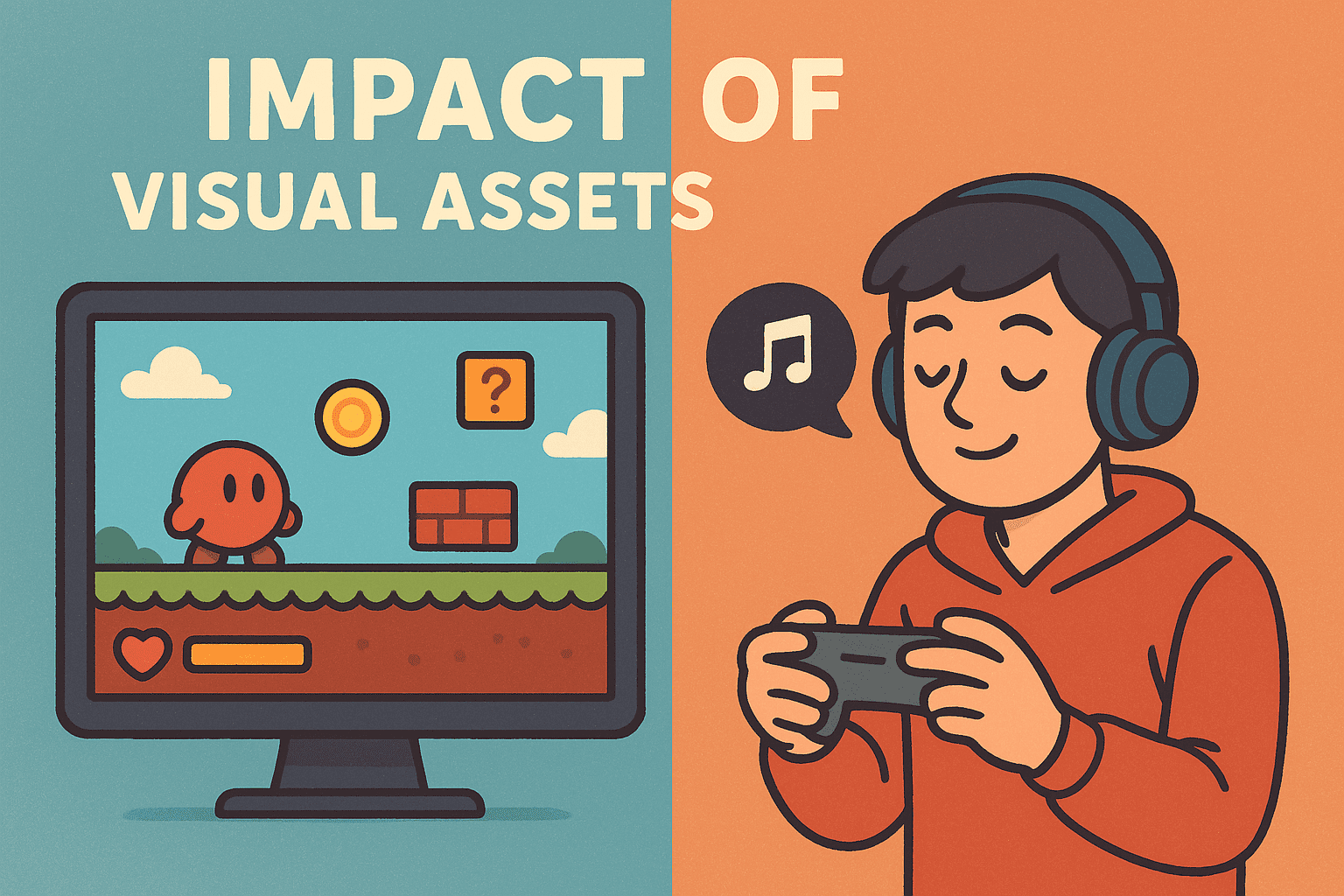
Game Assets Design shapes the way a player experiences the game worldThey help create an immersive world for players to interact with. Whether it’s the character being controlled, the environment being moved through, or a sound accompanying every move of yours, all of these aspects are driven by game assets positioned in power. Visual assets and audio assets can be categorized into two main groups.
However, this article mainly covers the visual aspects, which include everything that the player sees on the screen and hears in 3D sound, from backgrounds to foreground objects.
What Does Game Assets Design Mean?
An asset is anything that is used to make a game, like images (characters, settings, etc.) and audio, animations, scripts, and more. To put it simply, they are what make every game look good, work well, and be fun to play. Developers of video games make and add these things to games in order to make the virtual world feel real and engage players. A lot of different technologies are used to make game materials, such as 2D drawings, 3D models, music, text, and more. For making game graphics, though, there are a lot of great tools out there, such as Blender, Photoshop, Audacity, Maya, GIMP, and more.
Types Of Game Assets Design
Game assets fall into various categories, each with a unique function in the design and development process. In this chapter, we will explain their various categories.
Visual Assets
Visual assets span the spectrum from static 2D images to 3D models with life-like movement and believability. They determine the look and feel, the game’s image, which is visually appealing to players or not.
2D Sprite Assets
These are pictures or animations on a flat plane that represent how characters and objects move in the game. They can be made with traditional art techniques or digital tools.
3D Models
These assets serve as three-dimensional representations of characters, objects, and environments that are more elaborate than 2D sprites, and most of today’s games — especially those with detail and realism as their primary design principle — use them.
Textures
As such, textures are pictures attached to 3D models that give them detail and realism, whether it’s the rough surface of a stone wall or the smooth skin on a character.
Environment Assets
These are the foundation stones of the game world itself. They include terrains, landscapes, buildings, and other natural or man-made objects. In addition to providing a backdrop for gameplay, the environment helps to set the tone and mood.
Audio Assets
While visual assets create the look of games, audio assets create the sounds that accompany gameplay. This includes everything from sound effects to voices and music.
Sound Effects
These are short audio clips that play in response to a particular action or event, such as a character jumping, shooting, or opening a door. High-quality sound effects are an important factor for gamers as well.
Voice Over
Voice-overs are of particular importance for character development. This is now generally considered to be a standard feature for most games: in speaking parts, be they NPSs or protagonists.
Music
A game’s soundtrack can play a significant role in creating atmosphere. In addition to an epic orchestral score, be it a quiet background tune or something ambient can help to bond players emotionally with the experience of playing.
The Importance Of Game Assets Design
Game Assets Design is not just for looks but also serves functional purposes in gameplay. Well-designed assets can enhance the relationship between the game world and the player.
- Interactive Objects: Assets that include switches, doors, and collectables allow players to interact with the game environment. They help players with such tasks as completing levels or solving puzzles.
- Indications of Action: Animations and visual clues can tell the player what to do next. For instance, if there is a glowing object, that probably means it’s interactive content.
- Immersion: The more realistic or fantastical the assets are, the deeper the players are drawn into the game world. This makes for a more compelling and enjoyable experience.
Performance Efficiency In Game Assets

In modern game development’s view, creating assets with high resolution and extreme detail is inadequate. Instead, performance is the prime objective; assets should guarantee the game runs smoothly and without pause, particularly on mobile devices where every mill header second counts. Asset Optimization Techniques:
LOD (Level of Detail)
Objects that are relatively far from the player may be replaced by lower-resolution assets.
Texture Compression
Compressing textures reduces their file sizes, improving load times and reducing the resource cost in memory used to store them.
Instancing and Batching
Instancing allows the game engine to render multiple copies of an asset with one draw call, potentially improving performance. Batching similar objects together also helps to optimize rendering.
Mipmaps
These are pre-calculated textures that the game uses to regulate an object’s resolution according to its distance from the player. This technique maintains both memory and performance.
Future of Game Assets Design
As game design evolves, so do the technologies and techniques used for creating game assets. Here we will see some trends that are shaping the future of Game Assets Design:
- Artificial Intelligence (AI): AI-generated assets are getting more common. Automated creation of environments, characters, and animations can help speed development and provide generally more realistic visuals.
- Procedural Generation: Procedural generation uses algorithms to create huge game worlds that are complex and ever-changing. Virtually every parameter of level and environment design can change, yet no asset needs to be made manually.
- User-Generated Content (UGC): As players become major contributors to the experience through platforms like Steam Workshop, the assets they turn out, such as custom characters, vehicles, and levels (levels in particular), add more things for people to play around with. This trend both increases the amount of game content available and helps foster a more involved community.
- Virtual Reality (VR) and Augmented Reality (AR): Integrating VR and AR technology into gaming introduces new opportunities for interactive and immersive environments. Game assets will need to adapt to provide a seamless and lifelike experience for players in these new formats.
How to Design Game Assets?
In-house Versus Outsourcing: Whether to create game assets in-house or outsource them is a decision that faces many game developers. Each approach has its merits and drawbacks.
In-House Design
Designing assets in-house means better control over the creative process and ensures that all assets align with the game’s vision. However, it requires hiring talented artists and designers, which can be expensive and time-consuming.
Outsourcing
Outsourcing gives developers access to a wider pool of talent and can be more cost-effective, especially for small studios or large-scale projects. But as a drawback, it may entail less authority over the end product and potential communication difficulties.
Conclusion
Game assets are the foundation of video game design. Be they visual or aural, all assets join forces to bring a complete experience for players. The future development of game assets is on the way with technological advances such as AI, procedural generation, and VR/AR, which promise to blow open the boundaries of game design.
For developers, knowing what kind of game assets there are and how to optimize them is key to creating an engaging and high-performance game. By choosing how to make and manage game assets carefully, developers can produce not only beautiful games but also games that are a lot of fun for players to play, however long they last.