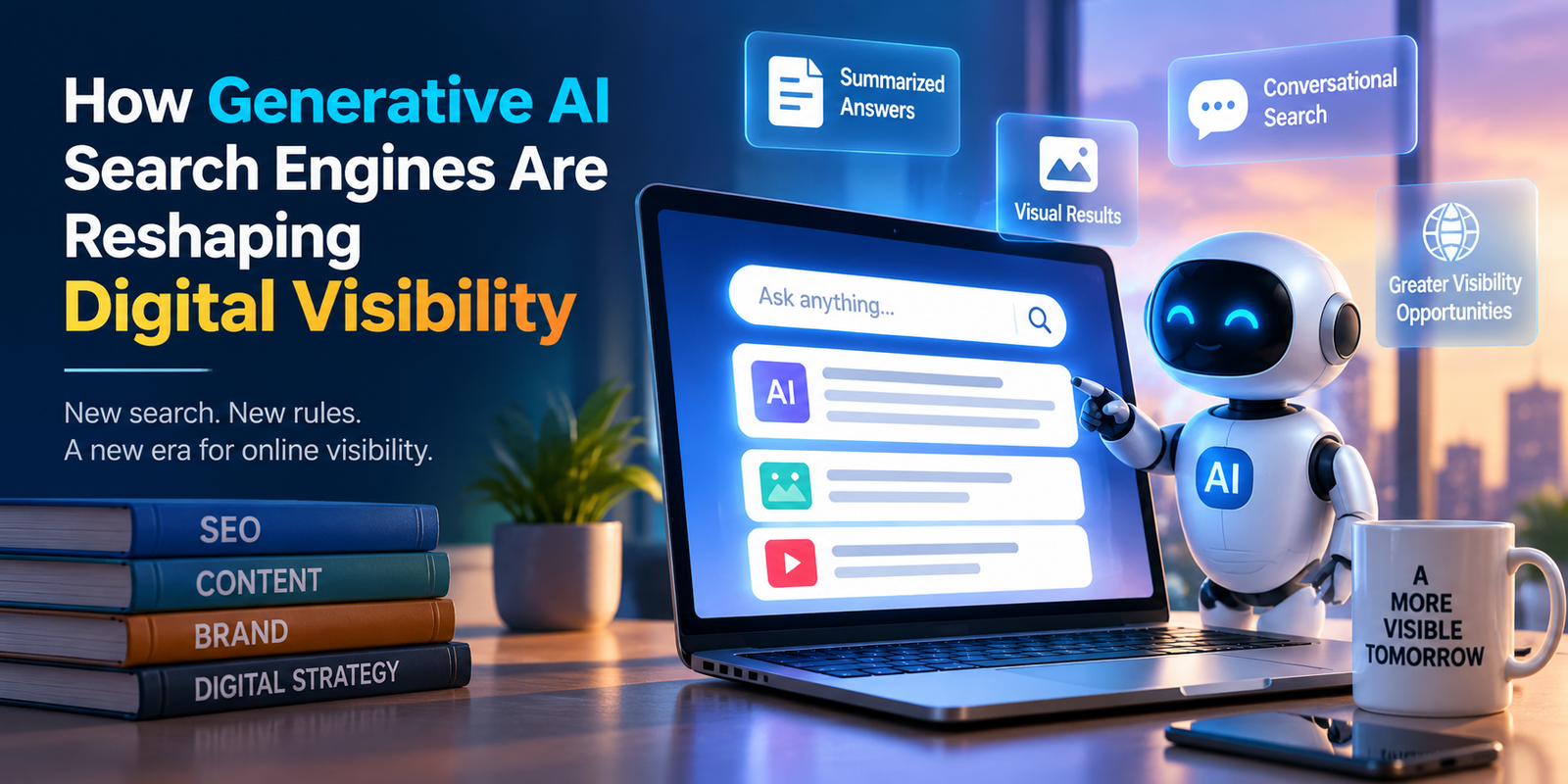
How Generative AI Search Engines Are Reshaping Digital Visibility
The digital landscape is undergoing a monumental shift. For over two decades, traditional search engines have dictated how consumers find information online. However, the rapid integration of machine learning algorithms and conversational chatbots is completely changing user behaviour. Recent demographic data from the first quarter of 2026 shows that 58 percent of the Australian population aged 14 and over now regularly use AI tools. Furthermore, over a third of Australian internet users initiate at least one new search per day starting directly with an AI assistant. This transition means digital marketers and website owners must rapidly rethink how they build and structure their content for a new era of generative algorithms.
The Shift from Traditional Search to Answer Engines
We are moving away from a web of blue links towards a system of direct, AI-generated answers. Platforms like Perplexity AI have evolved from niche chatbots into massive search competitors. By early 2026, Perplexity surpassed 230 million global monthly active users, processing up to 1.5 billion queries per month. The appeal is clear, as users want immediate answers rather than a list of websites to sift through. Facing such steep shifts in user habits, forward-thinking brands are already investing in AI driven SEO services to modernise their optimisation efforts and secure visibility.
This shift is significantly cutting into traditional query volumes. In fact, a highly cited report from Gartner predicts that traditional search engine volume will drop 25% by 2026 as users increasingly turn to AI chatbots and virtual agents for their daily research. For brands relying heavily on organic search, this represents a fundamental disruption in how top-of-funnel traffic is acquired and maintained.
How AI Overviews Impact Organic Traffic
Google has not sat idly by while new competitors capture market share. The rollout of Google AI Overviews has dramatically altered search engine results pages. Recent analysis reveals that these generative summaries disproportionately impact informational queries, triggering on nearly 90 percent of top-of-funnel searches compared to less than 2 percent of transactional searches.
The presence of these comprehensive summaries is accelerating a zero-click search environment. A 2026 analysis of 300,000 keywords found that when an AI Overview is present, the average click-through rate for the top-ranking traditional organic result drops by 58 percent. Facing such steep declines in traditional traffic, content teams must now prioritise getting cited within the AI-generated answers themselves.
Strategies for Generative Engine Optimisation
To adapt to this new environment, content creators must embrace Generative Engine Optimisation. This approach focuses on making content easily digestible for large language models. Studies have shown that large language model citations often pull information exclusively from the top 30 percent of a webpage. Therefore, an immediate, answer-led content structure is vital.
While exploring the ongoing evolution of artificial intelligence in digital marketing, experts often emphasise the pros and cons of using machine learning for content creation. Human oversight remains essential because AI search algorithms prioritise verifiable expertise.
To maximise your chances of being cited by an AI search engine, consider implementing the following structural tactics:
- Embed verifiable citations: Search algorithms heavily favour content that links to authoritative, highly trusted sources to back up its claims.
- Feature hard statistics prominently: Placing precise data points in the top third of your page gives large language models clear, extractable facts to use in their summaries.
- Include direct expert quotes: Unique insights from named industry professionals provide distinct value that AI cannot easily replicate from generic internet sources.
- Prioritise direct answers: Structure your headers as common questions and immediately follow them with concise, factual answers before diving into deeper contextual analysis.
The Fragmented Future of Consumer Search
While AI search adoption is growing rapidly, consumer behaviour remains complex and highly fragmented. For example, 72 percent of Australian online searchers utilise AI assistants at some stage of their discovery journey, but only 16 percent use them as their absolute initial starting point. Furthermore, a recent consumer survey revealed that only 3 percent of Australians would make a purchase based solely on an AI recommendation without cross-referencing traditional search engines or third-party review platforms.
This means that businesses cannot simply abandon traditional search practices. Instead, they must run a hybrid strategy. Optimising for generative AI ensures you remain visible during the initial research phase, while maintaining strong traditional search signals guarantees you capture the high-intent buyers who are ready to convert. Ultimately, the brands that thrive will be those that view AI not as a replacement for digital marketing, but as an essential new layer of digital visibility.