When to Upgrade Your Home’s Lighting to LED for Energy Savings?
- 1 Why Switch to LED?
- 1.1 Energy Efficiency Comparison
- 1.2 Running Cost Reductions
- 1.3 Lifespan and Maintenance Benefits
- 1.4 Light Quality and Control
- 2 Signs It’s Time to Upgrade to LED
- 2.1 Frequent Bulb Failures or Visible Flicker
- 2.2 Noticeably Highlighting Portion of Your Electricity Bill
- 3 How to Calculate Savings and Payback
- 3.1 Gather Baseline Data
- 3.2 Simple Payback Calculation
- 3.3 Tools and Calculators to Use in Australia
- 3.4 Factors that Affect Payback
- 3.5 Choosing the Right LED for Each Room and Use
- 3.5.1 Living Rooms and Bedrooms
- 3.5.2 Kitchens, Study and Task Areas
- 3.5.3 Bathrooms and Outdoor Areas
- 3.5.4 Downlights, Tubes and Retrofit Globes
- 3.5.5 Dimmers and Smart Bulb Compatibility
- 3.6 Australian Standards, Rebates and Incentives
- 3.7 How to Confirm Eligibility and Apply
- 3.8 Installation and Retrofit Considerations
- 3.8.1 When to Replace Bulbs Only vs Full Fixture Replacement
- 3.8.2 Low-voltage Transformers and Driver Compatibility
- 3.8.3 Safety and Compliance
- 3.9 Recycling and Disposal of Old Lamps in Australia
- 4 Conclusion
- LED lighting can reduce your energy consumption by up to 80% compared to traditional options
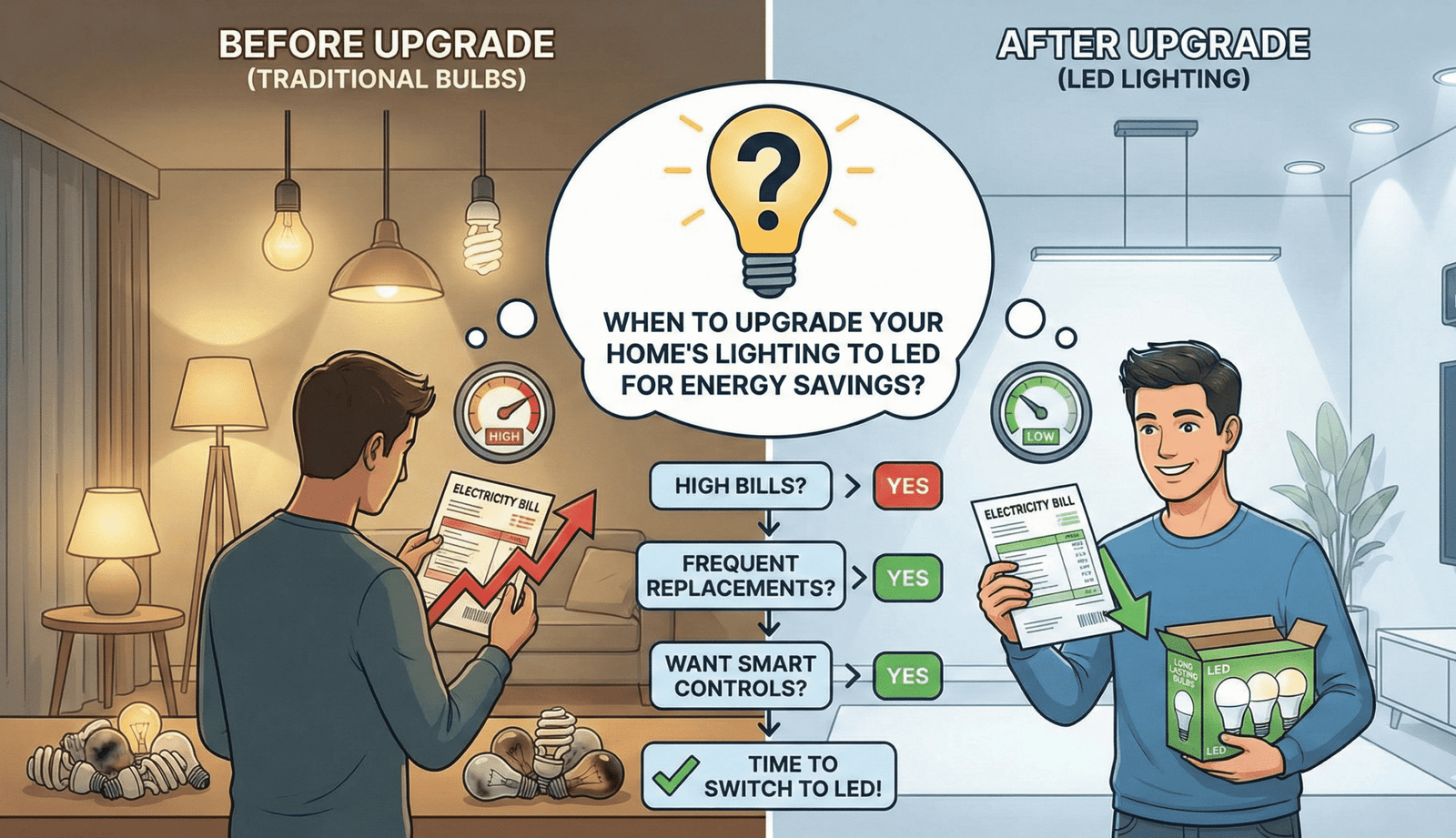
- The best time to upgrade is during renovations, when existing bulbs fail frequently, or when your electricity bills are noticeably high.
- Calculate your potential savings by comparing wattage, lifespan, and purchase costs against your current lighting.g
- Choose appropriate LED options based on room requirements, colour temperature, and lumens rather than watts.
- Consider Australian rebates and incentives to maximise your investment in LED technology
Thinking about brightening up your home while dimming down those electricity bills? Upgrading to LED lighting is one of the simplest yet most effective energy-saving improvements Australian homeowners can make. By replacing traditional halogen or incandescent bulbs with LEDs, you can slash your lighting energy consumption by up to 80%. That’s not just good for your wallet—it’s brilliant for the planet too. If you’re wondering whether it’s time to make the switch, cardaelectrics.com.au can help guide you through the process with professional expertise.
Why Switch to LED?
Energy Efficiency Comparison
The numbers speak for themselves when comparing LED to traditional lighting options. A typical 60W incandescent bulb can be replaced by a 9W LED, providing the same brightness while using 85% less power. Even compared to halogen (which might use 42W) or CFLs (14W), LEDs come out significantly ahead in efficiency.
Running Cost Reductions
The lower wattage directly translates to reduced electricity consumption. An average Australian home with 40 light points could save over $250 annually by switching entirely to LED. Factor in that LEDs last 5-10 times longer than traditional bulbs, and the savings multiply with fewer replacement purchases.
Lifespan and Maintenance Benefits
Quality LEDs typically last 15,000-25,000 hours, with premium options reaching up to 50,000 hours. Compare this to incandescent bulbs at roughly 1,000 hours, and you’ll be changing traditional bulbs 15-25 times more frequently. This means fewer trips up ladders and more time enjoying your properly lit home.
Light Quality and Control
Modern LEDs offer superior light quality with options for warm white (2700K-3000K), neutral white (3500K-4100K), or cool white (5000K-6500K). With Colour Rendering Indexes (CRI) above 80 or 90, LEDs can display colours more accurately than their predecessors. Many are also compatible with dimming systems and smart home integration for unprecedented lighting control.
“A major misunderstanding people have is thinking that LED lights create a harsh, clinical atmosphere. Today’s LED options can match or exceed the warm, inviting glow of incandescent lighting while delivering remarkable energy efficiency and lifespan benefits.” – Carda Electrics.
Signs It’s Time to Upgrade to LED
Frequent Bulb Failures or Visible Flicker
If you’re regularly replacing bulbs or notice an irritating flicker from existing lights, it’s a clear indicator that upgrading would be beneficial. Not only will you reduce maintenance, but you’ll eliminate the annoyance of unreliable lighting.
Noticeably Highlighting Portion of Your Electricity Bill
When lighting accounts for 15-20% or more of your electricity usage, switching to LED can make a significant impact. Review your energy bills and consider a home energy audit to identify how much you could save.
Lots of Halogen or Incandescent Fittings Still in Use
Homes with primarily older lighting technology stand to gain the most from an LED upgrade. If your home still uses mainly halogen downlights or incandescent bulbs, your potential savings are substantial.
Renovation, Resale or Retrofit Projects Underway
Any home improvement project presents the perfect opportunity to upgrade lighting. Whether you’re renovating, preparing to sell, or simply refreshing your home’s appearance, incorporating LED lighting adds value and appeal.
Wanting Smart Lighting or Better Dimming Performance
If you’re interested in home automation or improved lighting control, upgrading to compatible LED options opens up possibilities that older lighting technologies simply cannot match.
How to Calculate Savings and Payback
Gather Baseline Data
Begin by conducting a lighting inventory. For each room, note:
- Number and type of light fixtures
- Wattage of current bulbs
- Average hours used per day
- Current electricity rate (cents per kWh)
Simple Payback Calculation
To calculate annual savings for a single bulb replacement:
- Calculate current annual consumption: Wattage ÷ 1000 × hours per day × 365 × electricity rate
- Calculate LED annual consumption using the same formula with LED wattage
- Subtract LED consumption from current consumption to find annual savings
- Divide the cost of the LED bulb by annual savings to find the payback period in years
Tools and Calculators to Use in Australia
Several resources make this calculation easier. The Australian Government’s Energy Rating website offers calculators, as do many electricity retailers and lighting manufacturers. A simple spreadsheet can also be effective for tracking multiple fixtures.
Factors that Affect Payback
Your actual savings will depend on several variables, including local electricity rates (which vary significantly across Australia), usage patterns, and the quality of LED products chosen. Higher usage areas will show faster payback, sometimes in just months rather than years.
Choosing the Right LED for Each Room and Use
Living Rooms and Bedrooms
For these relaxation spaces, warm white (2700K-3000K) LEDs create a cosy atmosphere. Look for 450-800 lumens for ambient lighting and 250-450 lumens for accent lights. Dimmable options add flexibility for different activities.
Kitchens, Study and Task Areas
Work areas benefit from brighter, clearer light. Choose cool white (4000K-5000K) LEDs with 800-1100 lumens for general kitchen lighting and up to 1600 lumens for specific task areas like countertops or study desks.
Bathrooms and Outdoor Areas
Bathroom lighting should have an IP44 rating minimum for moisture resistance. Outdoor lighting needs at least an IP65 rating for weather protection. Consider 4000K neutral white for bathrooms and security lighting, while warm white works well for outdoor entertaining areas.
Downlights, Tubes and Retrofit Globes
For existing fittings, retrofit options often work well, but sometimes replacing the entire fixture is more effective—particularly for older downlights with transformers or fluorescent tube fittings.
Dimmers and Smart Bulb Compatibility
Not all LEDs work with all dimmers. Look specifically for “dimmable” LEDs and check compatibility with your existing system. For smart lighting, ensure your chosen bulbs work with your preferred platform (e.g., Google Home, Apple HomeKit, etc.).
Australian Standards, Rebates and Incentives
Regulatory Framework
In Australia, look for lighting with the Energy Rating Label and compliance with Minimum Energy Performance Standards (MEPS). Products should meet Australian Standards AS/NZS 4847.2 and AS/NZS 60598 for safety and performance.
State and Local Programs to Check
Various states offer energy-saving schemes. For example, NSW has the Energy Savings Scheme, Victoria offers the Victorian Energy Upgrades program, and South Australia has the Retailer Energy Efficiency Scheme. Local councils may also provide additional incentives.
How to Confirm Eligibility and Apply
Contact your state government’s energy department or visit their website to check current eligibility requirements. Many programs work through approved providers who handle the paperwork and provide discounts at the point of sale.
Retailer Promotions and Trade Programs
Many retailers offer seasonal sales on lighting products. Trade discounts may be available for bulk purchases, making whole-house upgrades more economical. Check with lighting specialists and electrical wholesalers for current promotions.
Installation and Retrofit Considerations
When to Replace Bulbs Only vs Full Fixture Replacement
Simple screw or bayonet fittings are easy to upgrade with retrofit LEDs. However, consider full fixture replacement when dealing with outdated technology, incompatible transformers, or when seeking improved aesthetics and performance.
Low-voltage Transformers and Driver Compatibility
Older halogen systems often use transformers that may not work properly with LED replacements. Electronic transformers, in particular, can cause flickering or early failure of LED bulbs. In these cases, either replacing the transformer or the entire fixture is recommended.
Safety and Compliance
While simple bulb replacements are DIY-friendly, any work involving wiring, downlight replacement in ceilings, or circuit modifications requires a licensed electrician. This ensures safety compliance and maintains your home insurance validity.
Recycling and Disposal of Old Lamps in Australia
Fluorescent tubes and CFLs contain mercury and should be disposed of properly. Many council recycling centres, hardware stores, and lighting retailers offer recycling programs for these items. Incandescent and halogen bulbs can typically go in regular waste in most Australian jurisdictions.
Conclusion
Upgrading to LED lighting represents one of the most straightforward energy efficiency improvements you can make in your home. With potential energy savings of up to 80%, improved lighting quality, and significantly reduced maintenance, LEDs make sense for most Australian households. The best time to upgrade is during renovations, when bulbs fail, or when you’re looking to reduce noticeably high energy bills.
Start by auditing your current lighting, prioritise high-usage areas for the fastest payback, and take advantage of available rebates and incentives. Remember that quality matters—investing in reputable products with good warranties will ensure you enjoy the benefits of LED technology for years to come. For professional assistance with upgrading your home’s electrical systems, including lighting, Carda Electrics provides expert installation and advice tailored to your specific needs.