What are your financial obligations during the separation process?
- 0.1 Legal framework for separation in Australia
- 0.2 Family Law Act 1975 and relevant state rules
- 0.3 Date of separation and why it matters
- 0.4 Interim orders and urgent financial relief
- 0.5 Immediate financial steps after separation
- 0.6 Secure accounts and payment methods
- 0.7 Update direct debits, pensions, and Centrelink details
- 1 Managing everyday living costs
- 1.1 Rent and mortgage payments while separated
- 1.2 Utilities, insurance, and school fees
- 1.3 Informal agreements versus formal orders
- 1.4 Spousal maintenance obligations
- 1.5 Types of maintenance orders
- 1.6 How maintenance is calculated in practice
- 1.7 Child support and child-related costs
- 1.8 Ordinary and extra child-related expenses
- 1.9 Record-keeping for child cost claims
- 1.10 Superannuation splitting and its effect on settlement
- 1.11 Timelines for final property orders
- 1.12 Practical budgeting and cash flow steps
- 1.13 Short-term funding options and managing credit use
- 1.14 Protecting children’s routines and schooling costs
- 1.15 Working with professionals
- 2 Conclusion
Going through a separation can be a challenging time, with many practical matters to address alongside emotional concerns. One of the most pressing areas to sort out is your financial obligations. In Australia, separating couples face several financial responsibilities that need careful management. Tonkin Family Lawyers can guide you through these complexities, but understanding the basics yourself is empowering.
- Financial obligations begin from your date of separation, which is legally significant.
- Both immediate expenses and long-term settlements need management
- Child support and spousal maintenance are separate from property settlement
- Proper documentation is essential for fair financial outcomes
- Early professional advice can prevent costly mistakes
Legal framework for separation in Australia
Family Law Act 1975 and relevant state rules
The Family Law Act 1975 governs most financial matters during separation in Australia. This federal legislation covers property division, spousal maintenance, and parenting arrangements. State-based systems handle some specific matters like domestic violence orders and child protection. Understanding which system applies to your situation helps you approach your finances correctly.
Date of separation and why it matters
The date you and your partner separate has significant financial implications. This date marks the beginning of the 12 months required before divorce and can affect how assets acquired after separation are treated. It’s also relevant for social security payments and tax purposes. Document this date clearly, as disagreements about when separation occurred are common.
Interim orders and urgent financial relief
If you’re experiencing financial hardship while waiting for a final settlement, interim orders provide temporary relief. These can include urgent spousal maintenance, payment of specific bills, or limited access to joint funds. Courts can expedite these orders when genuine financial stress exists.
Immediate financial steps after separation
Review household income and expenses
Start by gathering all financial documents: bank statements, payslips, tax returns, superannuation statements, and bills. Create a comprehensive picture of your income, expenses, assets, and liabilities. This information forms the foundation for fair negotiations and helps identify urgent financial needs.
Secure accounts and payment methods
Consider separating joint accounts or creating new individual accounts where appropriate. Change PINs and passwords for your personal accounts. For joint accounts that remain active, establish clear agreements about their use. Be careful not to breach court orders or act unreasonably by emptying accounts or blocking legitimate access.
Update direct debits, pensions, and Centrelink details
Review all automatic payments from your accounts and redirect them as needed. Update your details with Centrelink, as your separation may affect benefit eligibility. Similarly, notify superannuation funds and insurance providers about your change in circumstances.
Managing everyday living costs
Rent and mortgage payments while separated
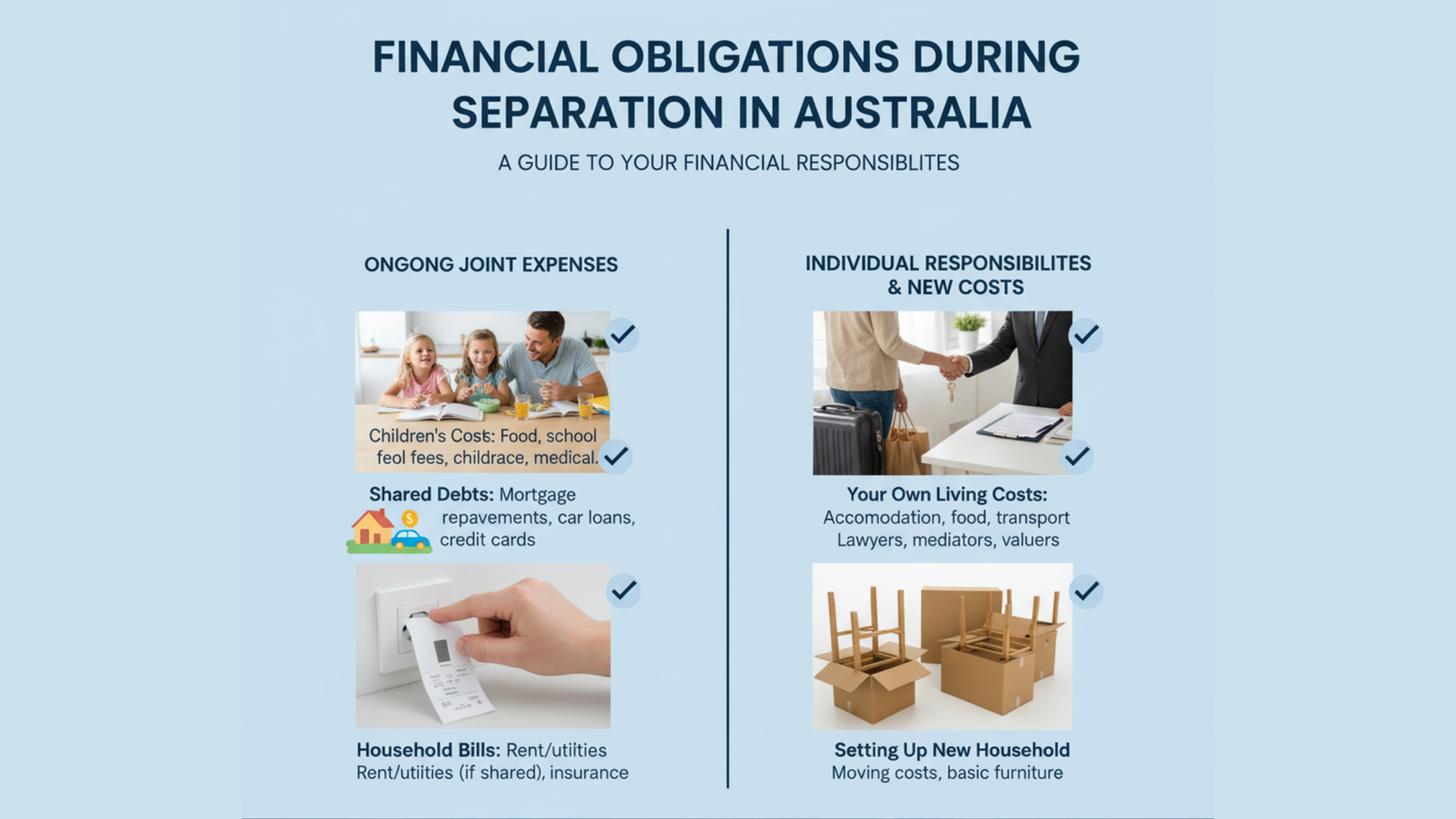
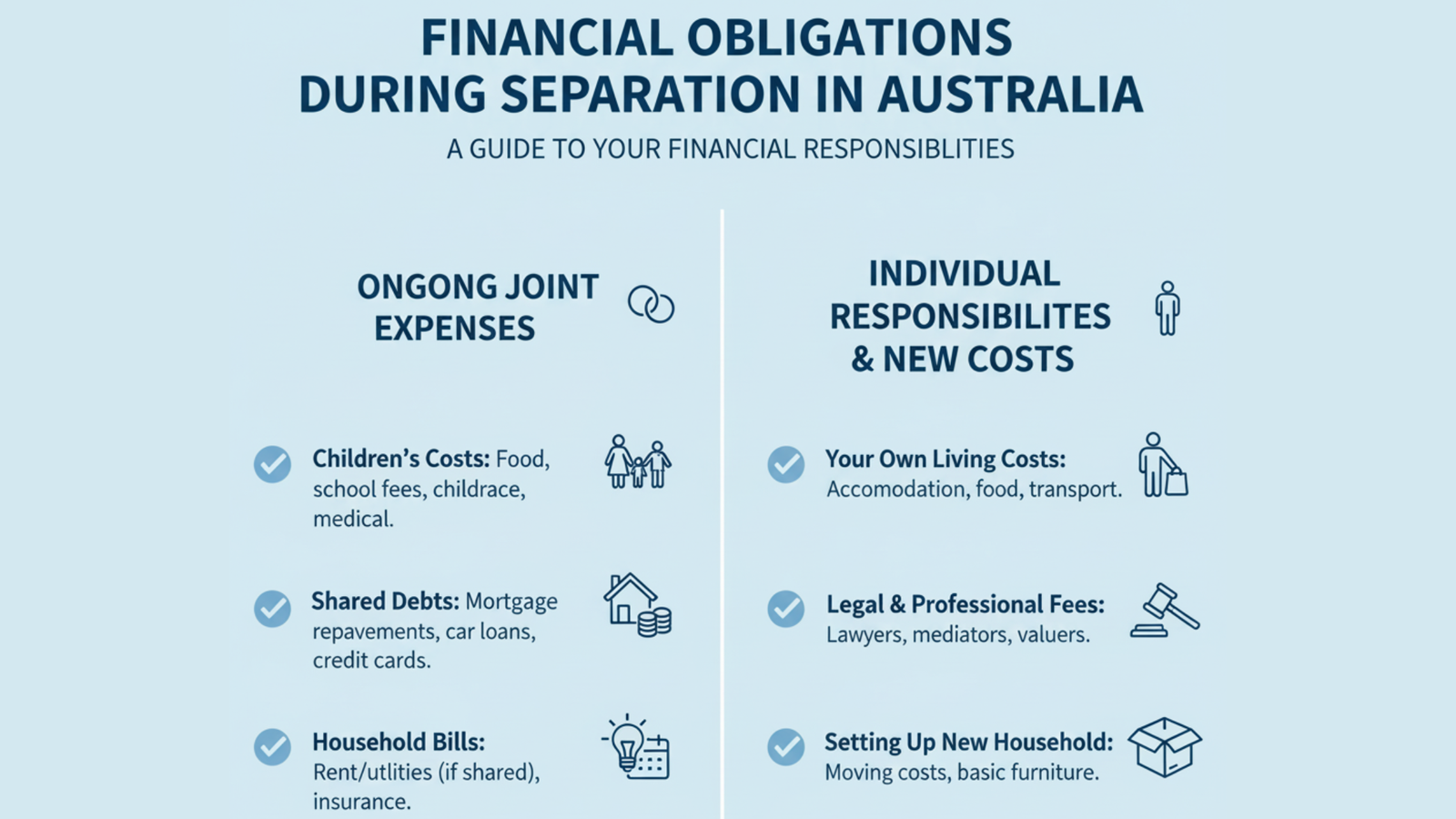
Housing costs typically represent the largest expense for separating couples. If one person remains in the family home, you’ll need to decide how mortgage or rent payments continue. Remember that both parties usually remain legally responsible for joint loans regardless of who lives in the property.
Utilities, insurance, and school fees
Establish clear agreements about ongoing household bills, especially for the family home. For children’s expenses like school fees and extracurricular activities, document who pays what to avoid confusion. Consider setting up a shared expense tracking system to maintain transparency.
“The most successful separations we see involve clear communication about everyday expenses from the outset. This prevents small financial disagreements from escalating into larger conflicts.” – Tonkin Lega.l
Informal agreements versus formal orders
While informal arrangements might work temporarily, formalising financial agreements provides security. Consent orders approved by the court or binding financial agreements offer legal protection that informal arrangements lack. They’re particularly important for significant assets or complicated financial situations.
Spousal maintenance obligations
Eligibility for seeking maintenance
Spousal maintenance depends on one party’s need and the other’s capacity to pay. Factors considered include age, healthincome-earningng capacity, childcare responsibilities, and the standard of living during the relationship. It’s not automatic – you must demonstrate both need and your ex-partner’s ability to provide support.
Types of maintenance orders
Maintenance can be periodic (regular payments), lump-sum, or even transfers of property. Urgent or interim maintenance addresses immediate needs while final arrangements are negotiated. Most maintenance orders are temporary, designed to support financial independence over time.
How maintenance is calculated in practice
Unlike child support, there’s no fixed formula for spousal maintenance. Courts examine income, expenses, and the reasonable needs of both parties. Financial statements detailing your budget, with evidence of expenses and income, are central to maintenance claims.
Child support and child-related costs
Child Support Agency formulas and private agreements
The Child Support Agency uses parents’ incomes, care arrangements, and the number of children to calculate support payments. While many parents use this administrative system, you can create private agreements through a limited or binding child support agreement if it suits your situation better.
Ordinary and extra child-related expenses
Basic child support covers ordinary expenses like food, housing, and clothing. Additional costs like private school fees, orthodontic work, or expensive extracurricular activities may be handled separately through agreements about “non-periodic” payments.
Record-keeping for child cost claims
Maintain detailed records of child-related expenses, especially for costs outside regular child support. Clear documentation helps resolve disputes and may be required if you later seek adjustments to support arrangements.
Property settlement and asset division
Identifying and valuing assets and liabilities
Full disclosure of all assets and liabilities is legally required, regardless of whose name they’re in. This includes properties, vehicles, businesses, investments, and personal items of significant value. Professional valuations may be necessary for complex assets like businesses or investment properties.
Superannuation splitting and its effect on settlement
Superannuation is treated as property under family law and can be divided between separating couples. This doesn’t provide immediate cash (unless you’re at retirement age) but allocates future retirement benefits. The process requires specific superannuation splitting orders or agreements.
Timelines for final property orders
Applications for property settlement must be filed within 12 months of divorce finalisation or within 2 years of separation for de facto relationships. While you can begin the process immediately after separation, many people wait until emotions settle to negotiate effectively.
Practical budgeting and cash flow steps
Building a short-term budget after separation
Create a realistic budget reflecting your new financial reality. Focus on essential expenses first:
- Housing (rent/mortgage)
- Utilities and essential services
- Food and groceries
- Transport costs
- Children’s immediate needs
- Debt repayments
Short-term funding options and managing credit use
Be cautious about accumulating new debt during separation. While credit might bridge temporary gaps, high-interest debt can compound financial stress. Explore hardship programs from existing creditors before seeking new loans. Emergency relief services can also provide short-term assistance.
Protecting children’s routines and schooling costs
Try to maintain children’s educational stability during separation. Discuss school fee payments, uniforms, excursions, and other educational expenses clearly. Many schools offer payment plans or hardship considerations for families experiencing separation.
Working with professionals
Separation involves legal, financial, and emotional aspects that benefit from professional guidance. Family lawyers specialise in separation matters and can explain your rights and obligations. Financial advisers help restructure finances and plan for the future, while accountants address tax implications. For complex matters, specialist valuers or forensic accountants might be needed.
Mediation and family dispute resolution services offer cost-effective ways to reach agreements without court intervention. These services help you negotiate financial arrangements while keeping legal costs manageable.
Conclusion
Managing financial obligations during separation requires organisation, clear communication, and informed decision-making. Start by securing your immediate financial position, gathering comprehensive documentation, and seeking appropriate professional advice. Remember that fair financial arrangements benefit everyone involved, especially children.
Whether you need assistance with immediate expenses, child support arrangements, or complex property settlements, Tonkin Legal provides expert guidance tailored to your specific situation. Taking proactive steps now can lead to greater financial stability as you move forward into the next chapter of your life.