7 Common Security Risks You Can Prevent With Better Audit Practices
- 1 7 Common Security Risks You Can Prevent With Better Audit Practices
- 1.1 1. Insider Threats: A Growing Concern
- 1.1.1 How Audits Help:
- 1.2 2. Data Breaches Due to Weak Authentication
- 1.2.1 How Audits Help:
- 1.3 3. Unpatched Software and Vulnerabilities
- 1.3.1 How Audits Help:
- 1.4 4. Phishing Attacks and Social Engineering
- 1.4.1 How Audits Help:
- 1.4.2 How Audits Help:
- 1.4.3 How Audits Help:
- 1.5 7. Lack of Encryption for Sensitive Data
- 1.5.1 How Audits Help:
- 2 Conclusion
Find out how making audits better might help protect your business from seven common security issues and online threats.
The digital world moves quickly these days, and security threats are getting smarter. Businesses need to stay ahead of the game. Hackers are looking for common security holes to use against companies.
How can they stop them?
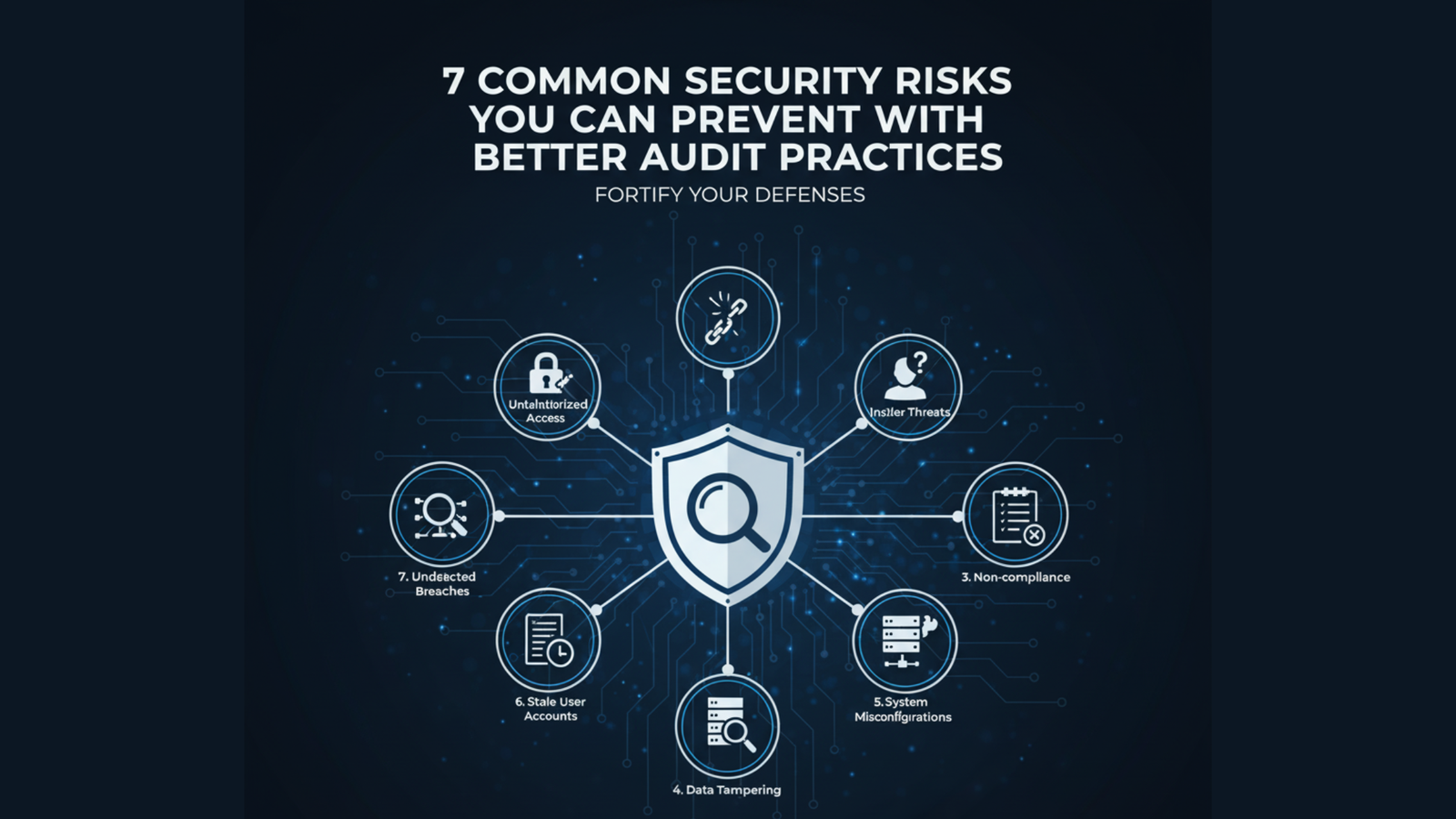
7 Common Security Risks You Can Prevent With Better Audit Practices
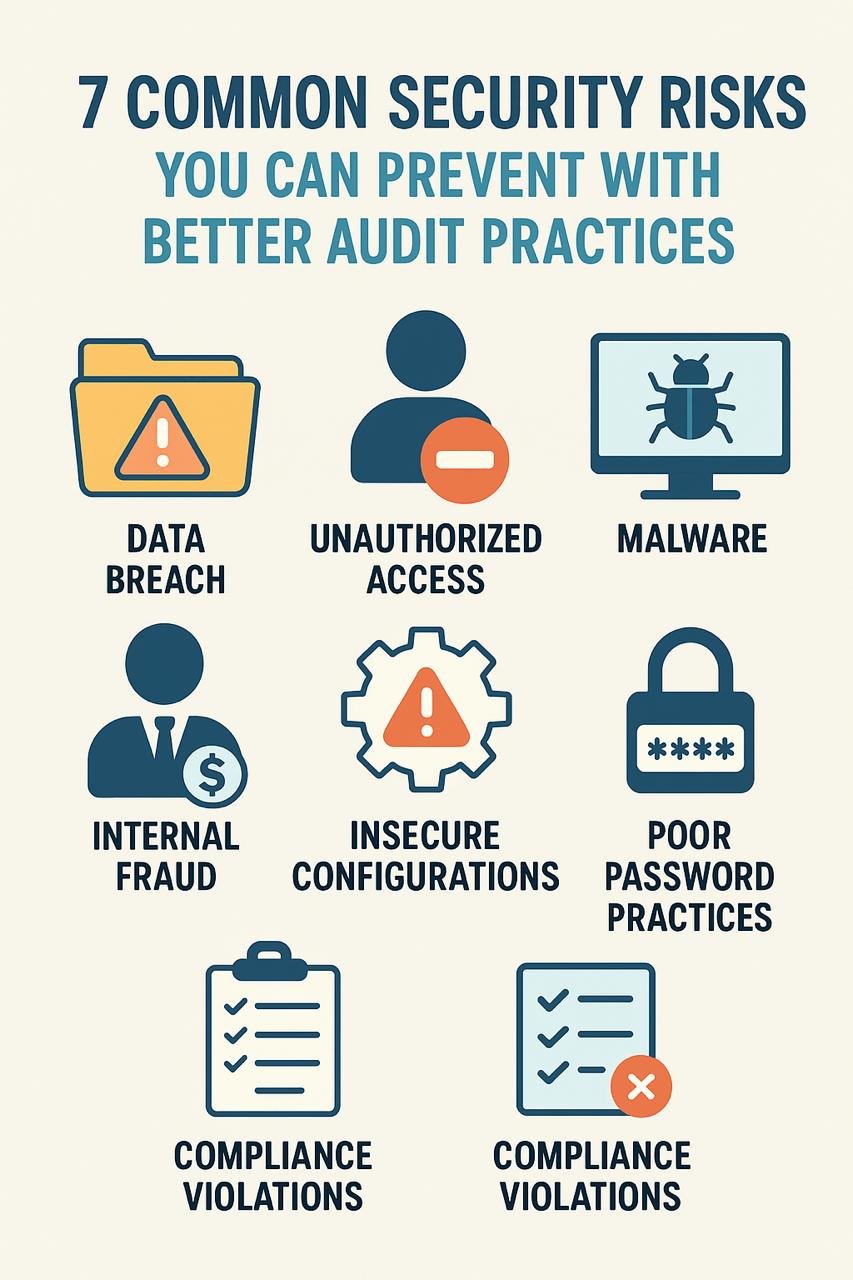
Making surveys better is one of the best ways to do this. By doing these things, you can help identify weak spots, enhance tracking, and ensure that industry standards are met. In this piece, ManageEngine ADAudit Plus – Active Directory Auditing is going to talk about seven common security worries and how better auditing might help lower them. If you know about these risks and how audits can help, you can keep your business safe from data breaches, theft, and other online threats.
1. Insider Threats: A Growing Concern
One of the hardest things to deal with in security is insider threats. These risks can come from employees, partners, or anyone else who can get into the company’s computers. Anytime someone breaks into your data, there is a chance that they will do something bad.
How Audits Help:
Auditors can help you keep an eye on how users act and find anything fishy, like when they access private data without a good reason. By looking at access logs and what special users are doing, businesses can spot bad behaviour before it does them any harm. The “least privilege” rule says that users should only be able to see the info they need to do their jobs. This also lets businesses follow that rule.
2. Data Breaches Due to Weak Authentication
Businesses are very worried about weak security, especially if they don’t use multi-factor authentication (MFA) or use old passwords. People who don’t belong in networks can easily get in through these holes in protection.
How Audits Help:
You can find accounts that are easy to hack by looking at failed login tries and authentication methods. When companies check their MFA settings and passwords often, they can fix weak ones before they are used. One way to stop breaches before they happen is to check user access and make sure that all accounts meet security requirements.
3. Unpatched Software and Vulnerabilities
Most of the time, cybercriminals use old software or security holes that haven’t been fixed. It is possible for known threats to get into your systems if you don’t apply security fixes on time.
How Audits Help:
Audits of your security can help you find patches that are missing or software versions that are no longer supported. All systems have the most up-to-date security patches because patch management and vulnerability tests are checked regularly. Keeping an eye on your software environment might make it harder for hackers to find and use holes.
4. Phishing Attacks and Social Engineering
For hackers, phishing is still one of the best ways to get in. To get employees to give up private information, this type of attack usually includes sending fake emails or making counterfeit websites.
How Audits Help:
Doing security checks regularly can help you find weak spots in your business’s defences against hacking and other social engineering attacks. They might check how well email filtering systems work, how well workers are trained, and how well methods for responding to incidents work. Users may be checked regularly to make sure they know how to spot scams and other social engineering tricks.
5. Misconfigured Cloud Settings
As more and more people use the cloud, it’s important to make sure that your account settings are correct. Attackers can use these flaws against companies that don’t set permissions properly or release sensitive data by accident.
How Audits Help:
Security checks in the cloud make sure that things like storage buckets and controls for who can see them are set up properly. Auditors can check for incorrect choices and make sure that only people who are allowed to see important data can do so. By doing regular cloud checks, businesses can stop data from being lost or accessed without permission.
6. Inadequate Network Segmentation
You should divide your network into sections so that private information doesn’t get lost. This makes it easier for attackers to get into important systems once they get past your defences. There is a greater chance of a big attack that affects many parts of the company if there isn’t enough segmentation.
How Audits Help:
Audits of the network can show where segmentation isn’t working and help keep important data separate from less important units. By looking at network activity and how companies divide their networks, companies can find weak spots and use tighter segmentation to stop attacks from spreading.
7. Lack of Encryption for Sensitive Data
To keep private data safe from people who shouldn’t have it, data needs to be encrypted. Bad people can see and use the info if they get into the system without encryption.
How Audits Help:
Checking the steps used for encryption can help make sure that private data is encrypted both when it is being sent and when it is being kept. Methods of encryption, certificates, and key management should be checked often to keep data safe from being seen or taken. Checking how well your security works can help keep your data safer and lower the risk of it being stolen.
Conclusion
Cybersecurity is always a problem, but companies can make security breaches much less likely by improving the way they investigate. If a business regularly checks its encryption, access control, patch management, and user behaviour, it can avoid the most common and risky security problems. It’s important to always keep an eye on things and be on the lookout if you want to stay safe.
Frequently Asked Questions
What are security checks, and why are they important?
When your business gets a security check, the measures you have in place are looked at to find holes and threats. They help set up a plan to lower security risks, make sure that security rules work, and find ways to make them better.
How often should a business check its safety?
At least once a year, companies should check their protection. But in dangerous places, checks need to be done more often, like every three or even every month.
How do security checks keep information from getting stolen?
Security checks can help you find holes in your systems, like ones with bad access controls, old software, or settings that aren’t set up right. Audits fix these issues, which lowers the chance of a successful data theft.
Can security checks stop strikes from inside the business?
Security audits can’t stop insider threats, but they are a great way to keep an eye on workers and spot any strange behaviour. Regular audits can help lower insider threats by finding private data that is being used or accessed without permission.
What kinds of tools can help with security checks?
One type of tool that can be used for security checks is a vulnerability scanner. Other types include access control management systems and software that keeps track of compliance. These tools help make monitoring more automatic, which lets you get more accurate and quicker information about your security.