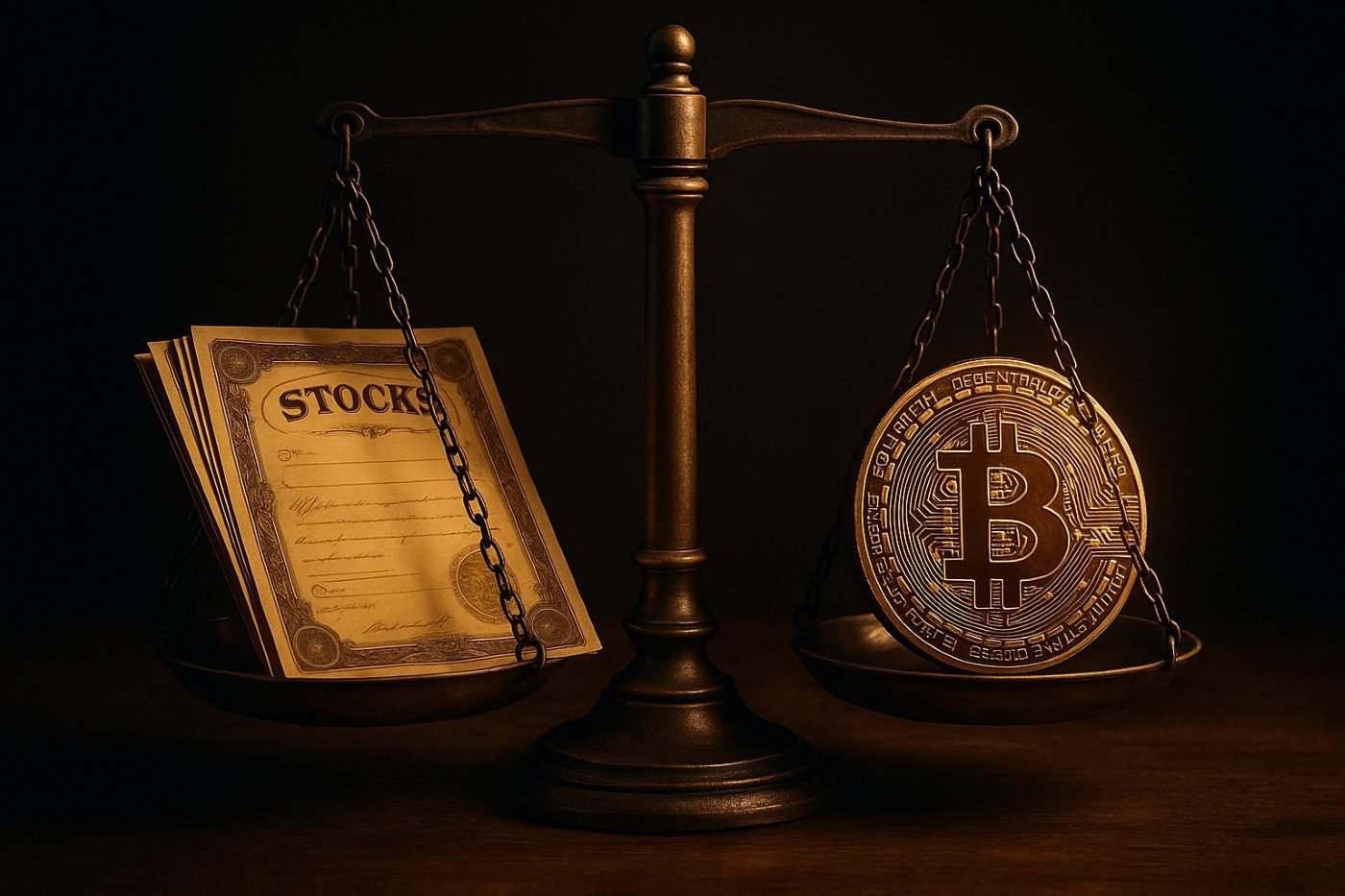
Stocks vs. Cryptocurrencies: Which Should You Choose?
- 1 What Are Stocks? What Are Cryptocurrencies?
- 1.1 Stocks — ownership in real businesses
- 1.2 Cryptocurrencies — digital assets on public blockchains
- 2 Stocks: Advantages & Trade-offs
- 2.1 Advantages
- 2.2 Trade-offs
- 3 Cryptocurrencies: Advantages & Trade-offs
- 3.1 Advantages
- 3.2 Trade-offs
- 4 How to Find Your Personal “Middle Ground”
- 4.1 1) Know your risk tolerance
- 4.2 2) Consider Dollar-Cost Averaging (DCA)
- 4.3 3) Diversify on purpose
- 4.4 4) Keep learning
- 5 An Example of a “Balanced” Starter Mix (Illustrative Only)
- 6 Final Thoughts
Walking into the world of investing can feel like standing at a fork in the road. On one path, you have stocks—pieces of real companies with earnings, boards, and audited reports. On the other hand, cryptocurrencies—digital assets built on public blockchains that trade around the clock. This guide breaks down both, compares the pros and cons, and shows you how to blend them thoughtfully.
Think of the choice a bit like picking between a gas-powered car and an EV. Both get you from A to B, but they behave differently, require different levels of care, and shine in different conditions. Your “right” answer depends on your goals, risk tolerance, and appetite for new tech.
What Are Stocks? What Are Cryptocurrencies?
Stocks — ownership in real businesses
When you buy a share of stock, you own a slice of a company. That typically comes with voting rights and potential dividends from profits. You can analyze earnings, cash flows, and balance sheets, and you’re investing within a well-defined regulatory framework.
Cryptocurrencies — digital assets on public blockchains

Crypto assets like Bitcoin or Ethereum live on blockchains—decentralized, append-only ledgers shared across many computers. Code (including smart contracts) can run on certain chains (e.g., Ethereum), enabling things like decentralized apps and finance. And unlike stock markets, most crypto markets trade 24/7/365.
Stocks: Advantages & Trade-offs
Advantages
- Stability & oversight: Exchanges run set sessions, disclosures are standardized, and companies publish audited reports—making analysis and comparisons easier.
- Dividends: Mature firms may share profits with shareholders, creating a cash stream even when prices wobble.
- Long-run track record: Broad equity indexes have historically trended upward over decades (with bumps along the way), which is why many investors use index funds/ETFs to capture diversified market returns.
Trade-offs
- Limited market hours: Regular U.S. equity sessions generally run 9:30 a.m.–4:00 p.m. ET (with pre-/after-hours sessions that have different dynamics).
- Moderate, not meteoric, moves. You’ll rarely see “overnight doubles” in blue-chip stocks.
- Single-company risk: Pick the wrong stock and you can lag the market for years—diversification helps.
Cryptocurrencies: Advantages & Trade-offs
Advantages
- Always on. Crypto trades globally all day, every day, so you can react to news anytime.
- Upside potential. New tech cycles can produce outsized gains—if you’re early and right.
- Innovation flywheel (DeFi, tokenization, smart contracts). DeFi apps enable lending, borrowing, trading, and more without traditional intermediaries; smart contracts automate rules on-chain.
Trade-offs
- Extreme volatility: Large price swings in hours—or minutes—are common. U.S. regulators consistently warn that crypto asset securities can be exceptionally volatile and speculative.
- Regulatory uncertainty: Rules continue to evolve; guidance and enforcement priorities can shift and affect market access and products.
- Key management = self-custody risk: Lose your private key and you can permanently lose access to funds; share it and funds can be stolen. Secure storage and backups are essential.

How to Find Your Personal “Middle Ground”
1) Know your risk tolerance
Ask yourself: Would a 10% intraday drop make me panic? If yes, tilt more toward stocks/ETFs and keep crypto a small satellite.
2) Consider Dollar-Cost Averaging (DCA)
Invest a fixed amount at regular intervals (e.g., monthly). DCA helps take timing emotion out of the process and smooths entry prices over time.
3) Diversify on purpose
Mix assets so that no single bet can sink your plan. For many, that means pairing broad stock exposure with a modest crypto allocation.
4) Keep learning
Read company reports, follow regulatory updates, and learn core crypto security practices (hardware wallets, backups, phishing awareness).
An Example of a “Balanced” Starter Mix (Illustrative Only)
This is not financial advice—just a teaching example. Adjust for your goals, horizon, and risk tolerance.
- 50% — Broad global stock ETF
- 20% — Dividend-oriented stocks/ETFs
- 10% — Investment-grade corporate bonds
- 15% — Bitcoin
- 5% — Ethereum or a small basket of high-conviction altcoins
Why this can work: equities as the core engine; bonds to dampen drawdowns; a measured crypto sleeve for asymmetric upside—secured with strong wallet practices.
Final Thoughts
Investing is a marathon, not a sprint. Don’t go all-in on a single bet, and don’t let headlines dictate your plan. Set clear goals (target portfolio size, max loss you’ll tolerate), pick a sensible mix, automate contributions (DCA), and review periodically. If you’re new, many people start with diversified stocks first and layer in a small, secure crypto allocation as they gain knowledge and comfort.
Want more deep dives? You’ll find additional investing articles at https://bitcoin-exchange.uk/
Educational content only; not investment advice. Markets carry risk, including loss of principal.