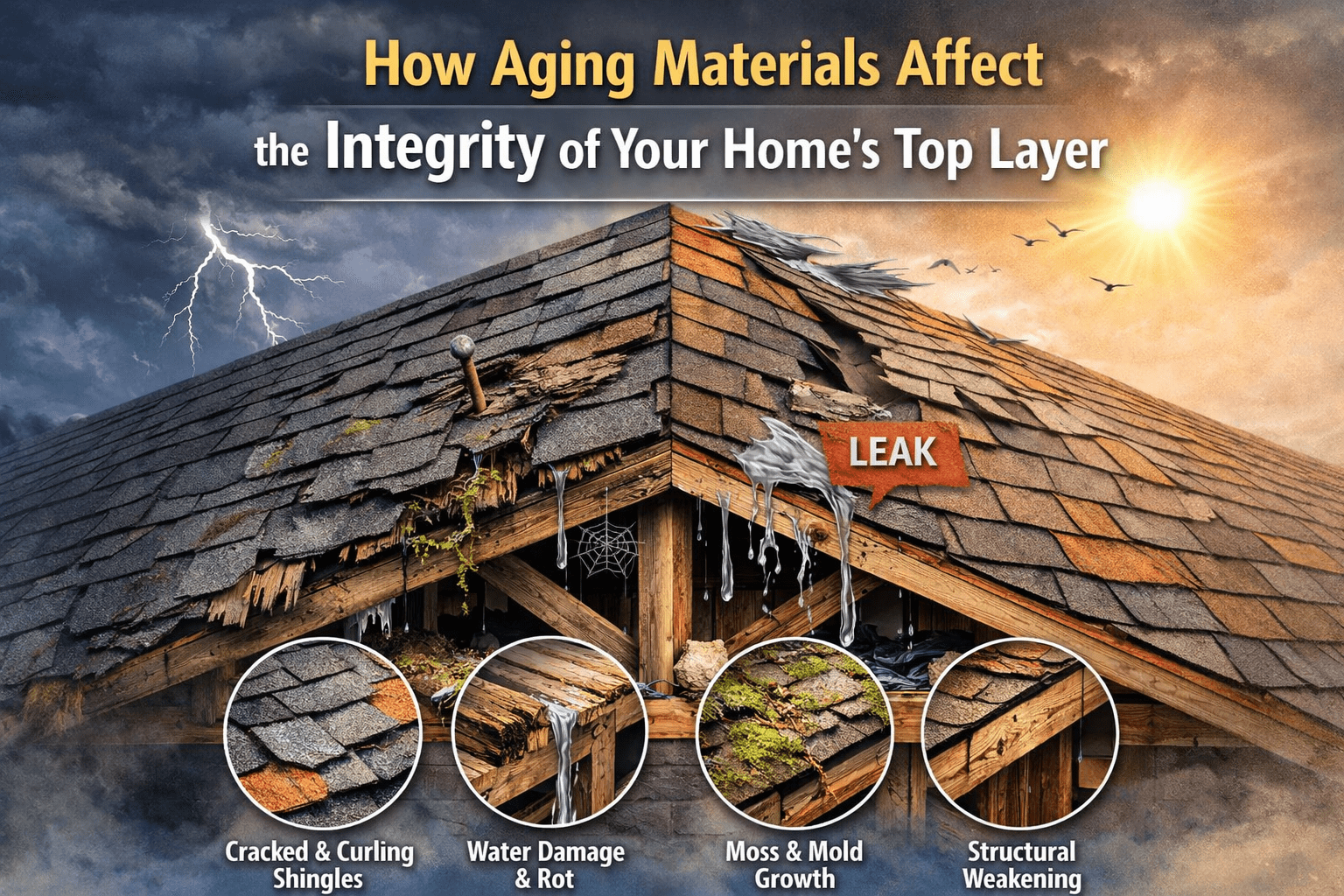
How Aging Materials Affect the Integrity of Your Home’s Top Layer
A roof usually does not fail in one dramatic moment. Its top layer weakens gradually as shingles, flashing, sealants, and underlayment lose flexibility and strength over time. That slow decline is why homeowners researching roofing services in Salt Lake City often discover that the real problem started long before the first visible leak. By the time water stains appear indoors, the outer surface has often been struggling for months or even years.
Age changes the way roofing materials respond to heat, moisture, wind, and seasonal shifts. A newer roof can shed water efficiently and resist minor stress without much trouble. An older one becomes brittle, thin, and less dependable. Understanding how that aging process works makes it easier to spot early warning signs and fix vulnerable areas before damage spreads deeper into the home.
Why the Top Layer Matters So Much
The outer layer of a roof does more than improve curb appeal. It acts as the first barrier against water intrusion, sunlight, debris, and temperature changes. When those materials are in good condition, they direct moisture away from the structure and help protect the decking underneath.
As materials age, that barrier becomes less reliable. Shingles can lose protective granules. Flashing can separate at joints. Sealants can dry out and crack. Once that happens, the roof may still look intact from the ground, but its ability to keep water out is already compromised. Small weak points tend to form around edges, valleys, vents, and transitions where different materials meet.
That is what makes aging so important. The roof does not need a massive opening to become vulnerable. A few worn sections in the right place can let moisture in and create problems that spread quietly through insulation, wood, and interior finishes.
How Roofing Materials Break Down Over Time
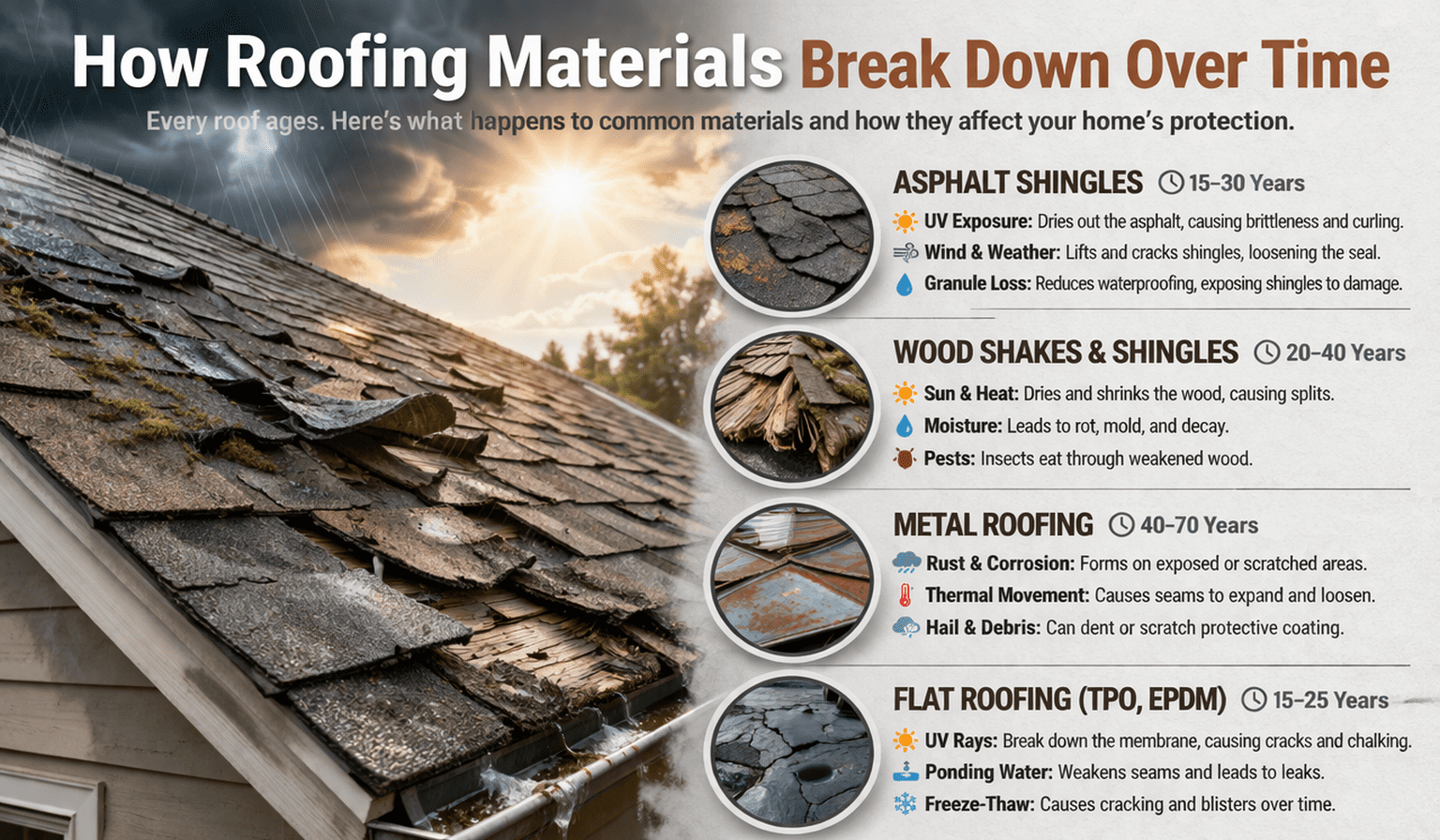
Different roofing systems age differently, but most follow the same pattern. Repeated exposure to sun, moisture, and temperature swings slowly changes the material itself.
Asphalt shingles often become dry and brittle. Their surface granules wear away, leaving the shingle more exposed to sunlight and faster deterioration. Edges may curl, corners may crack, and tabs may loosen. Once that starts, shingles are more likely to lift during storms or allow moisture to work underneath them.
Metal components age differently. Fasteners can loosen, protective coatings can wear thin, and sealants around penetrations can shrink. Even durable materials can become vulnerable if expansion and contraction repeatedly stress the same joints and seams.
Flat or low slope systems often show age through seam separation, punctures, and drainage issues. Water that sits too long on the surface increases wear and exposes weak areas faster.
In every case, the problem is cumulative. Wear builds slowly until a roof that once had a margin of safety no longer has one.
The Most Common Signs of Material Aging
Many homeowners overlook the early signs because they seem minor on their own. A roof with aging materials rarely announces trouble all at once. It gives hints.
One of the clearest signs is granule buildup in gutters. When shingles shed granules, they lose part of the surface protection that helps them resist weather and sunlight. Cracked or curling shingles are another strong sign that the top layer is becoming fragile.
Inside the home, aging roof materials may reveal themselves through subtle moisture issues. Stains on ceilings, musty odors in upper rooms, damp attic insulation, or peeling paint near the roofline can all indicate a weakened outer surface.
Flashing problems are also common. Rust, lifting edges, or visible gaps around vents and chimneys suggest the joints are no longer sealed the way they should be. These are the areas where water often enters first because they depend on precise detailing rather than broad surface coverage.
Why Small Surface Issues Become Bigger Structural Problems
The biggest risk with aging roofing materials is not always what you can see right away. It is what happens after water gets past the surface.
Once moisture slips below the top layer, it can soak the decking and reduce the strength of the wood beneath. It can reduce insulation, encourage mold growth, and travel farther than expected before becoming visible indoors. A leak that appears in one room may have started several feet away.
This is why homeowners often underestimate roof problems. They assume a missing shingle or a cracked seal is only a surface issue. In reality, the top layer exists to protect everything below it. When that surface weakens, the whole roofing system becomes more vulnerable.
A focused repair done early is usually far less disruptive than waiting until moisture affects the structure. The longer water lingers, the more likely repair work will involve more than just the outer layer.
Repairing Aging Areas Before Failure
Not every aging roof needs full replacement right away. In many cases, targeted repairs can restore function and buy valuable time. The key is knowing whether the damage is isolated or widespread.
If the roof still has solid decking and most of the surface is in fair condition, a contractor may be able to replace damaged shingles, reseal vulnerable joints, reinforce flashing, or repair a small section of underlayment. These repairs work best when the surrounding materials still have enough life left to support the fix.
If large sections are brittle, repeated leaks have already occurred, or repairs keep stacking up in different areas, replacement becomes more practical. At that stage, patching one section may not solve the bigger issue: overall material exhaustion.
This is where a careful inspection matters. A trustworthy professional should be able to explain whether the roof is dealing with a localized weakness or a broader decline. Homeowners considering roofing services in Salt Lake City should look for a contractor who can clearly distinguish between temporary fixes and lasting solutions.
Making Smarter Decisions as Roof Materials Age
Aging is unavoidable, but surprise damage is not. Homeowners who understand how roofing materials wear out are in a much better position to act early. Instead of waiting for a major leak, they can respond to the smaller signs that show the top layer is losing strength.
A roof does not need to collapse to be failing. It only needs enough wear in the wrong places to let water through. Paying attention to cracked shingles, worn flashing, granule loss, and attic moisture can help catch that process before it becomes expensive.
The most effective approach is simple. Treat surface wear as a warning, not a cosmetic issue. When the top layer starts to age, the rest of the roof depends on how quickly those weak points are addressed.