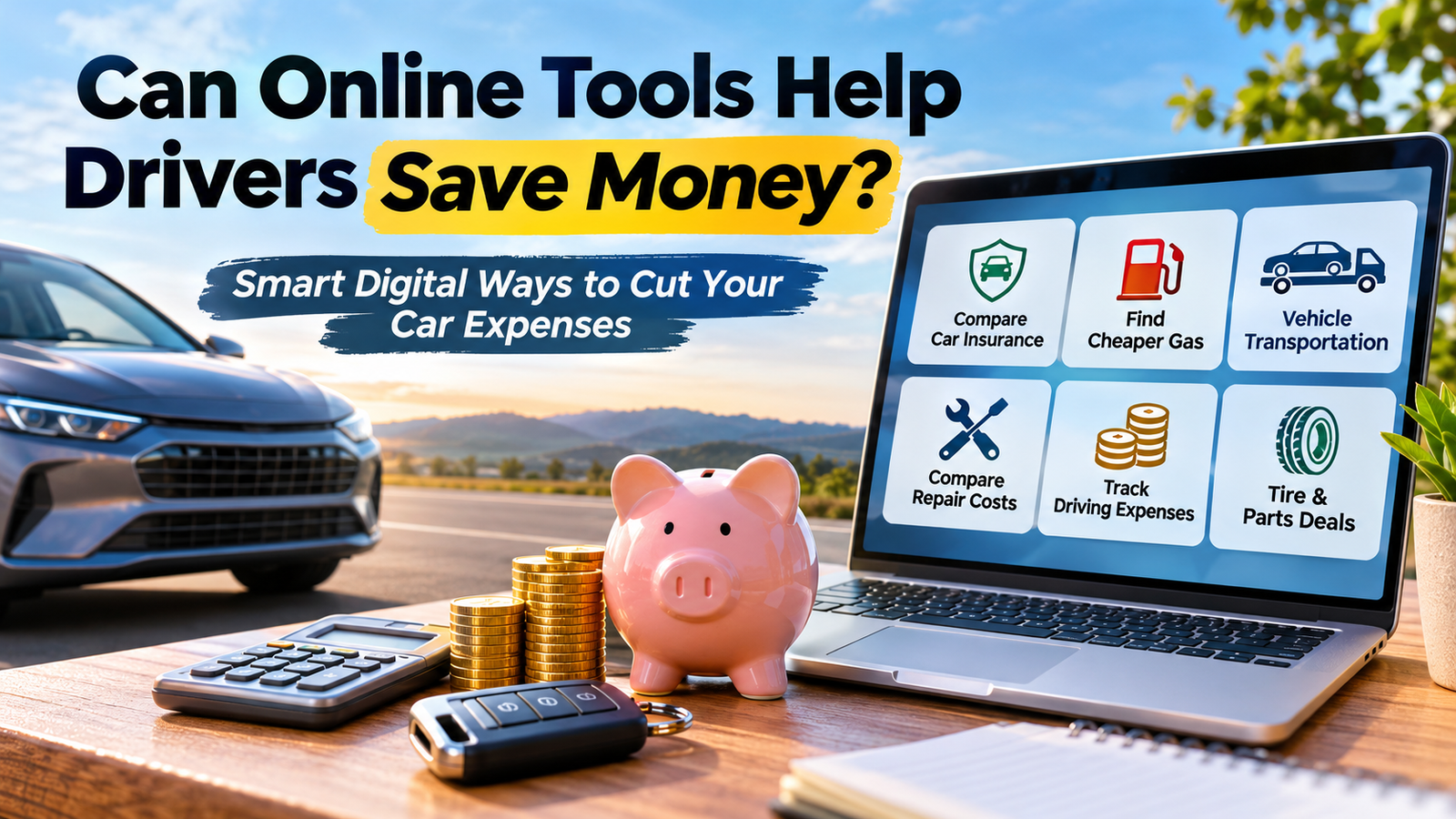
Can Online Tools Help Drivers Save Money? A Complete Guide to Reducing Your Car Expenses
- 1 Compare Car Insurance Quotes Before Renewing Your Policy
- 2 Find Cheaper Gas and Plan More Efficient Routes
- 3 Save Money on Vehicle Transportation Services
- 4 Compare Vehicle Repair and Maintenance Costs Online
- 5 Use Vehicle Expense Trackers to Understand Your Spending
- 6 Research Car Parts and Accessories Before Buying
- 7 Take Advantage of Online Tire Comparison Tools
- 8 Use Online Resources to Learn Basic Car Maintenance
- 9 Check Vehicle Recalls and Official Maintenance Information
- 10 Compare Parking and Toll Costs Before Travelling
- 11 Make Technology Work for Your Wallet
- 12 Final Thoughts
Owning a car offers convenience, flexibility, and independence, but it also comes with a range of ongoing expenses. From fuel and insurance to regular maintenance, unexpected repairs, and vehicle transportation, the cost of keeping a car on the road can quickly add up. For many drivers, these expenses represent a significant portion of their monthly budgets. While some costs are unavoidable, there are plenty of ways to manage them more effectively.
One of the most overlooked ways to reduce vehicle expenses is by using online tools and digital services. The internet has made it easier than ever to compare prices, research service providers, find affordable fuel, estimate repair costs, and monitor everyday driving expenses. Instead of accepting the first quote or relying entirely on recommendations, drivers can now make informed decisions using information available at their fingertips.
Whether you drive every day for work, use your vehicle for family trips, or occasionally travel long distances, the right online resources can help you identify savings opportunities without compromising convenience or safety.
So, can online tools really help drivers save money? Absolutely. Here are several practical ways to use digital platforms to keep your vehicle-related expenses under control.
Compare Car Insurance Quotes Before Renewing Your Policy
Car insurance is one of the most important expenses associated with vehicle ownership. It provides financial protection against accidents, theft, property damage, and other covered incidents. However, insurance premiums can vary considerably between providers, even when policies appear to offer similar protection.
Many drivers automatically renew their existing policies without checking whether better deals are available elsewhere. This can result in paying more than necessary for coverage.
Online insurance comparison platforms make it easier to evaluate multiple providers and understand the differences between their policies. Instead of contacting individual insurers one by one, drivers can enter their vehicle details, driving history, location, and coverage requirements to receive different quotes.
Before purchasing a policy, however, it is important to look beyond the advertised premium. A cheaper policy does not necessarily offer better value. Compare coverage limits, deductibles, exclusions, roadside assistance, rental car reimbursement, and other benefits that could become important when making a claim.
You should also review available discounts. Some insurers offer reduced premiums for safe driving, multiple vehicles, bundled policies, low annual mileage, or installing approved safety equipment.
Another useful strategy is to compare insurance prices several weeks before your renewal date. Having sufficient time to research alternatives makes it easier to evaluate your options without feeling pressured into accepting the first available offer.
The goal should be to find a policy that provides appropriate protection at a competitive price, rather than simply choosing the cheapest option.
Find Cheaper Gas and Plan More Efficient Routes
Fuel is one of the most frequent expenses for drivers, particularly those who commute regularly or cover significant distances. Even a small difference in fuel prices can create meaningful savings over several months.
Gas prices often vary between nearby stations because of differences in operating costs, competition, supply arrangements, and local demand. Paying attention to these differences can help drivers avoid unnecessarily expensive fuel stops.
Applications such as GasBuddy allow users to check reported fuel prices at nearby stations and identify more affordable options. Similar fuel-price services are available in different countries, helping motorists make better decisions before filling their tanks.
However, choosing the cheapest station does not always guarantee the greatest savings. Driving several extra miles to save a small amount per gallon could cost more in additional fuel than you actually save. It is better to compare prices at stations along your regular routes or near places you already visit.
Navigation applications can also help reduce fuel expenses by identifying efficient routes. Tools such as Google Maps and Waze provide traffic information, estimated journey times, and alternative routes. Avoiding heavy congestion, unnecessary detours, and repeated stops can improve fuel efficiency.
Drivers can make these savings even more effective by combining online route planning with better driving habits. Maintaining consistent speeds, avoiding aggressive acceleration, keeping tires properly inflated, and removing unnecessary weight from the vehicle can all help reduce fuel consumption.
Over time, combining fuel-price comparisons with smarter route planning can make a noticeable difference to your overall driving budget.
Save Money on Vehicle Transportation Services
There are situations when driving your own vehicle over a long distance is not necessarily the most affordable or practical option. For example, you might be relocating to another state, purchasing a vehicle from a distant seller, moving for work, or arranging transportation for a car that cannot be driven.
In these circumstances, professional vehicle transportation services can provide a convenient alternative to making the journey yourself.
Many vehicle owners assume that transporting a car professionally will always be more expensive than driving it. However, this is not necessarily true. A long-distance journey involves more than fuel costs. You also need to consider accommodation, meals, tolls, additional mileage, vehicle depreciation, and the possibility of unexpected mechanical problems.
Online vehicle shipping platforms allow customers to compare transportation companies and request quotes based on their pickup and delivery locations, vehicle type, and preferred shipping arrangements.
For instance, researching Denver car transporters can help people arranging vehicle transportation in the Denver area compare available services and pricing options.
When evaluating transportation quotes, consider the distance, estimated delivery timeframe, insurance arrangements, carrier credentials, and whether the service uses open or enclosed vehicle transport. Open transport is generally more economical, while enclosed transport offers additional protection for luxury, classic, or particularly valuable vehicles.
It is also worth checking customer reviews and understanding the company’s cancellation, payment, and damage-claim policies before making a booking.
Comparing multiple quotes rather than accepting the first offer can help you find a transportation arrangement that suits your requirements and budget.
Compare Vehicle Repair and Maintenance Costs Online
Vehicle maintenance is another area where online research can help drivers avoid unnecessary spending. Whether you need an oil change, brake replacement, tire rotation, battery replacement, or more complicated mechanical work, repair prices can differ significantly between service providers.
When a vehicle develops a problem, many drivers immediately visit the nearest mechanic. Although this can be convenient, it may not always be the most economical decision.
Online platforms make it easier to research local repair shops, compare customer feedback, and request estimates before scheduling an appointment.
Customer reviews can provide useful information about workmanship, communication, pricing transparency, turnaround times, and overall service quality. Reading a diverse range of reviews is particularly valuable because it helps you understand both positive experiences and potential problems. For additional guidance, consider this discussion on the importance of reading diverse customer reviews before making decisions.
Some automotive service platforms also allow drivers to compare estimated repair costs and receive quotes from different garages.
However, it is important to make comparisons carefully. A significantly cheaper repair estimate might exclude labor, replacement components, diagnostic charges, or additional work. Always request an itemized estimate and clarify whether the quoted price includes parts and labor.
Another useful online resource is your vehicle manufacturer’s official maintenance schedule. Checking the recommended service intervals can help you understand which maintenance tasks are necessary and when they should be performed.
Preventive maintenance is generally less expensive than waiting for a small issue to develop into a major mechanical failure. For example, replacing worn brake pads on time can help prevent damage to more expensive braking components.
By researching repair costs and maintaining your vehicle according to the manufacturer’s recommendations, you can avoid unnecessary expenses while keeping your car reliable.
Use Vehicle Expense Trackers to Understand Your Spending
Do you know exactly how much your vehicle costs you every month? Many drivers know how much they spend on fuel but overlook smaller expenses such as parking, tolls, cleaning, routine servicing, insurance, and replacement parts.
These costs may seem insignificant individually, but they can represent a substantial amount when calculated over an entire year.
Budgeting applications and vehicle expense trackers can help you develop a clearer understanding of your total ownership costs.
You can record fuel purchases, maintenance invoices, insurance premiums, registration fees, parking charges, and unexpected repairs. Some applications also allow you to track mileage, calculate fuel economy, and set reminders for upcoming maintenance.
Once you have collected several months of information, it becomes easier to identify spending patterns.
For example, you might discover that frequent short journeys are increasing your fuel expenses, or that parking fees are costing more than expected. You may also notice that certain maintenance costs are recurring more frequently than they should.
This information can help you make practical adjustments. Combining errands into fewer journeys, planning regular maintenance, and reviewing recurring vehicle-related payments can all improve your monthly budget.
Even a simple spreadsheet can work effectively if you prefer not to use a dedicated application. The important thing is to maintain accurate records rather than relying on estimates.
Research Car Parts and Accessories Before Buying
Replacement parts and automotive accessories can also become expensive, particularly when purchasing them without comparing available options.
Whether you need new windshield wipers, floor mats, tires, batteries, filters, or replacement components, online shopping platforms make it easier to compare brands, specifications, customer ratings, and prices.
Before purchasing a component, check your vehicle’s exact make, model, manufacturing year, engine type, and compatibility requirements. Two vehicles from the same manufacturer may use different components, so assuming that a part will fit based on appearance alone can lead to costly mistakes.
Manufacturer websites, authorized dealerships, automotive parts retailers, and established online marketplaces can help you identify suitable products.
It is also important to distinguish between genuine original equipment manufacturer (OEM) parts, reputable aftermarket alternatives, and low-quality replacements. While aftermarket components can sometimes offer excellent value, selecting an unsuitable or poorly manufactured part may compromise reliability and safety.
For safety-critical components such as brake pads, tires, steering parts, and suspension components, prioritize quality, compatibility, and proper certification over the lowest price.
Online research is particularly useful for understanding the differences between available products before visiting a mechanic or placing an order.
Take Advantage of Online Tire Comparison Tools
Tires are essential to vehicle safety, handling, braking performance, and fuel efficiency. However, replacing all four tires can represent a considerable expense.
Online tire comparison platforms allow drivers to research different brands, sizes, performance characteristics, and prices before making a purchase.
You can compare touring tires, all-season tires, performance tires, and specialized options depending on your vehicle and driving conditions.
Some retailers also provide information about tread life warranties, wet-weather braking, road noise, rolling resistance, and customer feedback. These details can help you choose tires that provide an appropriate balance of performance, durability, and cost.
It is important to check the manufacturer’s recommended tire size and load and speed ratings before purchasing. Choosing an incompatible tire simply because it is cheaper can affect vehicle handling and safety.
You should also compare the complete installation cost rather than looking only at the advertised tire price. Fitting, balancing, disposal charges, and additional services may increase the final amount.
Regularly checking tire pressure and monitoring tread depth can help extend tire life and prevent premature replacement. These simple habits can save money while maintaining safe driving conditions.
Use Online Resources to Learn Basic Car Maintenance
Not every vehicle-related task requires a professional mechanic. Some routine maintenance activities are relatively straightforward, provided you understand the correct procedure and follow the manufacturer’s instructions.
Online tutorials, automotive forums, and instructional videos can help drivers learn basic vehicle care.
For example, you can find guidance on checking tire pressure, inspecting windshield wipers, monitoring engine oil levels, replacing cabin air filters, and identifying dashboard warning lights.
Learning these basic tasks can help you recognize minor problems early and avoid unnecessary service appointments.
Automotive forums are also useful because they allow owners of similar vehicles to discuss common issues, maintenance experiences, and practical solutions. However, information shared by other users should not automatically be treated as professional advice.
For complicated mechanical problems, electrical faults, brake repairs, airbag systems, or other safety-critical work, consult a qualified technician.
The purpose of using online educational resources should be to become a more informed vehicle owner, not to attempt repairs beyond your technical knowledge.
Check Vehicle Recalls and Official Maintenance Information
Another useful way to avoid unexpected expenses is to stay informed about vehicle recalls and manufacturer service announcements.
A recall may involve a safety-related defect that requires inspection, repair, or replacement of a component. Depending on the manufacturer and applicable regulations, eligible recall work may be completed without charging the vehicle owner.
Many automobile manufacturers provide online recall-checking facilities where owners can enter their vehicle identification number (VIN) to determine whether their vehicle is affected by an outstanding recall.
Government transportation and vehicle safety websites can also provide information about safety notices, recalls, and relevant regulations.
Checking this information periodically is a sensible habit, particularly when purchasing a used vehicle.
You should also maintain digital copies of service records, repair invoices, and warranty documents. Having this information readily available can make it easier to establish maintenance history, verify previous work, and support warranty claims when necessary.
Compare Parking and Toll Costs Before Travelling
Parking fees and toll charges are often overlooked when calculating the cost of a journey. However, frequent commuters and people travelling to busy urban areas can spend a considerable amount on these expenses.
Online parking platforms and navigation applications can help drivers identify available parking facilities, compare prices, and plan where to leave their vehicles.
When travelling to an unfamiliar destination, checking parking charges in advance can prevent unpleasant surprises. You may discover that a slightly different parking location offers significantly better value without adding much walking distance.
Similarly, online toll calculators and route-planning services can help estimate the toll expenses associated with longer journeys.
By comparing alternative routes, you can decide whether a route with lower toll charges is worth taking, provided the additional distance and fuel consumption do not outweigh the savings.
Planning these details before departure can make road trips and regular journeys more predictable and affordable.
Make Technology Work for Your Wallet
Saving money on car ownership does not necessarily require purchasing a cheaper vehicle, reducing essential maintenance, or giving up the convenience of driving. Often, the biggest improvements come from making better-informed decisions about everyday expenses.
Online tools can help you compare insurance policies, identify affordable fuel stations, research repair providers, evaluate vehicle transportation services, and monitor your spending. They can also provide valuable information about maintenance schedules, replacement parts, tire options, and vehicle safety.
However, digital convenience should not replace careful judgment. Always verify prices, check service provider credentials, read the terms and conditions, and prioritize quality and safety when choosing automotive products or services.
The most effective approach is to use online resources as part of a consistent vehicle management routine. Compare insurance before renewal, check fuel prices along your regular routes, keep track of maintenance expenses, and research repair estimates before committing to expensive work.
These individual actions might appear small, but their combined impact can be significant over time.
Final Thoughts
Online tools have made it considerably easier for drivers to manage the financial responsibilities of owning a vehicle. Instead of relying entirely on local recommendations or accepting the first available price, motorists can research alternatives, compare services, and make decisions based on better information.
The key is to look beyond immediate savings and consider the overall value of each decision. A slightly cheaper insurance policy, a more efficient route, a reasonably priced repair, or a carefully planned vehicle transportation service can all contribute to lower ownership costs.
Ultimately, saving money as a driver is about being proactive rather than reactive. By making online research and expense tracking part of your regular routine, you can reduce unnecessary spending, prepare for future costs, and enjoy the convenience of owning a car without putting as much pressure on your budget.