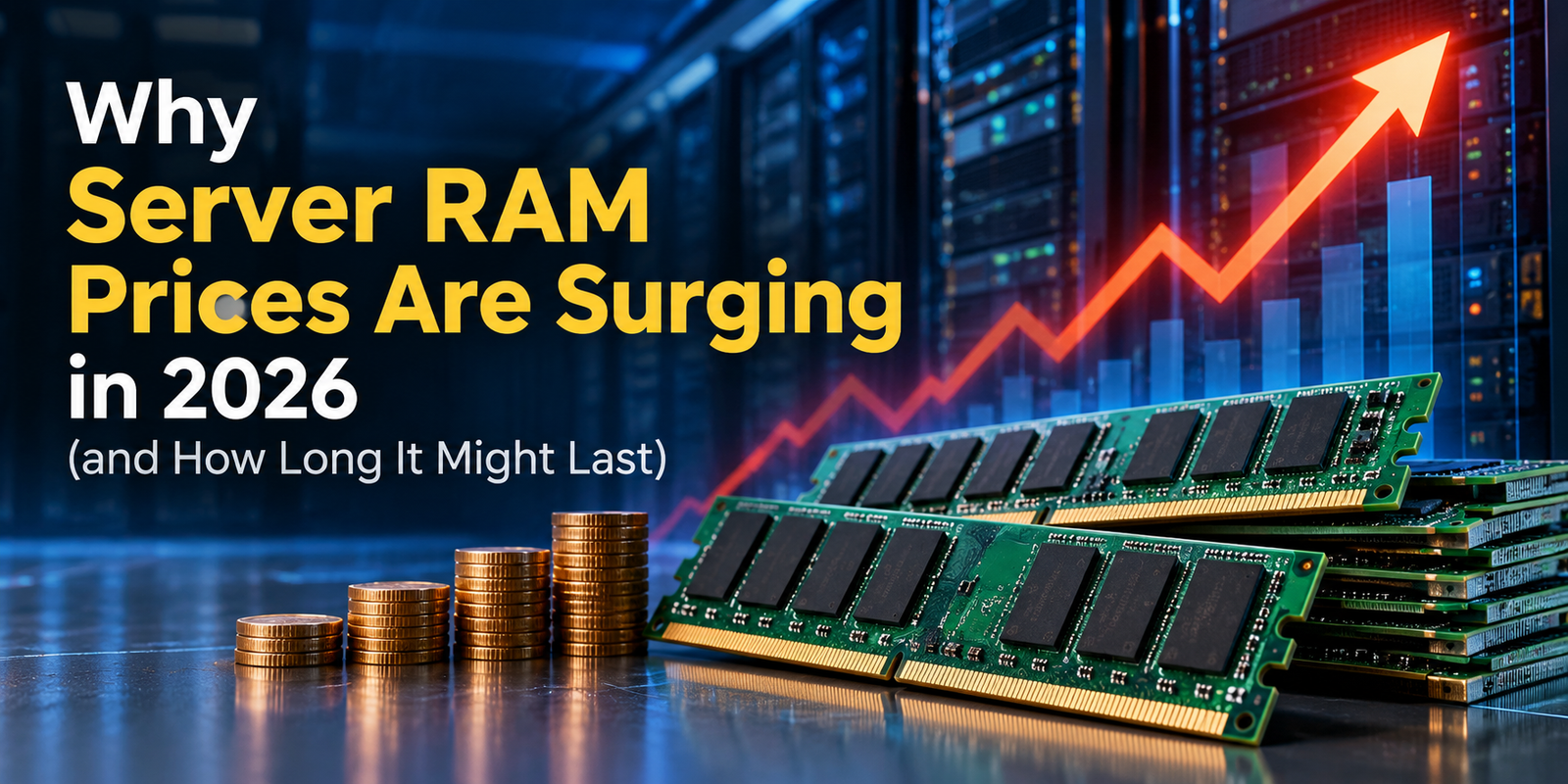
Why Server RAM Prices Are Surging in 2026 (and How Long It Might Last)
There are a lot of reasons that server RAM (random-access memory) has gotten expensive this year. One big reason may be that many companies are migrating servers at the end of their fiscal year. With that comes a rush of activity, including retiring old servers and consolidating workloads, all before budgets reset. It’s common to see a server room filled with boxes of old memory after such a migration. At the same time, finding the right replacement memory for the remaining systems in the data center can become more challenging and expensive.
Server RAM getting more expensive is one of those reasons it is worth paying attention to. Not all old server memory is the same, nor is it all useless. There are plenty of cases where the system you’re removing is tied to another system that is going to be in service for months after your scheduled move.
What Does a 90-Day Migration Look Like?
Consider a team responsible for decommissioning several racks of servers and stabilizing the remaining systems within 90 days. Old systems are going to be stripped, moved out, or left to sit on the floor waiting for an audit. The new servers in the data center need extra memory to take over the workloads of the systems being migrated.
The biggest mistake is assuming that any memory that was pulled from a decommissioned server is equal to any other piece of memory. That pool of memory may include modules that are compatible with systems that you’re going to use, as well as modules that do not work with anything left in the data center. You can avoid a massive scramble later by determining which servers are still going to be used and keeping track of the memory that can be put to use.
Here is an example inventory list to start with:
- Capacity and speed
- Generation and error correction type
- Rank, voltage, and physical dimensions
- Server compatibility and testing status
- Number of units in each group
Server RAM is not generally valuable in single pieces. Lots that are identifiable and matched in quantity are much easier to assess and decide whether to keep, reuse, or sell.
Why Is Compatible Server Ram Getting Expensive?
The biggest driver is demand, not just logistics. Memory makers have been shifting wafer capacity to high-bandwidth memory (HBM) for AI systems, which is far more profitable and uses several times the capacity of standard DRAM, while winding down older DDR4 production. That has pushed DDR4 and DDR5 prices up sharply across the market. On top of that broad pressure, migrations create a second, more local squeeze between two competing timelines. Organizations who have to continue running systems in a data center have to find memory replacements quickly, while other organizations are deciding whether they should hold onto older memory from systems being retired.
Supply goes down fast if there is a mix of working memory that was pulled from decommissioned systems. A data center might have dozens of memory units, but they could be spread across different types of speeds, capacities, and configurations. This means that the actual number of usable memory units available is much lower than it seems at first glance.
It is all about compatibility.
If you have to run older rack servers, tested memory that meets specifications can be more valuable than brand-new memory that cannot fit in the existing platforms. The result is a bit of a split where certain memory is worthless but other specific modules are critical for a successful data center migration.
Which Spares Should You Hold Onto?
Before turning memory in for buyback, you should consider what you’ll need to replace failed hardware in the future. This does not mean holding onto every single spare, but it does mean retaining enough spare units to handle a reasonable amount of failure without investing too much capital in memory that you will never need. For memory that is no longer required, a server memory buyback program can provide an option for recovering some of its value rather than leaving usable hardware sitting in storage.
Look carefully at older server fleets that have a mix of memory modules. Sometimes, you will have modules that came out of systems that were upgraded to a newer capacity or configuration, but those same modules can work perfectly fine on the servers that are remaining. However, they may not meet the requirements of the memory installed in the servers that will be staying online, causing problems with speed, capacity, or even whether the system can start.
This is why you should have a complete inventory before you write off memory as scrap. What parts are essential spares, and what parts are being kept just because nobody decided to get rid of them?
Can Old Memory Help Pay for Upgrades?
Selling memory that is no longer needed may not fund the entire data center refresh, but it can cover unexpected costs like additional storage devices, network components, or overtime to complete the data center relocation. For more on the value of aging data center hardware, see what happens to AI hardware when it becomes obsolete.
Don’t Let the Fiscal Year End Dictate Your Plans
There is a silver lining to higher server memory prices: you may be able to recover more money from memory you no longer need. At the same time, you may struggle to find the memory you need to keep older servers functioning. Separate any decommissioned memory before the next wave of retirements begins. Mark any memory that needs to be kept for spares, then inventory any other memory to determine whether it is worth keeping or selling before the fiscal year end.